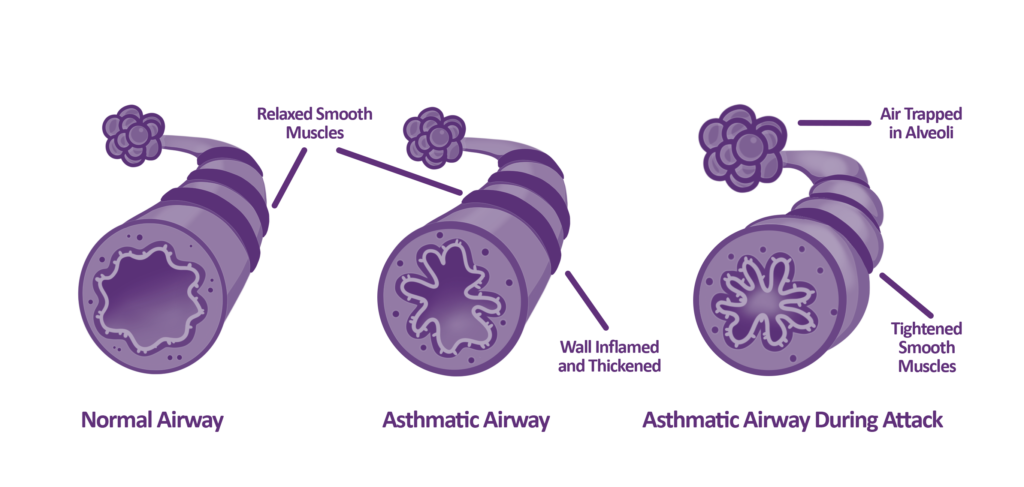
As winter draws in, the NHS braces for an influx of patients infected with common respiratory viruses. For those with respiratory conditions, such as the 5.4 million asthma sufferers in the UK, the colder months pose an especially daunting threat.1 Constricted airways, breathlessness, and tightness of the chest are typical yet distressing symptoms of asthma, an inflammatory disorder affecting around 9% of the population and capable of increasing vulnerability to respiratory infections.1,2

Beyond the physical and mental strain caused by asthma, a DALY rate of 350 per 100,000 indicates a significant burden of asthma-related disability in the UK population.3 This is reflected in the reported 60,000 hospital admissions and 200,000 bed days for asthma sufferers each year.1 Asthma can also be life-threatening, with asthma attacks claiming the lives of three people each day.1

The human toll of asthma has led to a significant economic burden. This year, the direct cost of asthma in England – encompassing NHS expenses, the impact of greenhouse gas emissions, and patient travel costs – has exceeded £1.2 billion.1 Collectively, lung conditions, including asthma, place an annual £9.6 billion burden on the NHS and exacerbate winter healthcare pressures, as individuals with these conditions are more susceptible to respiratory illnesses and cold weather.1 Asthma has become more than a personal health concern; it is a public health and economic crisis.

Compounding a Crisis: Inadequate Diagnostic Testing Impedes Effective Decision-Making

A report published in 2023 by the British Charity Asthma + Lung UK highlights the concerning state of lung healthcare in England. Despite lung disease being the third leading cause of death, individuals suffering from breathlessness frequently wait years for a formal diagnosis, while others remain undiagnosed or are misdiagnosed.1 One study found that an asthmatic diagnosis could not be established in over 30% of adults who had previously received positive diagnoses.4 The scale of this issue is brought into focus when realizing that an estimated 750,000 people are misdiagnosed as asthmatic in England, and attendant financial repercussions are estimated at £132 million each year.1

The reasons behind these apparent oversights are complex. One contributing factor involves funding restrictions and a lack of accessibility to diagnostic tests, undermining the veracity of primary care diagnoses. As uncovered in a PwC analysis, current deficiencies in testing are estimated to cost England £2.2 billion, primarily due to preventable hospital stays and treatments.5

To recoup some of these costs and alleviate pressure on the NHS, Asthma + Lung UK proposed the following measures. By fully funding diagnostic testing such as FeNO, reinstating nationwide spirometry, and maximizing the potential of community diagnostic centers and primary care for diagnoses, £307 million could be saved, and 273,000 beds could be made available – with over a third of these during the critical winter period. This figure dwarfs the £250 million in emergency funds that the UK government set aside to create 5,000 extra NHS hospital beds for this winter.1

FeNO Testing: Tackling the Burden of Lung Conditions, One Breath at a Time

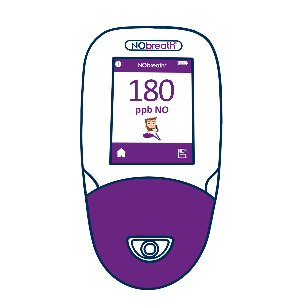
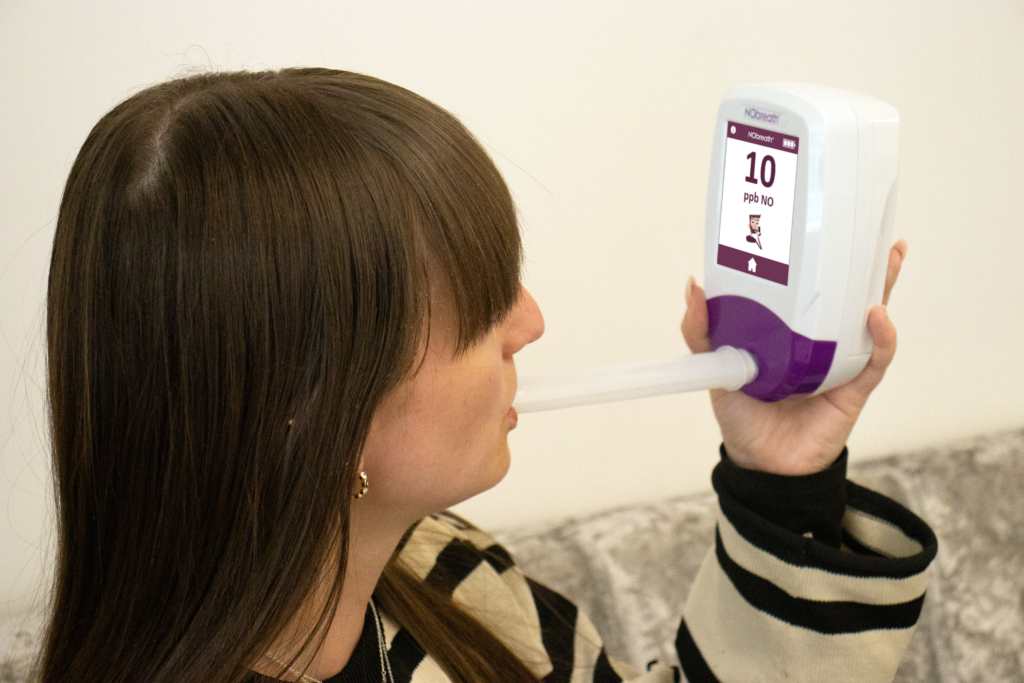
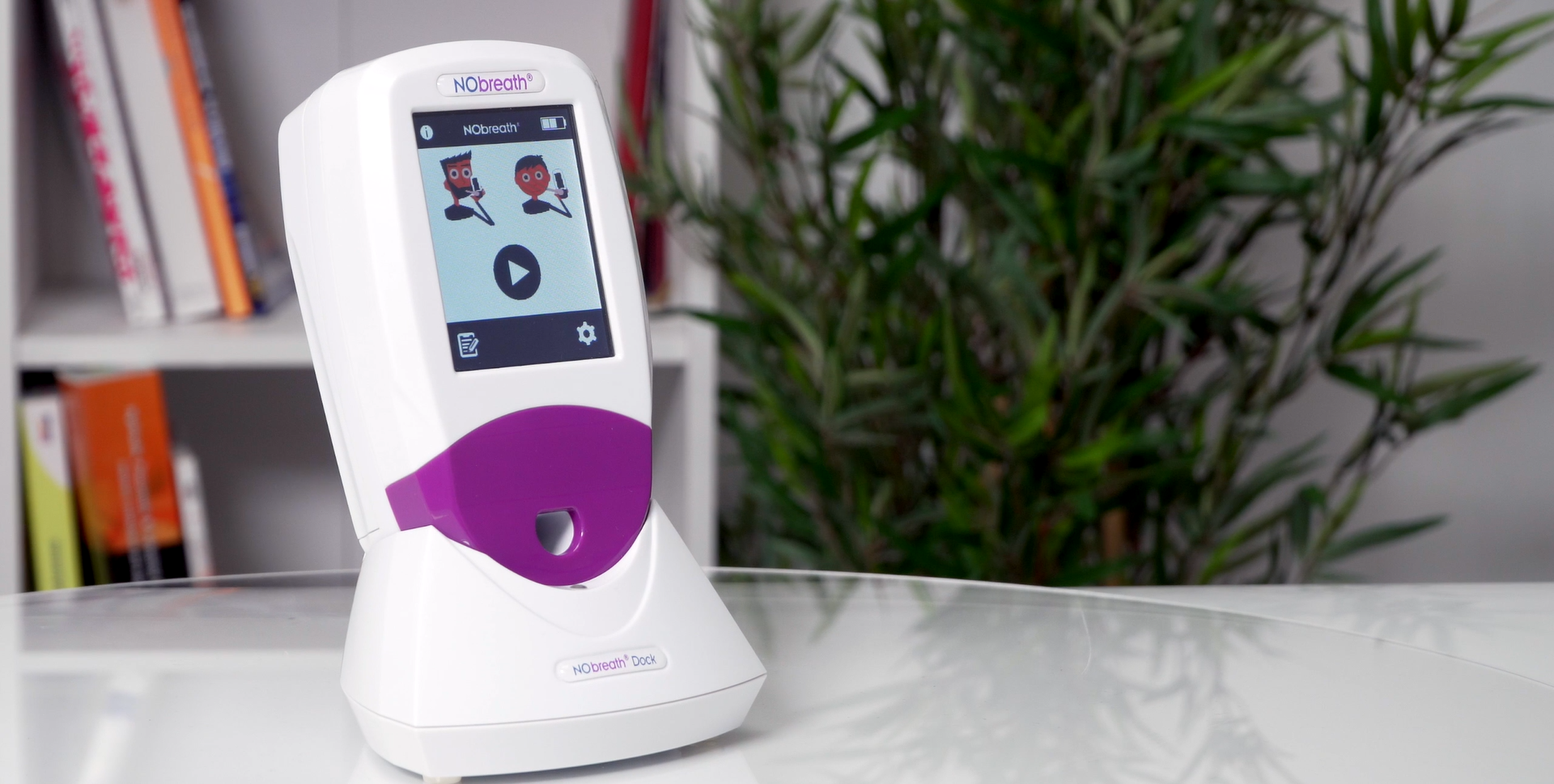
As one of the three recommendations proposed by Asthma + Lung UK, improving diagnostic testing appears realistically achievable. NICE recommends a single objective test for measuring airway inflammation in the diagnosis of asthma, fractional exhaled nitric oxide (FeNO).6 This test works by measuring nitric oxide, a naturally occurring gas produced by cells lining the airways to help combat inflammation. In individuals with respiratory conditions, especially asthma, there is often increased production of nitric oxide due to localized inflammation. During a FeNO test, the individual breathes into a specialized device, such as the NObreath® by Bedfont Scientific Ltd, which is designed to capture and analyze its nitric oxide content. With extreme sensitivity, the device measures the concentration of nitric oxide in parts per billion. Through reading the output of the device, valuable information about the degree of inflammation in the individual’s airways can be discerned. Higher FeNO levels are indicative of greater airway inflammation, which is often associated with conditions like asthma.5

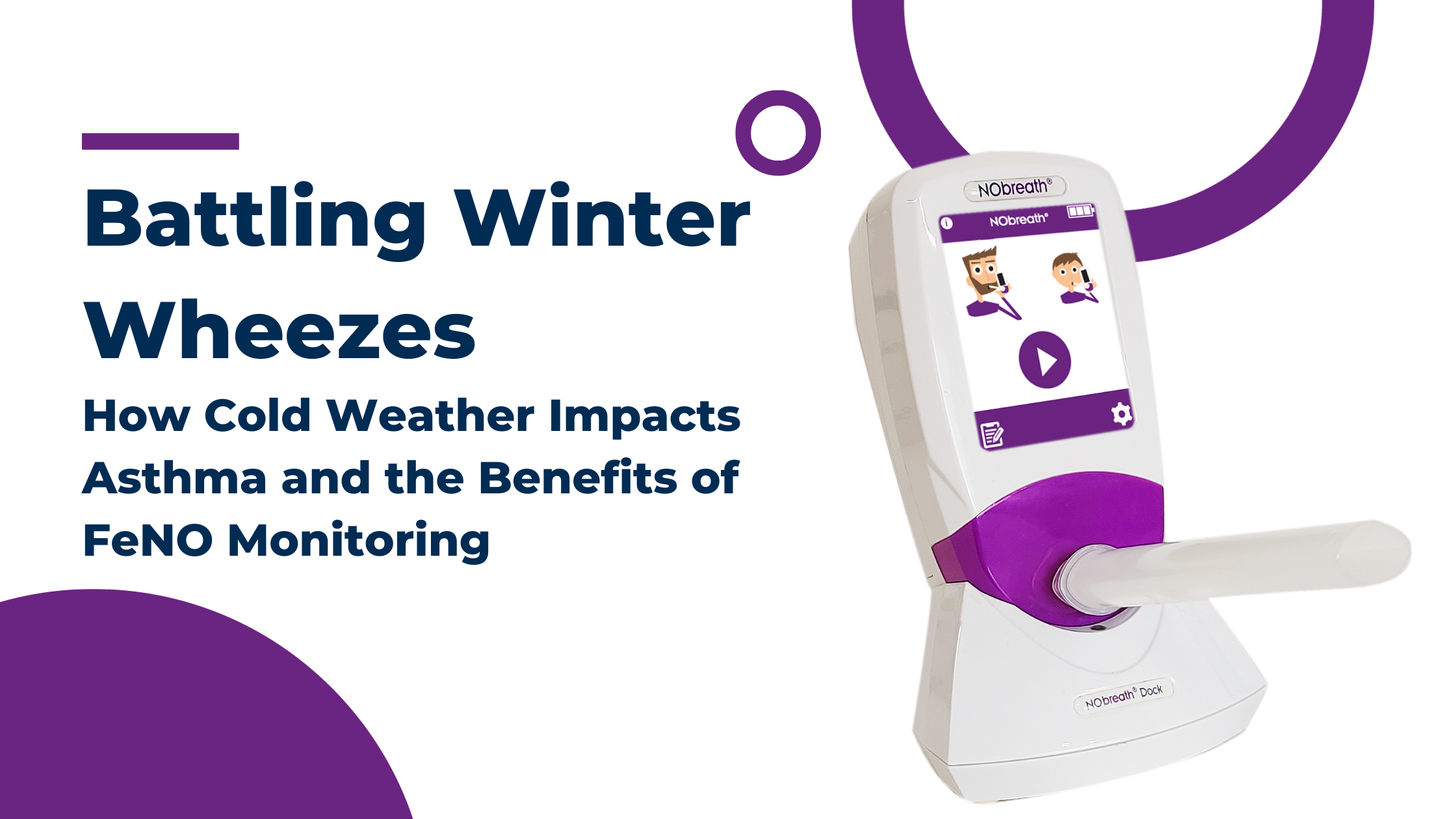
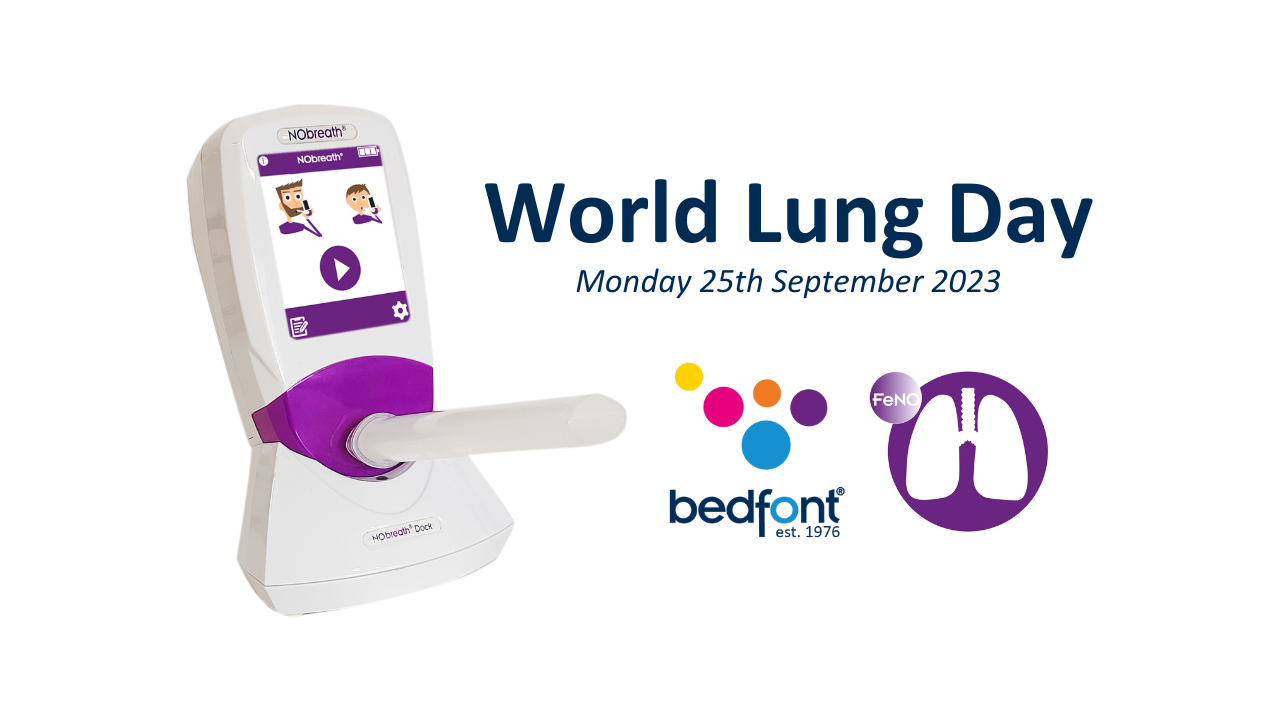
The NObreath®, developed by Bedfont Scientific Ltd., is a non-invasive FeNO monitor suitable for both adult and child patients. Conforming to ATS & ERS guidelines, the NObreath® works using an easy exhale-only technique and on-screen visual motivation. After a breath sample is collected and analyzed, airway inflammation can be assessed, and responses to treatment can be monitored. Furthermore, a patient interpretation guide streamlines result analysis, enabling healthcare providers to make informed decisions.7

While the NObreath® offers a simple and cost-effective solution to asthma diagnosis, FeNO tests and solutions essential to accurately evaluating lung health remain largely unavailable in primary care.5,7 A comprehensive analysis conducted by the PwC suggests that if FeNO tests were to be made universally accessible to GPs across England, optimization of asthma treatment could save around £100 million.1 Such a finding not only underscores the cost-effectiveness of FeNO testing but emphasizes its potential to enhance patient outcomes by ensuring accurate diagnoses and tailored treatments.

A Nation Blue in the Face: Heeding the Call for Improved Diagnostic Testing

The asthma crisis in England is a multifaceted challenge involving misdiagnoses and financial strain on the NHS. FeNO testing represents a solution that can aid in the accurate diagnosis of lung conditions, such as asthma, and save millions of lives when made widely available to GPs across the country and integrated into primary care. It is crucial that everyone suspected of lung conditions, such as asthma, has access to FeNO tests and that those who undergo testing receive precise diagnoses.

By embracing FeNO testing as a cornerstone of asthma management, we can significantly improve the quality of life for asthma sufferers, reduce healthcare costs, and alleviate the burden on the NHS. The time to act is now for the benefit of patients and the healthcare system nationwide. Contact Bedfont Scientific Ltd. to find out what solutions are available to aid in this journey to more accessible testing.

References and further reading

  1. Saving Your Breath: How Better Lung Health Benefits Us All. (2023). Asthma + Lung UK. Available at: https://www.asthmaandlung.org.uk/saving-your-breath-report
  2. Sharma S, et al. (2022). Vulnerability for Respiratory Infections in Asthma Patients: A Systematic Review. Cureus. http://doi.10.7759/cureus.28839
  3. Nunes C, et al. (2017). Asthma costs and social impact. Asthma Research and Practice. http://doi.10.1186/s40733-016-0029-3
  4. Aaron SD, et al. (2017). Reevaluation of Diagnosis in Adults With Physician-Diagnosed Asthma. JAMA. http://doi.10.1001/jama.2016.19627
  5. ‘Abysmal’ lack of testing for lung conditions is forcing GPs to play a ‘guessing game’ with diagnosis. (2023). Asthma + Lung UK. Available at: https://www.asthmaandlung.org.uk/media/press-releases/abysmal-lack-testing-lung-conditions-forcing-gps-play-guessing-game-diagnosis (Accessed on 09 October 2023).
  6. Asthma: diagnosis, monitoring and chronic asthma management. NICE. Available at: https://www.nice.org.uk/guidance/ng80/chapter/Recommendations#objective-tests- for-diagnosing-asthma-in-adults-young-people-and-children-aged-5-and-over (Accessed on 09 October 2023).
  7. Nobreath. Available at: https://www.nobreathfeno.com/us/ (Accessed on 09 October 2023).

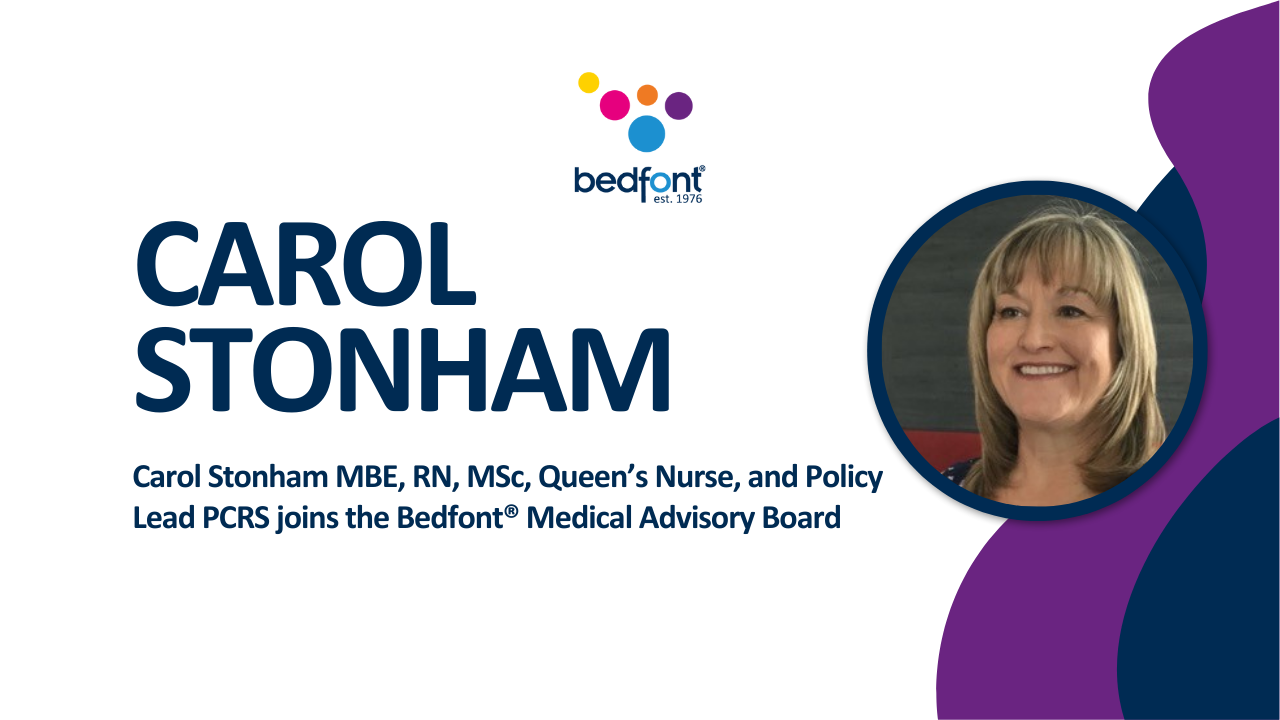
Esteemed Respiratory Healthcare Expert, Carol Stonham, Joins the Medical Advisory Board for Medtech Company, Bedfont Scientific Ltd.

Bedfont® Scientific Ltd, a leading innovator in breath analysis medical device technology, is proud to announce the addition of Carol Stonham, a highly respected and accredited respiratory healthcare expert, to its esteemed medical board. This appointment further strengthens Bedfont’s commitment to revolutionising respiratory healthcare solutions and delivering cutting-edge products to patients and healthcare professionals.

Carol brings an extensive background in respiratory healthcare and in particular Asthma and FeNO (Fractional Exhaled Nitric Oxide). She has worked in primary care in Gloucestershire for over 26 years. Her role includes running a local FeNO referral service whilst being a CCG Primary Care Nurse Practitioner for Respiratory Care. Her experience extends even further in this clinical field as she is an active member of the PCRS and currently Policy Lead.

Jason Smith, Managing Director at Bedfont®, exclaims, “We are thrilled to welcome Carol to our Medical Advisory Board. Her expertise and dedication to improving respiratory healthcare align perfectly with our vision to foster a world where everyone has access to instant, non-invasive, simple breath testing to aid in medical diagnosis. As Helen Keller said, ‘Alone we can do so little; together we can do so much’. With Carol’s fantastic knowledge and passion for FeNO, we hope to work together to improve asthma management and diagnosis worldwide.”

Carol, adds, “I am delighted to be part of the Bedfont Medical Advisory Board and to collaborate in the advancement of respiratory healthcare. I look forward to working with Bedfont and fellow board members and leveraging my experience to drive innovation in this critical field. I have been passionate about FeNO for a number of years now and my main interest is improving the industry standards and the care we deliver to our patients.”

Bedfont’s mission is to work with the Bedfont Family and healthcare professionals worldwide to provide cutting-edge breath analysis medical products to the highest standard, through technical innovation and professional business practice. The addition of Carol Stonham to its medical board underscores its dedication to delivering excellence in respiratory healthcare.

To learn more about Carol, watch her introduction here: https://www.youtube.com/watch?v=Z_15x3eanM8

Harnessing the Power of FeNO Monitoring to Combat Lung Conditions – A Vital Step in Addressing the UK’s Lung Health Crisis

A new report from PwC commissioned by Asthma+Lung UK has highlighted the alarming crisis surrounding Lung Health in the UK. Sarah Woolnough, CEO of Asthma+Lung UK, said lung conditions were the third biggest killer in the UK, with the report finding that due to the lack of testing, such as FeNO monitoring, patients can also be wrongly diagnosed and an estimated 750,000 people in England are misdiagnosed with asthma, costing the NHS an estimated £132 million every year1.

Fractional Exhaled Nitric Oxide (FeNO) is a non-invasive medical test that measures the level of nitric oxide in a person’s breath. It is a pivotal advancement in asthma care, offering precise insights into airway inflammation. By facilitating accurate diagnoses, personalising treatment plans, and enabling ongoing monitoring of asthma control, FeNO empowers healthcare providers to optimise medication use, reduce exacerbations, and enhance patient engagement. This transformative tool not only improves the quality of life for individuals with asthma but also contributes to more effective, cost-efficient healthcare management, ultimately making a profound impact on the battle against this chronic respiratory condition.

Carol Stonham MBE, RN, MSc, Queen’s Nurse, and Policy Lead PCRS, explains, “Making an accuratediagnosis of asthma relies on taking an accurate history and then performing appropriate tests to confirm the diagnosis. Spirometry (a test of lung function) was stopped during the pandemic and hasbeen very slow to restart. FeNO testing provides a valuable piece of the jigsaw to confirm whether a person has asthma (or not). It is a very quick test to perform and most people find it easy to do. The basis of asthma is airway inflammation which is what the FeNO test gives an indication of. It helps confirm a diagnosis quickly and easily and helps the patient better understand their condition and how inhalers work to treat the condition. It helps clinicians make the correct diagnosis in a timely way and get the person onto the correct treatment pathway avoiding unnecessary hospital admission and life-threatening asthma attacks.”

Jason Smith, Managing Director at Bedfont Scientific, comments, “As a leading manufacturer of breath analysis medical devices, we understand the pivotal role that innovation plays in enhancing patient care and healthcare efficiency. FeNO testing is a prime example of such innovation. We remain committed to advancing respiratory care and hope that in working towards our mission to make healthcare more accessible, our NObreath® FeNO monitor can help make a positive impact on the lives of individuals living with asthma.”

Livio Gagliardi, Acting Managing Director at Intermedical, adds, “As the official UK distributor for NObreath®, we understand the significance of accessibility and affordability. We take pride in offering a flexible three-year rental plan for the NObreath® FeNO device. Our aim is to support practices and Primary Care Networks, regardless of their size or testing volume, in ensuring equal access to FeNO testing for their patients. We are well aware of the financial constraints faced by healthcare providers and patients alike.”“What sets us apart is our democratic cost per test pricing policy. We do not penalise smaller practices; instead, we maintain a low fixed cost per test, regardless of the volume of tests conductedper year. This means that even the smallest practices can benefit from our cost-effective solution. Our rental program for the NObreath® FeNO device serves as a crucial link, as we actively strive to narrow the gap and make advanced respiratory care accessible to everyone.”

The full report can be found here: https://www.asthmaandlung.org.uk/saving-your-breath

To contact Intermedical, please call 01732 522444 or email sales@intermedical.co.uk

References

  1. Asthma+Lung UK. Saving Your Breath: How Better Lung Health Benefits Us All. September 2023. Available from: https://www.asthmaandlung.org.uk/saving-your-breath-report

Access to prevention and treatment for all. Leave no one behind:

Organised by the Forum of International Respiratory Societies (FIRS) since 2016, World Lung Day is a time for everyone to take a look at what we can do individually and as a society, to work toward clean air and healthy lungs for all. Asthma is closely related to World Lung Day because it is one of the major lung health conditions that the day seeks to address.

Under-diagnosis of asthma

In 2019, asthma affected an estimated 262 million people worldwide1 and led to 455,000 deaths globally2. A study completed by Nolte et al. in 2006 involved 10,877 participants aged 14-44 years old, 11% (1,149) of whom had previously reported asthma symptoms. After further assessment provided by Global Initiative for Asthma (GINA) recommendations, 43% (493) of the 11% were diagnosed with asthma, of which a further 50% (246) had not been diagnosed before3.

When asthma remains undiagnosed or receives inadequate treatment, it can lead to stress, anxiety, or depression, as well as lung infections, hindered growth and delayed puberty in children. Additionally, it can escalate to critical asthma attacks that can be life-threatening4.

FeNO testing and asthma:

The use of FeNO testing, in conjunction with a comprehensive clinical history and additional examinations, contributes to more efficient asthma diagnosis and enhances patient care. Furthermore, it enables the monitoring of patients’ responses to asthma interventions.

FeNO testing can be completed within seconds and provides nearly instantaneous results, compared to traditional testing like spirometry with a bronchodilator test. Thereby ensuring a larger number of individuals receive appropriate treatment for their specific conditions, leading to reduced medication wastage5. In England, a two-year programme from 2021-2023 showed an estimated 58,000 people with newly diagnosed asthma received faster treatment, after more than 1,200 FeNO devices entered primary care6, highlighting the impact FeNO testing can have on asthma care.

Visit https://www.nobreathfeno.com to find out how you can support your patients with FeNO monitoring, with the NObreath® from Bedfont® Scientific Ltd.

References:

  1. Vos T, Lim SS, Abbafati C, Abbas KM, Abbasi M, Abbasifard M, Abbasi-Kangevari M, Abbastabar H, Abd-Allah F, Abdelalim A, and Abdollahi M. Global burden of 369 diseases and injuries in 204 countries and territories, 1990–2019: a systematic analysis for the Global Burden of Disease Study 2019. The Lancet. 2020;396(10258):1204-1222. DOI: 10.1016/S0140-6736(20)30925-9.
  2. Asthma [Internet] World Health Organization. 2023. [Cited 24th August 2023]. Available from: https://www.who.int/news-room/fact-sheets/detail/asthma
  3. Nolte H, Nepper-Christensen S, and Backer V. Unawareness and undertreatment of asthma and allergic rhinitis in a general population. Respiratory medicine. 2006;100(2):354-362. PMID: 16005621. DOI: 10.1016/j.rmed.2005.05.012
  4. The Global Asthma Report 2018 [Internet]. 2018. [Cited 25th August 2023]. Available from: http://globalasthmareport.org/2018/index.html
  5. Improving access to FeNO testing in primary care [Internet]. 2023. [Cited 25th August 2023]. Available from: https://www.ahsnnetwork.com/programmes/respiratory-disease/bettering-access-to-feno-testing-in-primary-care/
  6. New report shows impact of FeNO national programme on asthma care in England [Internet] Primary Care Respiratory Society. 2023. [Cited 24th August 2023]. Available from: https://www.pcrs-uk.org/news/new-report-shows-impact-feno-national-programme-asthma-care-england#:~:text=During%20the%20two%2Dyear%20programme,in%20primary%20care%20in%20England.

The National FeNO Programme has recently released its Impact Report, promoting how their programme has improved access to fractional exhaled nitric oxide (FeNO) testing across the National Health Service (NHS) in England. The programme ran from April 2021 to March 2023.

The National FeNO Programme was part of a wider programme by the Accelerated Access Collaborative’s (AAC)’s Rapid Uptake Products Programme. The AAC brings together the NHS, patients, industry, government and more, with the goal of removing barriers to innovative and revolutionary new treatments and technology1. In England, the AAC has helped encourage the adoption of FeNO, with the help of the AHSN Network which delivered the programme as part of its commission from the NHS England Innovation Research and Life Sciences (IRLS) team1. The National FeNO Programme included two FeNO devices appraised by NICE, with NObreath®, manufactured by Bedfont® Scientific Ltd., being one of them.

What is FeNO?

FeNO is very minuscule particles of nitric oxide (NO), measured in parts per billion (ppb). NO is naturally produced by your body to help combat inflammation and when your airway is inflamed, NO is produced in the lungs and exhaled on the breath. The production of NO is often found to be higher in inflammatory conditions such as asthma and therefore FeNO monitoring can be used for the detection and management of such conditions.

Programme impact on FeNO device and testing

Over the duration of the programme, 1,244 new FeNO devices are now available in primary care. Notably, it is estimated that 53% of Primary Care Networks (PCNs) in England now have access to FeNO testing2, thanks to the National FeNO Programme. Yhe AAC and Office for Life Sciences (OLS), funded 33 national FeNO projects through their Pathway Transformation Fund (PTF), a total of £915,000 was given from the PTF, resulting in the implementation of 118 new FeNO devices.

Programme’s impact on education and funding for FeNO

The AHSN Network has supported training and development for FeNO testing, with two FeNO training modules developed for healthcare professionals. This has resulted in over 4,900 hours of training being delivered. A FeNO implementation toolkit was created as an aid to support the adoption of FeNO testing, and has been viewed over 13,500 times. After training modules were completed, a survey was carried out by 1,047 healthcare professionals enrolled on the FeNO training modules, 91% indicated the training will help in their role.

FeNO programme impact on asthma care for patients in England

During the course of the programme, the report estimates a potential 58,000 new asthmatics in England receiving an asthma diagnosis with the support of FeNO testing. In turn, helping to increase the accuracy and speed of the diagnosis of asthma, thus speeding up access to essential treatments for patients2.

What’s next?

The FeNO programme has now finished, but the incredibly important work around FeNO still continues. NICE, the Scottish Intercollegiate Guidelines Network (SIGN), and the British Thoracic Society (BTS) are currently developing joint asthma guidelines expected in 20243. In addition to this, the FeNO toolkit, training modules and resources developed during the AAC FeNO programme will remain accessible. Future opportunities still remain for improving asthma care in England, including the continuous sustainable growth of FeNO within primary and secondary care, and establishing a sustainable funding mechanism for FeNO testing across England.

With a handheld, portable, easy-to-use device, Bedfont® Scientific Ltd., is helping to break FeNO accessibility barriers. Previously FeNO breath analysis has been expensive, however, they have made it more cost-effective by having low-cost mouthpieces with a long shelf-life. The NObreath® includes a 5-year warranty on the device and sensor, and the service and maintenance options they offer have also been simplified. To find out how you can support your patients with FeNO monitoring, visit https://www.nobreathfeno.com.

Read the full National FeNO Programme Impact Report here:

https://wessexahsn.org.uk/img/projects/FeNO%20-%20national%20programme%20impact%20report%20-%20FINAL.pdf

References:

  1. NHS Accelerate Access Collaborative [Internet] NHS England. 2023. [Cited 5th July 2023]. Available from: https://www.england.nhs.uk/aac/
  2. National FeNO programme impact report [Internet]. Wessex Academic Health Science Network. 2023. [Cited 6th July 2023]. Available from: https://wessexahsn.org.uk/img/projects/FeNO%20-%20national%20programme%20impact%20report%20-%20FINAL.pdf
  3. FeNO programme impact report [Internet]. Wessex Academic Health Science Network. 2023. [Cited 10th July 2023]. Available from: https://wessexahsn.org.uk/projects/604/feno-programme-impact

Organized by the Global Initiative for Asthma (GINA), World Asthma Day is an annual awareness day aimed at raising awareness of asthma and improving healthcare, with this year’s theme focusing on ‘Asthma care for All’1. Thanks to over 15 years of experience in FeNO monitoring, Bedfont® Scientific Ltd has developed a FeNO breath analysis device that can aid in the diagnosis and management of asthma. Bedfont® is working to increase access to FeNO monitoring worldwide through its dedicated network of distributors and Key Opinion Leaders.

Did you know that worldwide asthma affected an estimated 262 million people in 2019 and caused 455,000 deaths?2 The central process within asthma and many other lung diseases is airway inflammation, and being able to detect airway inflammation levels and monitor a patient’s response to treatment is regarded as a gold standard in the management of respiratory diseases.

When airways are inflamed Nitric Oxide (NO) is naturally produced by your body to help combat inflammation. This production of NO is often found to be higher in inflammatory conditions such as asthma, and an innovative way of detecting and managing such conditions is done through FeNO monitoring. Two funded projects in the UK have presented data from a staff survey in primary care that shows that 83% of survey respondents have felt that FeNO testing has improved confidence levels when diagnosing asthma, and 90% believe that access to FeNO testing has supported the diagnosis of asthma with patients3.

Fractional exhaled Nitric Oxide (FeNO) is a measure of the concentration of NO gas particles in exhaled breath, expressed in parts per billion (ppb). The NObreath® FeNO device by Bedfont® Scientific Ltd. is easy to use with its simple exhale-only technique and on-screen visual motivation. With over 10 years of clinical use featuring in many studies worldwide, the NObreath® FeNO device aids in the diagnosis & management of asthma for both adult and child patients, giving you the ability to also store up to 25 results in up to 50 patient profiles with full graph results.

With a handheld, portable, easy-to-use device, Bedfont® is helping to break FeNO accessibility barriers. Previously FeNO breath analysis has been expensive, however, we have made it more cost-effective by having low-cost mouthpieces with a long shelf-life. The NObreath® includes a 5-year warranty on the device and sensor, and we have also simplified the service and maintenance options. To find out how you can support your patients with FeNO monitoring to improve ‘Asthma care for All’ this World Asthma Day, visit https://www.nobreathfeno.com.

References:

1. Rurey K. 2023 World Asthma Day – Global Initiative for Asthma [Internet]. GINA. 2023 [cited 2023Apr4]. Available from: https://ginasthma.org/2023-world-asthma-day/

2. Asthma [Internet]. World Health Organization. World Health Organization; [cited 2023Apr17]. Available from: https://www.who.int/news-room/fact-sheets/detail/asthma

3. Feno testing in Primary Care [Internet]. West of England Academic Health Science Network. 2023 [cited 2023Apr17]. Available from: https://www.weahsn.net/our-work/case-study/feno-testing-in-primary-care/

When a person’s airways are not working correctly, the resulting difficulty in breathing can be detrimental to everyday activities and lead to more serious health risks. According to the World Health Organization, asthma – a chronic condition where a person’s airways are narrow and inflamed, making airflow difficult – is a health condition that affected over 260 million people worldwide in 20191. On May 3rd, 2022, asthma care advocates celebrated World Asthma Day, which is dedicated to raising awareness of asthma worldwide. A World Health Organization collaborative organization called Global Initiative for Asthma, or GINA, selected the theme ‘Closing the Gap’ to highlight many gaps in asthma care which are an issue all year-round.

There are multiple gaps in present-day asthma care that can be addressed to improve the general health of people with asthma. Through education services and user-friendly technology such as the NObreath® monitor, life sciences company Bedfont® Scientific Ltd. covers many topics that close the gaps in asthma care that GINA outlines. This blog post will highlight how FeNO monitoring with NObreath® solves some of these issues.

How the NObreath® Monitor Addresses Gaps in Asthma Care Access and Delivery

Fractional exhaled nitric oxide (FeNO) levels can be used as an indicator of airway inflammation, a common sign of asthma. The NObreath® is a fractional exhaled nitric oxide test monitor that easily and non-invasively measures expired breath nitric oxide3. This monitor is useful because it helps identify if a person requires regular asthma treatment such as medication.
As NObreath® is simple to use and is non-invasive, this device closes the gap between healthcare providers prescribing inhalers and a patient’s ability to use asthma care devices. Furthermore, this technology can be programmed for a range of patients, from children to adults, also addressing gaps between care for various age groups2,3.
NObreath® also bridges gaps in equal access to asthma care, between socioeconomic groups, and in different communities with a wide range of wealth diversity. The device is available for purchase in multiple countries, has no limits on its use, and operates with low-cost mouthpieces that have a long lifetime, making NObreath® a cost-effective solution to asthma care4.

How Bedfont’s Education Portal Addresses Gaps in Asthma Care Communication, Education, and Awareness

Bedfont® Scientific Ltd. also created an online education portal around NObreath® that helps solve other challenges to asthma care outlined by GINA. The portal includes various informational and training videos surrounding the device and effective asthma care that boosts communication and awareness about asthma to both people with asthma and health care providers alike.
The website includes videos explaining FeNO and interpreting FeNO test results in the context of asthma care which connects scientific evidence and education to the actual delivery of care2,5. Other videos cover topics such as explaining how to take a test, change parts, and charge the NObreath® monitor. These bolster the machine’s usability and accessibility and the general awareness of asthma as a chronic disease for people with asthma, the general public, and health care professionals2,5.
Bedfont® Scientific Ltd. Provides Solutions to Asthma Care Challenges
World leaders in breath analysis, Bedfont® Scientific Ltd. addresses multiple gaps outlined by GINA for World Asthma Day 2022 through the userfriendly NObreath® FeNO monitor and an education portal covering scientific concepts and practical learning.

References:
1. World. (2021, May 3rd). Asthma. Who.int; World Health Organization: WHO. https://www.who.int/news-room/fact-sheets/detail/asthma
2. World Asthma Day 2022 – Global Initiative for Asthma – GINA. (2022, April 6th). Global Initiative for Asthma – GINA. https://ginasthma.org/world-asthma-day-2022/
3. Bedfont® Scientific Ltd. (2022). Bedfont.com. https://www.bedfont.com/nobreath
4. NObreath® | Bedfont® GmbH. (2021, April 15th). Bedfont® GmbH. https://eurostore.bedfont.com/product/nobreath-2nd-generation/
5. Educational Portal – NObreath. (2018). NObreath. https://www.nobreathfeno.com/educational-portal/

Bedfont’s NObreath® monitor for airway inflammation has been cleared for sale in the USA

UK, med-tech company, Bedfont Scientific Ltd., is celebrating a brighter 2022 as the U.S. Food and Drug Administration (FDA) cleared its NObreath FeNO monitor for use in monitoring airway inflammation.

The NObreath®, which conforms to ATS and ERS guidelines1, is a portable, non-invasive device for the measurement of Fractional Exhaled Nitric Oxide (FeNO) in human breath. The production of nitric oxide is often found to be increased in inflammatory conditions such as asthma.

The NObreath® works by measuring FeNO through breath analysis, making the process quick, simple, and non-invasive for both the Healthcare Professional and the patient. Interpreting FeNO levels aids in identifying patients who do/do not require ongoing treatment2 whilst also differentiating between allergic (eosinophilic) and non-allergic asthma3, and if used daily, FeNO measurements can help to predict and prevent exacerbations and attacks4.

Jason Smith, Managing Director at Bedfont, comments, “NObreath has been available outside the US for over 12 years now, we have been working towards FDA clearance for quite some time and we are over the moon to have received it. We are one step closer to achieving our purpose; to make FeNO monitoring lower cost and therefore more accessible globally. According to the Centre for Disease Control (CDC), around 25 million Americans suffer from asthma; that’s a potential 25 million people that the NObreath® can help through FeNO monitoring.”

-ends-

REFERENCES

  1. ATS/ERS Recommendations for Standardized Procedures for the Online and Offline Measurement of Exhaled Lower Respiratory Nitric Oxide and Nasal Nitric Oxide, 2005; American Journal of Respiratory and Critical Care Medicine; vol. 171: 912-930;2005
  2. Andrew D. Smith, Jan O. Cowan, Sue Filsell, Chris MacLachlan, Gabrielle Monti-Sheehan, Pamela Jackson and D. Robin Taylor. Diagnosing Asthma: Comparisons between Exhaled Nitric Oxide Measurements and Conventional Tests. Am J Respir Crit Care Med Vol 169. pp 473-478, 2004.
  3. Coumou HBel E. Improving the diagnosis of eosinophilic asthma [Internet]. Taylor and Francis online. 2017 [cited 21 December 2021]. Available from: http://www.tandfonline.com/doi/full/10.1080/17476348.2017.1236688
  4. Harkins M. Exhaled Nitric Oxide Predicts Asthma Exacerbation [Internet]. Taylor & Francis. 2017 [cited 21 December 2021]. Available from: http://www.tandfonline.com/doi/abs/10.1081/JAS-120033990
Back to top