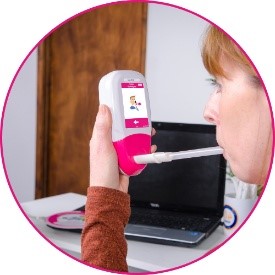
The NObreath® device enhances access to FeNO diagnostics in Mexico.

Bedfont® Scientific Limited, a world leader in breath analysis with nearly 50 years of expertise in the medical breath analysis industry, has formed a strategic partnership with Aerosol Medical Systems to improve Fractional exhaled Nitric Oxide (FeNO) testing accessibility in Latin America. Aerosol Medical Systems is an established leader in the field of respiratory therapy, providing a comprehensive service to improve quality of life.

We are committed to diagnosing and treating respiratory diseases and have completed, in collaboration with Bedfont®, the registration of the NObreath® device with the healthcare authorities in Mexico.” Comments Rodrigo León Molina, Director General and CEO at Aerosol Medical Systems. “The registration provides healthcare professionals with more accurate diagnostic tools and offers better treatment options for patients with asthma. This represents significant growth in the Mexican market, and will allow a larger number of tests to identify asthma early and better control the disease.”

In 2019, a report found that in Mexico, 1,655 people died from asthma1, highlighting the need for better asthma care across the region. The successful registration for the NObreath® FeNO device in Mexico is a vital step to improving the accessibility of innovative diagnostic and management tools for asthma care.

“Our mission has always been to provide cutting-edge medical devices at affordable prices to improve accessibility and healthcare standards worldwide.” Said Jason Smith, CEO at Bedfont®. “By collaborating with Aerosol Medical Systems, we’re helping clinicians across Mexico deliver faster, more personalised asthma care, empowering patients to live healthier lives.”

Working on a foundation of shared values, including providing exceptional service, this partnership aims to improve asthma care in Mexico by ensuring that those living with this respiratory condition have access to instant, non-invasive, and simple breath testing to aid diagnosis and management.

To learn more about the NObreath®, visit the website here.

References

1.Lopez-Bago A, Lascurain R, Hernandez-Carreño PE, Gallardo-Vera F, Argueta-Donohue J, Jimenez-Trejo F, et al. Sex, Age, and Regional Disparities in the Burden of Asthma in Mexico from 1990 to 2019: A Secondary Analysis of the Global Burden of Disease Study 2019. Sustainability [Internet]. 2023 Aug 20 [cited 2025 Oct 14];15(16):12599–9. Available from: https://www.mdpi.com/2071-1050/15/16/12599?

Research has shown that seven out of ten people with asthma report that cold air exacerbates their asthma symptoms1. As winter approaches quickly, it is essential to prepare for asthma management in advance. A vital tool in asthma management, as recommended by the National Institute for Health and Care Excellence (NICE), the British Thoracic Society (BTS), and the Scottish Intercollegiate Guidelines Network (SIGN), is Fractional exhaled Nitric Oxide (FeNO) testing2. In this blog, we will explore how FeNO testing can play a crucial role in asthma management this winter.

Winter challenges for asthma patients

During the winter months, the air temperature drops, and this can impact people living with asthma for various reasons:

  • Cold air causes the airways to narrow1.
  • Cold, dry air can irritate the airways, exacerbating symptoms1.
  • Cold air can weaken the immune system, making it easier to catch respiratory infections1.
  • Spending more time indoors during winter makes the spread of respiratory infections easier1.

Asthma + Lung UK found that hospital admissions for lung diseases, such as asthma, rose by 80% in December, January, and February, compared to Spring3. These figures highlight the significant impact that respiratory conditions, such as asthma, have on healthcare systems during the winter months. FeNO testing is a vital tool in improving the quality of life for asthma patients during the winter months.

What is FeNO testing?

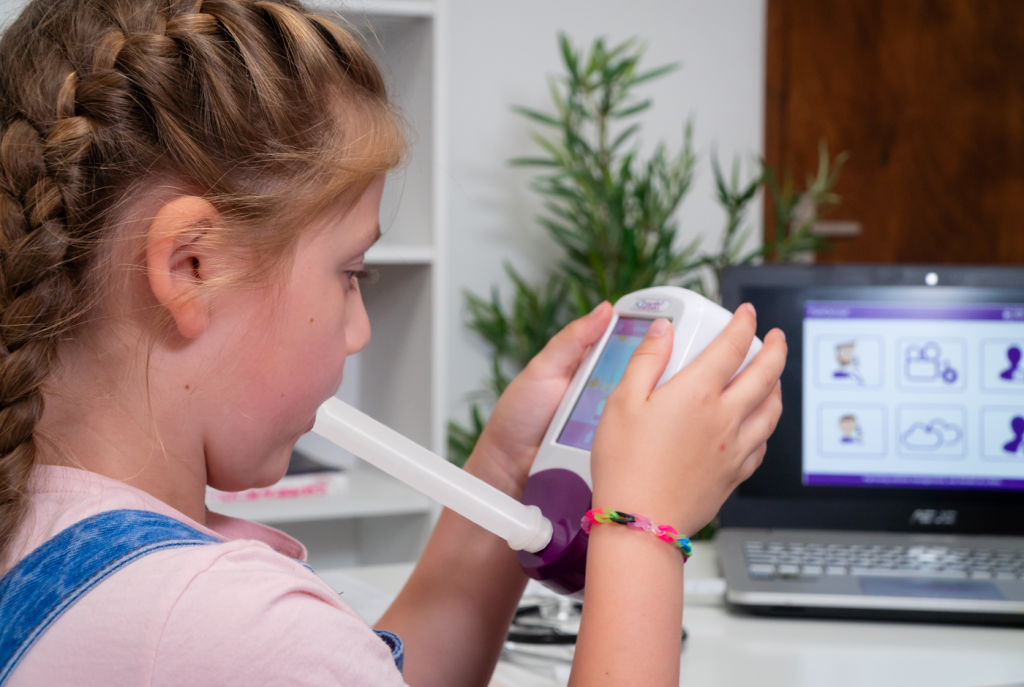
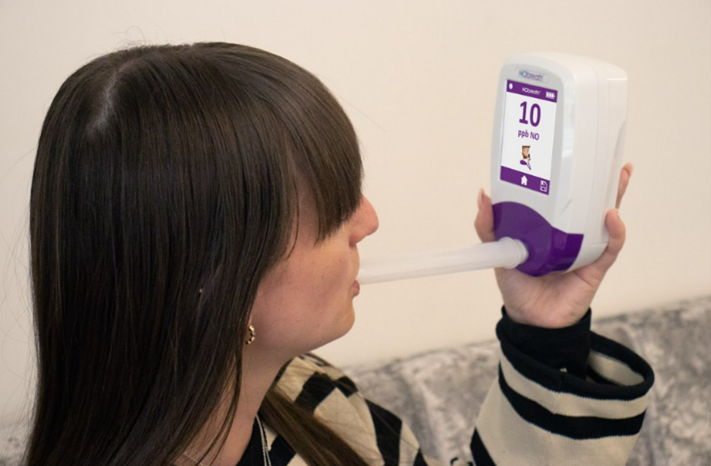
FeNO is a biomarker for eosinophilic airway inflammation, a condition commonly associated with asthma. When a person’s airways are inflamed, more Nitric Oxide (NO) is produced, and this can be measured in exhaled breath in parts per billion (ppb). Taking a FeNO test with a FeNO device like the NObreath® is a quick, easy, and non-invasive process. During the test, the patient takes a deep breath and then exhales into the NObreath®. An instant FeNO reading is displayed, allowing you to determine a person’s level of airway inflammation in as little as five minutes4.

FeNO testing with the NObreath®

The NObreath® is an innovative FeNO device, specifically designed for use in primary and secondary care settings. Fully portable, the NObreath® can be easily carried between consulting rooms, providing a quick and convenient solution for FeNO testing in busy settings. The device has an adult and child test mode, making it perfect for all ages.

Why is FeNO testing crucial before and during winter?

Providing a FeNO test at regular asthma reviews allows clinicians to proactively monitor a patient’s airway inflammation, allowing them to identify rising inflammation before symptoms spike. It also helps to provide personalised treatment plans and guide inhaled corticosteroid (ICS) titration, ultimately reducing exacerbations and unnecessary hospital visits.

The latest joint UK guidelines from NICE, BTS, and SIGN recommend FeNO as a first-line test for asthma diagnosis and a vital tool for asthma management2, making it clear that FeNO testing should be available throughout the country. With this in mind, regular asthma reviews are essential throughout the year, not just during the winter months. FeNO testing is the perfect way to establish a person’s airway inflammation, allowing healthcare professionals to personalise treatment plans and therefore improving quality of life for those with asthma.

For more information on FeNO testing with the NObreath®, visit the website here.

References

  1. Asthma and Lung UK. Cold Weather and Your Lungs | Asthma + Lung UK [Internet]. www.asthmaandlung.org.uk. 2023. Available from: https://www.asthmaandlung.org.uk/living-with/cold-weather
  2. ‌NICE. Overview | Asthma: diagnosis, monitoring and chronic asthma management (BTS, NICE, SIGN) | Guidance | NICE [Internet]. Nice.org.uk. NICE; 2024. Available from: https://www.nice.org.uk/guidance/NG245
  3. ‌Out in the cold: lung disease, the hidden driver of NHS winter pressure | Asthma + Lung UK [Internet]. www.asthmaandlung.org.uk. Available from: https://www.asthmaandlung.org.uk/out-cold-lung-disease-hidden-driver-nhs-winter-pressure
  4. Fractional Exhaled Nitric Oxide (FeNO) Test | North Bristol NHS Trust [Internet]. Nbt.nhs.uk. 2024 [cited 2025 Jun 23]. Available from: https://www.nbt.nhs.uk/our-services/a-z-services/respiratory-medicine/respiratory-patient-information/fractional-exhaled-nitric-oxide-feno-test

September sees the return to school for children after the summer holidays. While the return to routine is welcomed, it can be challenging for children with asthma. Research by Asthma + Lung UK found that in 2022/2023, there was a 348% rise in hospital admissions in 5-14-year-olds with an asthma attack in September compared to the previous month1. This staggering rise highlights the importance of helping parents or guardians manage their child’s asthma effectively as the school year begins.

Understanding the September asthma epidemic1

Many factors can contribute to the increase in asthma flare-ups when children return to school, including:

  • Interrupted medication routines throughout the summer holidays,
  • Exposure to triggers on the return to school,
  • Emotional stress experienced when starting a new school or school year.

With this in mind, parents or guardians must be well educated and prepared for the return to school.

How can parents or guardians prepare?

Various steps can be taken to ensure the return to school runs smoothly with minimal impact on a child’s asthma symptoms.

Arrange a pre-school check-up

Asthma reviews are essential for well-controlled asthma. Arranging a pre-school check-up provides a good opportunity to:

  • Assess how well your child’s asthma is controlled,
  • Review medication,
  • Check inhaler technique.

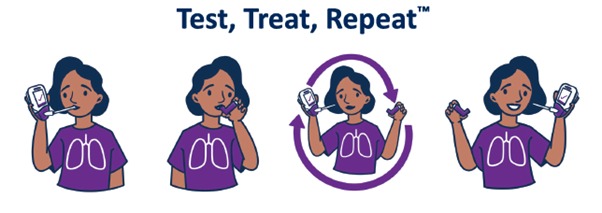
During the review, consider asking about Fractional exhaled Nitric Oxide (FeNO) testing. FeNO is a non-invasive test that measures airway inflammation in the lungs, which is often found in asthma. It can help confirm an asthma diagnosis if there is uncertainty, determine how well inhaled corticosteroids work, and guide adjustments in treatment2.

A FeNO test can be helpful if your child’s symptoms are inconsistent or you are unsure whether their asthma is fully under control heading into the school year.

FeNO testing with the NObreath® FeNO device

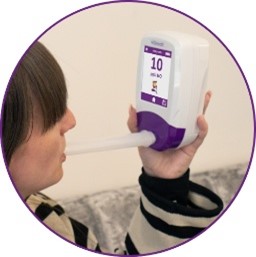
The NObreath® is a portable, non-invasive FeNO testing device designed to aid in asthma diagnosis and management. Carrying out a FeNO test with the NObreath® is quick and easy, making it the perfect choice for asthma care and management in children. The latest joint guidelines from the British Thoracic Society (BTS), National Institute for Health and Care Excellence (NICE), and the Scottish Intercollegiate Guidelines Network (SIGN) recommend a FeNO test as the first-line test for asthma diagnosis in children3.

Understand your child’s asthma triggers

Triggers differ from person to person; one thing that might set symptoms off in one person may not cause symptoms in another, so it is essential to understand what triggers your child’s asthma. Common school-related triggers could include4:

  • Dust,
  • Pollen,
  • Cold air,
  • Physical activity,
  • Stress,
  • Classroom pets.

If you know your child’s triggers, it would be a good idea to communicate with the school staff to ensure they are aware, so triggers can be avoided if possible.

Communicate with the school

We briefly touched on communication with the school regarding triggers. However, it is important that the staff are aware of your child’s asthma, triggers and medication. When preparing your child’s medication and supplies, it is a good idea to label everything correctly and ensure the school is aware so inhalers can be stored safely at school. You should also ask about the school’s medication use and self-administration policy.

Teach self-management skills

Education is key, so the more your child knows about asthma and treatment, the better. They must know how to recognise their symptoms and how to use their inhaler correctly. Providing the correct age-appropriate education empowers your child to recognise worsening symptoms and when to ask for help.

Going back to school can be challenging for children and parents or guardians. However, asthma doesn’t need to impact this transition. The back-to-school process should run smoothly with the correct education, treatment, and preparation. We should also recognise that while starting a new school year can cause an exacerbation in asthma symptoms, it is important to remain vigilant throughout the year, ensuring your child’s asthma is well-controlled.

For more information on FeNO testing with NObreath® and its integral role in the asthma pathway, visit the website here.

References

  1. Number of children in hospital with life-threatening asthma attacks could quadruple as they return to school [Internet]. Asthma + Lung UK. 2024. Available from: https://www.asthmaandlung.org.uk/media/press-releases/number-children-hospital-life-threatening-asthma-attacks-could-quadruple-they
  2. NHS England. NHS Accelerated Access Collaborative» Fractional Exhaled Nitric Oxide (FeNO) [Internet]. www.england.nhs.uk. Available from: https://www.england.nhs.uk/aac/what-we-do/innovation-for-healthcare-inequalities-programme/rapid-uptake-products/fractional-exhaled-nitric-oxide/
  3. NICE. Overview | Asthma: diagnosis, monitoring and chronic asthma management (BTS, NICE, SIGN) | Guidance | NICE [Internet]. Nice.org.uk. NICE; 2024. Available from: https://www.nice.org.uk/guidance/NG245
  4. Asthma at school and nursery | Asthma + Lung UK [Internet]. www.asthmaandlung.org.uk. 2024. Available from: https://www.asthmaandlung.org.uk/conditions/asthma/child/life/school

Fractional exhaled Nitric Oxide (FeNO) is extensively utilised in both primary and secondary care settings worldwide. Many regions recommend FeNO-guided management as part of their clinical protocols. This article reviews FeNO-related guidelines in the UK and internationally, with a focus on comparing approaches across different regions.

Guidelines

NICE, BTS, and SIGN guidelines1:

The latest and most significant updates to UK guidelines were in November 2024, when the National Institute for Health and Care Excellence (NICE), the British Thoracic Society (BTS), and the Scottish Intercollegiate Guidelines Network (SIGN) updated and published a joint guideline on asthma diagnosis, monitoring, and chronic asthma management. Before this, NICE, BTS, and SIGN published their guidelines independently, the newly published guidelines bring harmonisation across the board. This review brings significant changes to asthma care approaches, including applying FeNO testing- an objective airway inflammation test for aiding in asthma diagnosis and management.

The guideline can be read here.

ERS guidelines2:

In 2022, the European Respiratory Society (ERS) updated its guidelines for the diagnosis of asthma in adults. In patients suspected of asthma, in whom the diagnosis is not established based on the initial spirometry combined with bronchodilator reversibility testing, ERS suggest measuring FeNO as part of the diagnostic work-up of adults aged > 18 years old with suspected asthma (conditional recommendation for the intervention, moderate quality of evidence).

The guideline can be read here.

DGP guidelines3:

The German Respiratory Society (The Deutsche Gesellschaft für Pneumologie und Beatmungsmedizin, DGP) is the largest and oldest medical professional organisation for respiratory disorders. The latest guidelines on asthma, published in 2023, titled ‘S2K guidelines for specialist diagnosis and therapy of asthma’. FeNO is described as an indispensable component of specialist asthma diagnostics.

The guideline can be read here.

ATS guidelines4,5:

In 2011, the American Thoracic Society (ATS) developed guidance on the interpretation of FeNO testing in adults and children (up to 12 years old). The latest update to the American Thoracic Society (ATS) regarding FeNO to guide the treatment of asthma was in 2021. The update includes FeNO testing being strongly recommended to manage asthma in patients, in addition to usual care.

The American College of Allergy, Asthma and Immunology (ACAAI) and the American Academy of Allergy, Asthma and Immunology (AAAAI), published a joint statement in 2012 in response to the ATS guidelines “The American College of Allergy, Asthma and Immunology and the American Academy of Allergy, Asthma and Immunology formally recognize and support the 2011 ATS Clinical Practice Guideline on the Interpretation of Exhaled Nitric Oxide for Clinical Applications.”6.

 The guideline can be read here and here.

GINA guidelines7,8:

The Global Initiative for Asthma (GINA) works with healthcare professionals, patient representatives, and public health officials around the world to reduce asthma prevalence, morbidity, and mortality. GINA’s guidelines, which were updated in 2024, recognise FeNO as a useful biomarker for aiding in asthma diagnosis and management. The guideline provides ppb recommendations for diagnosis; however, for children, GINA does not specify exact cutoffs but acknowledges its role in guiding treatment.

The guideline can be read here and here.

Reimbursement for FeNO:

Each country has different policies regarding reimbursement for FeNO testing. In England, practices strive to accomplish maximal Quality and Outcomes Framework (QoF)9 points to maintain practice income and fund expenses such as the purchase and maintenance of equipment, for example, FeNO devices. Currently, the QoF requirement for diagnosis of asthma is spirometry and one other test, such as FeNO, bronchodilator reversibility or measures of variability. With the change in the BTS/SIGN/NICE guideline, this will change in line with the guideline recommendations, with the requirement that practices perform at least one objective test that indicates asthma. In adults initially, this could be FeNO or blood eosinophils; in children, the initial test must be FeNO.

Across Europe, reimbursement policies vary widely, depending on national health guidelines. In Germany, FeNO testing is endorsed in the national asthma guidelines; however, FeNO is not reimbursed by Statutory Health Insurance (SHI) in primary care settings. In North America, Medicare and Medicare Advantage plans provide reimbursement for FeNO testing if the test is deemed medically necessary by your healthcare professional10.

Why guidelines matter:

The use of asthma diagnosis and management guidelines in the application of FeNO is essential globally, to ensure standardised, evidence-based asthma management, tailored to varying healthcare infrastructures and patient demographics. These guidelines empower healthcare professionals to make informed decisions, enhancing the accuracy of asthma diagnosis and treatment. Established guidelines fosters consistency in care, contributing to sustainable healthcare costs, reducing misdiagnosis, and ultimately improving patient outcomes. It’s worth noting that besides the countries listed in this article, numerous others also have national guidelines, including Japan, Italy, China, France, Mexico, Spain, Malaysia, Australia, and many more!

Key Takeaways

NICE, BTS, SIGN guidelines1:

Diagnosis:

  • For adults, asthma can be diagnosed if FeNO levels are ≥ 50 ppb or higher, an increase from the previous NICE guideline’s 40 ppb or higher threshold.
  • For children, asthma can be diagnosed if FeNO levels are ≥ 35 ppb or higher. This has remained the same as the previous NICE guidelines.
  • FeNO testing is recommended as first-line testing in asthma diagnosis for adults and children.
  • If the first test is diagnostic, further diagnostic testing is not required.

Management:

  • FeNO testing has been acknowledged as a tool in asthma management.
  • It aids to inform healthcare professionals when changing or adjusting asthma therapy.
  • Recommend FeNO use for asthma monitoring in adults.

ERS guidelines2:

Diagnosis:

  • A cut-off of 40 ppb offers the best compromise between sensitivity and specificity while a cut-off of 50 ppb has a high specificity of > 90% and is therefore supportive of asthma diagnosis.
  • A FeNO value < 40 ppb does not rule out asthma, and similarly, high FeNO levels themselves do not define asthma.

Management:

  • Measure FeNO as part of the diagnostic work-up of adults aged 18 years with suspected asthma (conditional recommendation for the test, moderate quality of evidence).

DGP guidelines3:

Diagnosis:

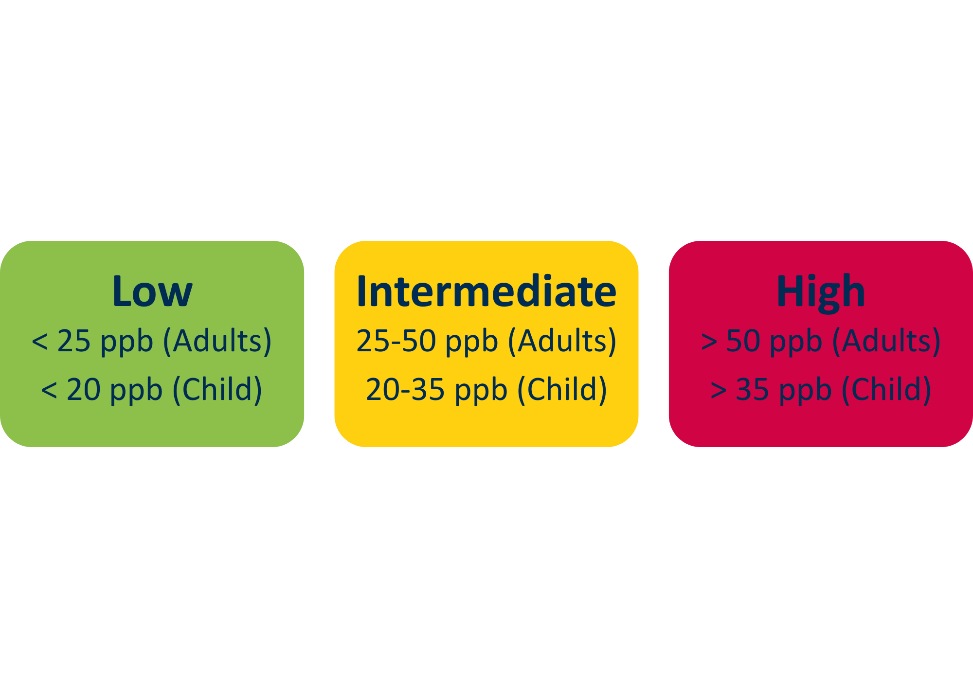
  • Low FeNO levels < 25 ppb (< 20 ppb in children) can be used to indicate that eosinophilic inflammation and responsiveness to corticosteroids are less likely.
  • High FeNO levels > 50 ppb (> 35 ppb in children) can be used to indicate that eosinophilic inflammation and, in symptomatic patients, responsiveness to corticosteroids are likely.

Management:

  • Patients with elevated FeNO levels are usually ICS-responsive. Elevated FeNO levels (especially FeNO levels > 50 ppb) during ICS therapy, despite clinical stability, argue against reducing the ICS dose.
  • In children and adolescents, regularly monitored FeNO proved to be a meaningful parameter to predict asthma relapse after planned ICS discontinuation, even before the onset of clinical symptoms.

ATS guidelines4,5:

Diagnosis:

  • Low FeNO levels < 25 ppb (< 20 ppb in children) can be used to indicate that eosinophilic inflammation and responsiveness to corticosteroids are less likely.
  • Intermediate FeNO values between 25 ppb and 50 ppb (20 ppb and 35 ppb in children) should be interpreted cautiously and with reference to the clinical context.
  • High FeNO levels > 50 ppb (> 35 ppb in children) can be used to indicate that eosinophilic inflammation and, in symptomatic patients, responsiveness to corticosteroids are likely.

Management:

  • FeNO is beneficial and should be used in addition to usual care.
  • Recommend the use of FeNO in monitoring airway inflammation in patients with asthma.

GINA guidelines7,8:

Diagnosis:

  • High FeNO levels > 50 ppb in non-smokers are moderately associated with eosinophilic airway inflammation.
  • FeNO levels above ≥ 20 ppb in adults with who have difficult-to-treat or severe asthma support the presence of type 2 airway inflammation.

Management:

  • Measure FeNO as an adjunct to diagnostic evaluation in individuals with suspected asthma and to monitor airway inflammation.

FeNO testing with the NObreath®:

Regular FeNO measurements indicate levels of airway inflammation, which can help healthcare professionals personalise treatment plans for patients by helping titrate ICS dosing and evaluate patient adherence to treatment.

For over 48 years, Bedfont® Scientific Limited has specialised in designing and manufacturing breath analysis medical devices. Using innovative technology, we provide cutting-edge medical devices at affordable prices to improve accessibility and healthcare standards worldwide. Bedfont® manufactures the NObreath® FeNO device, a non-invasive breath testing device which can be used to measure airway inflammation for the diagnosis and management of asthma.

For more information on the NObreath® and FeNO testing, visit the NObreath® website.

References:

  1. Asthma pathway (BTS, NICE, SIGN) [Internet]. National Institute for Health and Care Excellence. 2024. [Cited Friday 17th January 2025]. Available from: https://www.nice.org.uk/guidance/ng244
  2. Louis R, Satia I, Ojanguren I, Schleich F, Bonini M, Tonia T, Rigau D, Ten Brinke A, Buhl R, Loukides S, Kocks JW. European Respiratory Society guidelines for the diagnosis of asthma in adults. European Respiratory Journal. 2022 Sep 1;60(3). DOI: 10.1183/13993003.01585-202.
  3. Lommatzsch M, Criée CP, de Jong CC, Gappa M, Geßner C, Gerstlauer M, Hämäläinen N, Haidl P, Hamelmann E, Horak F, Idzko M. Diagnosis and treatment of asthma: a guideline for respiratory specialists 2023-published by the German Respiratory Society (DGP) e. V. Pneumologie (Stuttgart, Germany). 2023 Jul 5. DOI: 10.1055/a-2070-2135.
  4. Dweik RA, Boggs PB, Erzurum SC, Irvin CG, Leigh MW, Lundberg JO, Olin AC, Plummer AL, Taylor DR, American Thoracic Society Committee on Interpretation of Exhaled Nitric Oxide Levels (FENO) for Clinical Applications. An official ATS clinical practice guideline: interpretation of exhaled nitric oxide levels (FENO) for clinical applications. American journal of respiratory and critical care medicine. 2011 Sep 1;184(5):602-15. PMCID: PMC4408724 PMID: 21885636.
  5. Khatri SB, Iaccarino JM, Barochia A, Soghier I, Akuthota P, Brady A, Covar RA, Debley JS, Diamant Z, Fitzpatrick AM, Kaminsky DA. Use of fractional exhaled nitric oxide to guide the treatment of asthma: an official American Thoracic Society clinical practice guideline. American journal of respiratory and critical care medicine. 2021 Nov 15;204(10):e97-109. PMCID: PMC8759314 PMID: 34779751.
  6. Zitt M, Oppenheimer J, Bernstein D, Boggs P, Dinakar C, Jain N, Katial N, Sands M, Szefler S. AAAAI/ACAAI joint statement of support of the ATS clinical practice guideline: interpretation of exhaled nitric oxide for clinical applications. 2012 [Internet]. 2014.
  7. Global strategy for asthma management and prevention [Internet]. Global Initiative for Asthma. 2024. [Cited Friday 17th January 2025]. Available from: https://ginasthma.org/2024-report/
  8. Murugesan N, Saxena D, Dileep A, Adrish M, Hanania NA. Update on the role of FeNO in asthma management. Diagnostics. 2023 Apr 15;13(8):1428. DOI: 10.3390/diagnostics13081428.
  9. NHS England [Internet]. Quality and outcomes framework guidance for 24/25. 2024. [Cited 22nd April 2025]. Available from https://www.england.nhs.uk/publication/quality-and-outcomes-framework-guidance-for-2024-25/
  10. Healthline [Internet]. What you need to know abut FeNO testing for asthma. 2024. [Cited 22nd April 2025]. Available from: https://www.healthline.com/health/asthma/feno-test-asthma?c=1285499318383#takeaway
NObreath® FeNO device and Gastrolyzer® range of devices are now available across the Middle East.

Bedfont® Scientific Limited, a world leader in breath analysis with over 47 years of knowledge and expertise in designing and manufacturing medical breath analysis devices, has partnered with Tebaba Medical Services, a leading supplier of high-quality medical supplies for healthcare providers across Africa and the Middle East. The successful registration in October means Tebaba will distribute Bedfont’s cutting-edge technology to healthcare professionals in the region, aiding in diagnosing and managing respiratory and gastrointestinal conditions.

The NObreath® Fractional exhaled Nitric Oxide (FeNO) device is used to aid in the diagnosis and management of asthma by measuring the nitric oxide levels on exhaled breath. High levels of nitric oxide indicate airway inflammation, common in allergic asthma.

The Gastrolyzer® range of devices, comprising of the Gastro+™ which measures the amount of hydrogen and the GastroCH4ECK® which measures the amount of hydrogen and methane in the breath, which can indicate gastrointestinal (GI) disorders such as small intestinal bacterial overgrowth (SIBO) and carbohydrate malabsorption.

Tebaba Medical Services, a well-established leader in the Middle Eastern healthcare market, was selected as a distributor for its strong alignment with Bedfont’s core values. With a commitment to delivering high-quality medical devices and exceptional customer service, Tebaba Medical Services brings extensive regional expertise to this partnership. By working together, Bedfont® and Tebaba are advancing the availability of cutting-edge breath analysis technology across the Middle East.

Jason Smith, CEO at Bedfont®, comments, “We are excited about the registration, which will allow our cutting-edge technology to transform the impact on respiratory and gastrointestinal health across the Middle East, marking an important step in our vision where everyone has access to instant, non-invasive, simple breath testing to aid in medical diagnosis.”

The first shipment was delivered in November, marking the beginning of Bedfont’s long-term commitment to supporting healthcare providers in the region with reliable, innovative technology and paving the way for enhanced patient care.

For more information on Bedfont® breath analysis devices, please visit our website by clicking here.

On Wednesday, 27th November, the National Institute for Health and Care Excellence (NICE), the British Thoracic Society (BTS), and the Scottish Intercollegiate Guidelines Network (SIGN) updated and published a joint guideline on asthma diagnosis, monitoring, and chronic asthma management. 

Streamlining asthma management

BTS/SIGN and NICE published guidelines independent of each other. To align approaches to asthma care throughout the UK, NICE has undertaken a joint review with BTS and SIGN to bring harmonisation across the board. This review brings significant changes to asthma care approaches, including applying fractional exhaled nitric oxide (FeNO) testing- an objective airway inflammation test for aiding in asthma diagnosis and management.

Previously, NICE, BTS and SIGN recommended the following:NICE:

  • FeNO testing was recommended for use in adults and children during asthma diagnosis.
  • FeNO levels, should be measured in conjunction with other diagnostic tests (e.g., spirometry).
  • For adults: A FeNO level of 40 parts per billion (ppb) or more was regarded as a positive test.
  • For children and young people (5–16 years): A FeNO level of 35 ppb or more was regarded as a positive test.

BTS and SIGN:

  • FeNO testing can support asthma diagnosis, particularly when the diagnosis is uncertain or symptoms suggest eosinophilic inflammation in adults and children.
  • FeNO levels, should be measured in conjunction with other diagnostic tests (e.g., spirometry).
  • For adults: A FeNO level of 40 ppb or more was regarded as a positive test.
  • For children and young people (5–16 years): A FeNO level of 35 ppb or more was regarded as a positive test.

What is new? NICE/BTS/SIGN guideline on asthma: diagnosis, monitoring and chronic asthma management

Asthma diagnosis (adults):

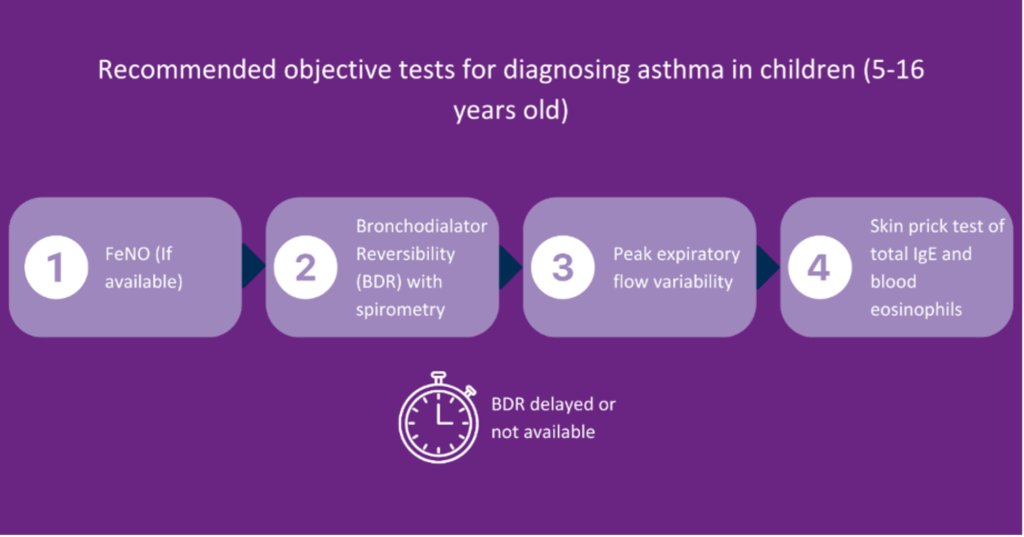
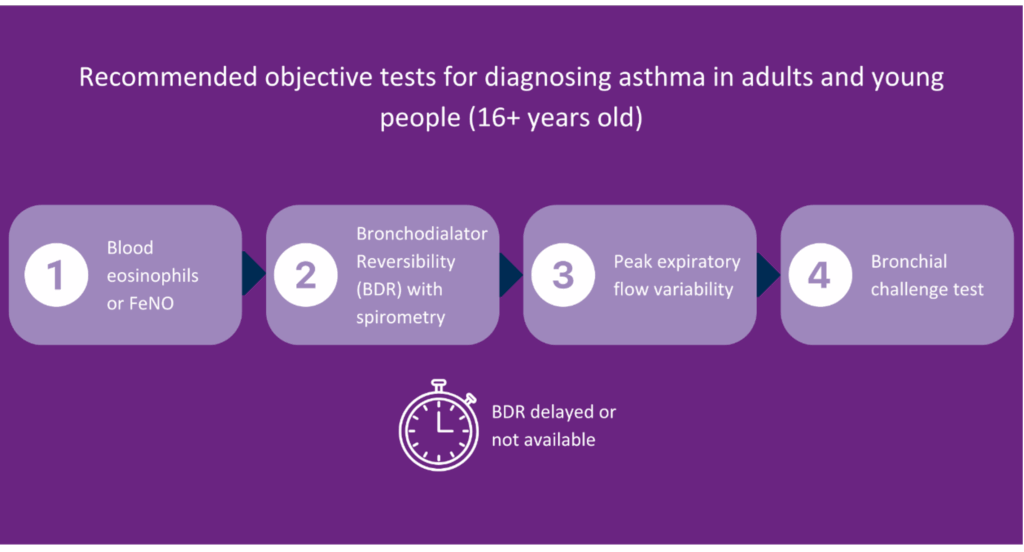
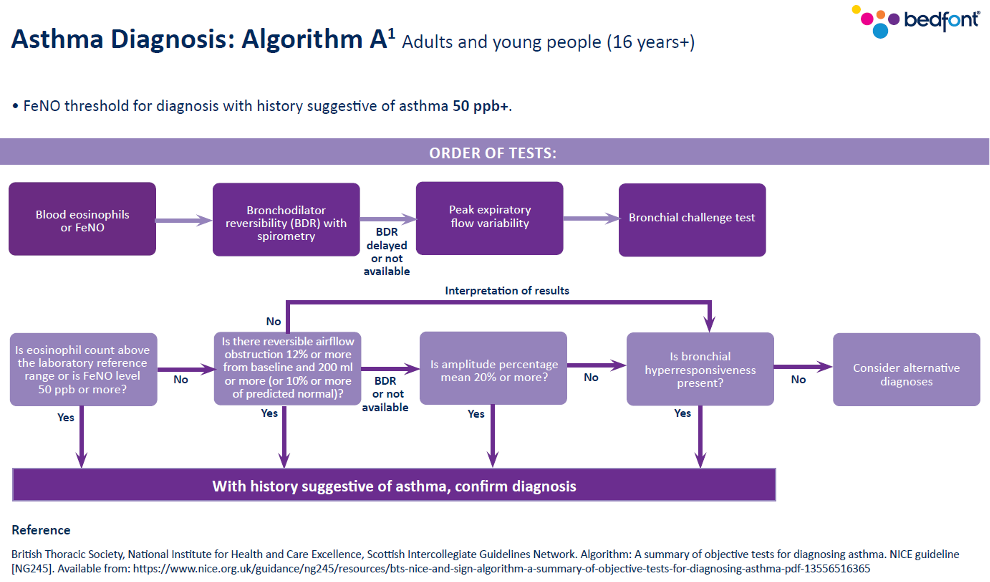
The new NICE/BTS/SIGN guidelines recommend that adults with symptoms and a history suggestive of asthma undergo blood eosinophil count or FeNO testing as initial diagnostic steps. Asthma can be diagnosed if the blood eosinophil count exceeds the laboratory reference range or if FeNO levels are 50 ppb or higher. If these initial tests are inconclusive, bronchodilator reversibility (BDR) testing with spirometry is advised. When asthma remains clinically suspected despite inconclusive results from blood eosinophil count or FeNO, BDR, or peak expiratory flow (PEF) measurements, a referral for a bronchial challenge test is recommended to confirm the diagnosis if bronchial hyper-responsiveness is detected.

Asthma diagnosis (children and young people aged 5-16):

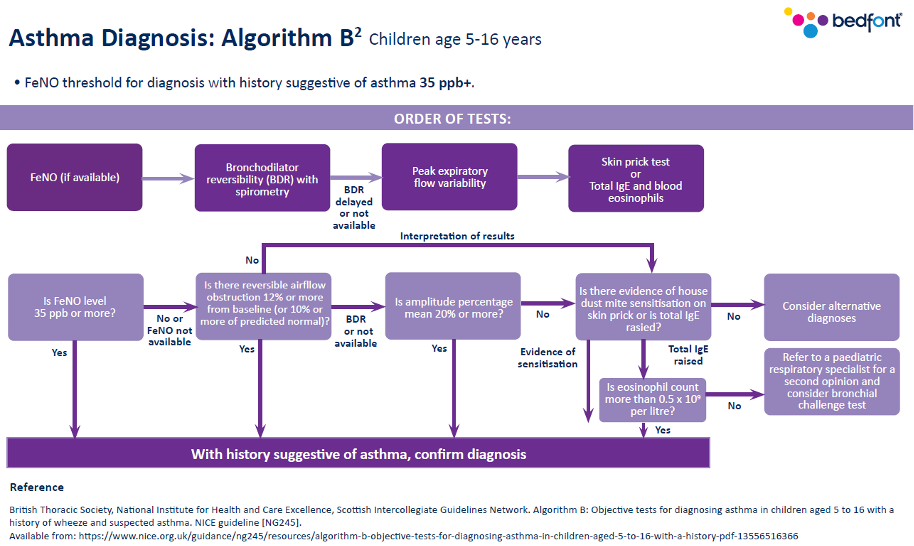
For children with symptoms suggestive of asthma, the new NICE/BTS/SIGN guidelines recommend measuring FeNO levels as a first-line diagnostic test, provided it is available. Asthma can be diagnosed if FeNO levels are 35 ppb or higher. A NICE literature review highlighted the higher specificity of FeNO testing in children, further reinforcing its use as a first-line option for both children and adults.

Asthma management (adults):

FeNO testing provides a significant advantage to health care professionals when monitoring asthma patients, including assessment of response to newly prescribed asthma therapies and regular review of adherence to medications. FeNO monitoring applications have been acknowledged globally in other well-recognised clinical guidelines, including the American Thoracic Society (ATS) and the Global Initiative for Asthma (GINA). Not acknowledged in previous asthma clinical guidelines by NICE or BTS/SIGN, a recommendation has been made to include FeNO evaluations as part of regular yearly asthma reviews in adults, alongside reviewing before and after any changes to patients’ asthma therapy.

Economic Evaluation of asthma care

Cost of exacerbations to the NHS:

NICE calculated that on average a mild to moderate exacerbation cost the NHS on average £42 per patient. This includes a GP visit (£38) and a salbutamol metered-dose inhaler (MDI) with a spacer (£4).

For severe exacerbations, the average estimated cost was thought to increase to £102 per patient. This includes 80% of patients requiring systemic glucocorticoid steroids (adults £1.88 and children £0.60), 13% of patients visiting A&E (£113), and 7% of patients needing hospitalisation (adults £1,181 and children £1,223).

FeNO cost analysis:

NICE conducted an economic evaluation of FeNO testing, factoring in the volume of tests performed on average across the UK. On average, taking into account the resource allocation of staff time and the cost of a FeNO test, an average total cost to the NHS would be £22.21 per patient. Among the eight diagnostic tests evaluated during NICE’s review, FeNO ranked as the third most cost-effective after adult blood eosinophil count and children’s blood eosinophil count.

NICE also highlighted the potential economic advantage of performing multiple tests during the same appointment, which could save time and reduce overall costs. The most cost-effective combination was spirometry and FeNO with a total cost of £34.29, followed by BDR and FeNO (£50.52) and skin prick test and FeNO, which ranked fourth most cost-effective (£50.66). These findings suggest strategic test combinations could optimise economic and clinical outcomes.

Carol Stonham, a member of Bedfont® Scientific Limited Medical Advisory Board and policy lead for Policy Care Respiratory Society (PCRS), comments “The new NICE/BTS/SIGN asthma guidelines introduce a positive step change in the diagnosis and management of asthma for adults and children. For diagnosis the necessity to perform numerous diagnostic tests has been reduced if initial testing confirms asthma, based on the evidence and cost effectiveness. In management the step away from using short acting bronchodilators to anti-inflammatory (AIR) and Maintenance and Reliever Therapy (MART) regimes should see better asthma control, less people with symptoms, and a reduction in asthma mortality.”

FeNO testing in asthma: Key takeaways from NICE guidelines

Diagnosis:

  • For adults, asthma can be diagnosed if FeNO levels are 50 ppb or higher, an increase from the previous NICE guideline’s 40 ppb or higher threshold.
  • For children, asthma can be diagnosed if FeNO levels are 35 ppb or higher. This has remained the same as the previous NICE guidelines.
  • FeNO testing recommended first-line testing in asthma diagnosis for adults and children.
  • If the first test is diagnostic further diagnostic testing is not required.

Management:

  • FeNO testing has been acknowledged as a tool in asthma management.
  • Aids to inform healthcare professionals when changing or adjusting asthma therapy.
  • Recommending FeNO use for asthma monitoring in adults.

Costs:

NICE’s economic evaluation revealed the average FeNO test to be on average £22.21, this includes an average consumable cost of £6.37. The NObreath® device, manufactured by Bedfont® Scientific Limited prides itself on being one of the most cost-effective products on the market. On average, NObreath® consumables (£3.70 per mouthpiece) are 42%* less than the FeNO testing consumables pricing highlighted in the NICE economic evaluation (£6.37), making the overall cost for FeNO testing 12%* less than what has originally been highlighted in the NICE economic evaluation, ensuring fair and accessible pricing for both primary and secondary care alike.  

To read the full NICE guidelines, please visit: https://www.nice.org.uk/guidance/ng244

*Based on UK pricing.

References:

  • Asthma pathway (BTS, NICE, SIGN) [Internet]. National Institute for Health and Care Excellence. 2024. [Cited Wednesday 27th November 2024]. Available from: https://www.nice.org.uk/guidance/ng244

Bedfont® outlines key updates and offers support for healthcare professionals navigating the changes.

Bedfont® Scientific Ltd., world leaders in breath analysis with over 47 years of knowledge in designing and manufacturing medical breath analysis devices, welcomes the recent update to the National Institute for Health and Care Excellence (NICE) guidelines on asthma management.

Bedfont® manufactures the NObreath® Fractional exhaled Nitric Oxide (FeNO) device, which aids in diagnosing and managing asthma. Nitric oxide is a gas found in exhaled breath that indicates airway inflammation commonly found in eosinophilic asthma.

The previous guidelines for asthma management from NICE recommended FeNO testing alongside other objective tests, such as spirometry and peak flow. A FeNO reading of over 40 parts per billion (ppb) in adults and 35 ppb in children suggested a diagnosis of asthma if carried out with a positive spirometry or peak flow result.

So, what’s new? NICE released the most recent asthma guidelines on Wednesday 27th of November, which recommends a blood test to measure eosinophil levels, or a FeNO test to diagnose asthma in adults. A FeNO test is recommended as the first-line test for an asthma diagnosis in children. Confirmation of a positive asthma diagnosis is a FeNO level exceeding 50 ppb in adults and 35 ppb in children.

It is also proposed that FeNO tests should be offered at regular adult asthma reviews for monitoring, including before and after changing asthma medication. A FeNO test should also be undertaken if a patient presents with poorly controlled asthma.

Jason Smith, CEO at Bedfont® comments “We welcome the updated NICE guidelines, which provide even greater clarity and emphasis on the role of FeNO testing in asthma care. These updates underscore the importance of

FeNO testing as an essential tool in improving diagnostic accuracy and tailoring treatment plans to individual patient needs. At Bedfont® we are proud to support healthcare professionals with our innovative NObreath® FeNO testing device that aligns with the latest clinical guidance, ultimately helping to deliver better outcomes for people with asthma.”

In light of the changes to asthma care and management recommendations, Bedfont® will host various educational resources, such as webinars and articles, to discuss these changes and what they mean for healthcare professionals carrying out FeNO tests.

For a more in-depth look at the guideline updates, read our latest article here: https://www.bedfont.com/new-nice-guidelines-for-asthma-feno-testing-and-the-nobreath-device-in-adult-and-paediatric-care/

References

Asthma pathway (BTS, NICE, SIGN) [Internet]. National Institute for Health and Care Excellence. 2024. [Cited Wednesday 27th November 2024]. Available from: https://www.nice.org.uk/guidance/ng244

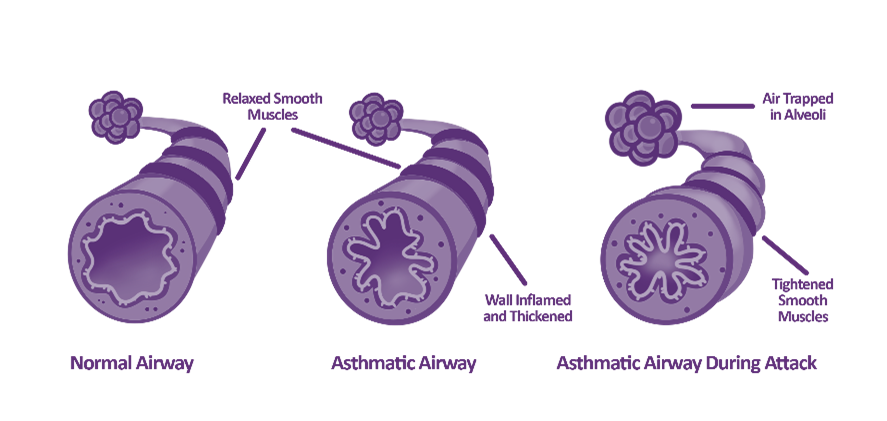
Love Your Lungs Week is a national awareness event which occurs annually in June, taking place from 21st June to 27th June 2024. Initiated by the British Lung Foundation, now known as Asthma and Lung UK, the event focuses on enhancing lung health and looks to raise awareness of a variety of respiratory conditions that affect lung health. One of these conditions is asthma, which is a chronic condition where the airways become inflamed and narrowed, making breathing difficult.

Symptoms of asthma include:

  • Coughing
  • Wheezing
  • Chest tightness
  • Shortness of breath

What causes asthma?

It is thought that asthma is caused by a combination of genetic and environmental factors; when exposed to various irritants and substances, it can trigger asthma symptoms. There are 2 types of asthma; allergy-induced asthma and non-allergy induced asthma. Both types can have different triggers and these can vary from person to person.

Allergy-induced asthma is the most common form and can be triggered by inhaling allergens. This
can lead to an immune response in the airways which causes the symptoms of asthma. Common
allergens include:

  • Pollen: From trees, grass and weeds.
  • Dust Mites: Tiny creatures that thrive in household dust.
  • Pet Fur: Shed by cats, dogs and other furry pets.
  • Mould: Fungai that can grow indoors or outdoors in moist environments.

If these allergens are inhaled by someone with allergy-induced asthma, an allergic reaction can take place that causes the airways to swell, narrow and produce excess mucus.

Non-allergy induced asthma does not depend on an allergic reaction and is often triggered by factors not relating to allergies.

These can include:

  • Respiratory Infections: Such as the common cold or influenza.
  • Exercise: Especially in cold or dry air.
  • Stress and Emotions: Intense emotions can lead to hyperventilation and tightness in the chest.
  • Airborne Irritants: Such as smoke, chemical fumes, strong odours, or pollutants.

These triggers can cause the airways to swell and narrow but do not involve an allergic response. Instead, they may involve different inflammatory responses or hypersensitivity of the airways.

What impact does asthma have?

Asthma can have a significant impact on people’s lives, affecting their physical health, mental well- being and quality of life. The condition imposes lifestyle limitations, with sufferers often avoiding activities that might trigger symptoms, along with the economic burden from continuous medical care and loss of productivity due to absences from work or school.

Unfortunately, asthma-related emergency admissions remain high at over 35,000 in both adults and
children in the UK1, and with 1,261 people sadly passing away in 20201, it is clear more needs to be
done to avoid these numbers increasing.

What about FeNO testing?

Fractional Exhaled Nitric Oxide (FeNO) is found in exhaled breath and can aid in the diagnosis and treatment of asthma. FeNO is naturally produced in the lungs through a complex biological process. The measurement of FeNO helps assess the level of inflammation in the lungs, aiding in the diagnosis and treatment of asthma. Using a FeNO device like the NObreath® is a quick and easy, non-invasive way to read a person’s FeNO level. FeNO testing is especially useful for managing asthma in patients who are known to have allergic triggers, as it specifically measures the type of inflammation most commonly associated with allergic asthma.

How does FeNO fit into asthma management?

  • Diagnosis: FeNO testing can help in diagnosing asthma in cases where typical diagnostic tests (like spirometry) might not be conclusive. Elevated FeNO levels can suggest eosinophilic inflammation, which is a common underlying cause in many asthma patients.
  • Monitoring: For ongoing asthma management, FeNO levels can provide insight into how well inflammation is being controlled through medication, particularly inhaled corticosteroids.
  • Monitoring FeNO can help in adjusting medications more precisely to reduce inflammation.
  • Predicting Exacerbations: High FeNO levels can indicate poorly controlled asthma and predict potential exacerbations. This can be particularly useful in managing patients who have periodic flare-ups, allowing for preventive adjustments in treatment.
  • Assessing Treatment Response: Regular FeNO testing can assess the effectiveness of current asthma treatment regimens. If FeNO levels remain high despite treatment, it might suggest the need for alternative therapies or more aggressive management.

With World Asthma Day just a little over a month ago now, this years theme “Asthma Education Empowers” aimed to highlight the importance of education in asthma diagnosis and treatment. It is clear that the innovative approaches to its management, including FeNO testing, have never been more essential.

Bedfont® Scientific Limited, are world leaders in breath analysis, with over 47 years of expertise and knowledge in designing and manufacturing breath analysis devices. They are committed to improving patient safety through innovating breath analysis devices, such as the NObreath®. The device is a portable handheld FeNO device, used by healthcare professionals to aid in the diagnosis and treatment of asthma.

Bedfont® hosted an insightful webinar which looked in depth at how FeNO testing can empower and educate healthcare professionals alike. To read the Bedfont® blog article on this subject, and to watch the webinar, please click here.

1. Public health profiles. Office for Health Improvement & Disparities. [cited on 7/5/24] Available from
https://fingertips.phe.org.uk/search/asthma

A history of Fractional exhaled Nitric Oxide (FeNO) testing: where it all began

The story of FeNO began in the 1990s after it gained a lot of interest from researchers in the potential it posed as a non-invasive biomarker for airway inflammation. When airways are inflamed, Nitric Oxide (NO) is naturally produced by your body to help combat inflammation. This production of NO was observed by researchers to be significantly higher in patients with asthma. Researchers initially used a technology called ‘chemiluminescence’, to undertake research into FeNO and asthma. Over time, as FeNO testing evolved, so did available technologies on the market, and FeNO testing with electrochemical sensors was introduced as a more robust and cost-effective solution.

Chemiluminescence vs electrochemical FeNO technology: why electrochemical sensor technology is now considered ‘gold standard

Both chemiluminescence and electrochemical sensor technology is adopted as a means of measuring and quantifying levels of nitric oxide in exhaled breath. Although both technologies are incredibly accurate and reliable when measuring exhaled nitric oxide, they both have note-worthy differences9. Whilst considered a highly sensitive and specific method for testing exhaled nitric oxide, chemiluminescence technology has some significant drawbacks, including the costly nature of the technology, and the additional complexity of using chemiluminescence devices9.

Chemiluminescence technology often requires additional specialist training as well as extra requirements for regular maintenance and calibration, which can lead to significant hikes in operational costs. Additionally, the size and portability of chemiluminescence devices are often at a disadvantage, as devices tend to be very bulky and less portable in comparison to other FeNO technologies such as electrochemical FeNO technology9.

Because of the difficulties chemiluminescence technology presented for widespread adoption in clinical practice, electrochemical technology was considered an alternative technology for carrying out FeNO testing in secondary and primary care. A number of studies were carried out comparing chemiluminescence technology to electrochemical technology, which found that there was a good correlation between the two technologies. A revolutionary finding, due to the cost-effective, accurate and portable nature of electrochemical technology for FeNO testing.

Electrochemical Technology and NObreath®: Dawn of A New Era

The need for more cost-effective, portable, and accurate solutions for FeNO testing was found in electrochemical technology, and a flurry of innovation from med-tech industries ensued, the NObreath® was born.

The NObreath® was developed by Bedfont® Scientific Ltd. in 2008, reflecting on over 10 years of FeNO development. Taking into consideration any obstacles current FeNO technology highlighted on market, the aim for Bedfont® was to develop the ultimate FeNO test solution, creating an electrochemical FeNO device developed with health care providers and patients in mind.

NObreath® vs alternative electrochemical FeNO technologies on the market: are they just as accurate?

NObreath® has been developed with accuracy and repeatability in mind and has been subject to the stringent processes of CE, FDA, CFDA and PMDA clearance (to name but a few) as part of their respective product registration and have also been shown in clinical research to result in excellent repeatability, reproducibility and comparability.

Additionally, the NObreath® device’s electrochemical sensor has been validated against chemiluminescence technology and has shown a good correlation between both technologies7. The NObreath® has been subject to many clinical studies and case study write-ups proving its accuracy and repeatability.

Further to clinical studies, case studies, and scrutiny by a number of different regulatory bodies, NObreath® has been subject to a number of lab condition tests to ensure accuracy, repeatability and stability of the electrochemical sensor, for up to 29,000 tests*, giving patients and healthcare professionals continued and accurate use with the NObreath®.

Finally, in addition to FeNO testing being a widely adopted test for airway inflammation in asthma patients such as ATS and ERS FeNO guidelines1, the NObreath® is one of three FeNO devices recommended by NICE5, an independent international organisation responsible for driving improvement and excellence in the health and social care system.

NObreath®: Breaking barriers in innovation and accessibility for all

NObreath® breaks barriers with its innovative features, making NObreath® the device of choice for healthcare providers.

Instant results

Why wait? Save precious clinic time with the NObreath® by receiving an instant and accurate FeNO test result.

No nonsense’ pricing for a cost-effective solution

NObreath® prides itself on being the most cost-effective FeNO solution on the market, by providing competitive pricing for mouthpieces and NObreath® devices. This is in addition to a long shelf life for mouthpieces, making test per patient the most cost-effective solution for operational overheads, increasing accessibility to all.

Incentive flow rate

The NObreath® has a selection of incentive flow rates suitable for all ages, to ensure patients exhale to a flow rate of 50ml/s for optimal and accurate FeNO testing.

FeNO testing without limits

The NObreath® has been designed to ensure continued use, meaning your device can be used over and over again**, reducing cost to your clinic, and limiting wastage for better environmental sustainability. Furthermore, to ensure continued use of your NObreath®, our easy ‘plug and play’ components mean healthcare professionals can easily maintain the NObreath® on-site without having to delay or suspend clinics due to off-site servicing or delay in having to purchase a new FeNO device.

Integrated infection control

The NObreath® device has integrated antimicrobial technology, in addition to integrated bacterial and viral filters in the NObreath® mouthpieces for improved infection control. Simple exhalation-only technique.

Simple exhalation-only technique

The exhalation-only technique on the NObreath® makes FeNO testing easy for all. There is no need to inhale through the device, as our partitioning method ensures any ambient NO is removed from the breath sample. As the breath sample enters the NObreath®, the first few seconds are partitioned and vented through the monitor bypassing the sensor chamber. After the partition period has elapsed, the pump will begin to draw the remaining viable sample into the sensor chamber, where the breath sample will be analysed in real-time. As the sensor measures the sample in real-time, by the end of the test, the result is instantly shown onscreen. Removal of potential environmental NO is advised by ‘ATS/ERS recommendations 2005 for standardized procedures for the measurement of exhaled nitric oxide (FeNO) testing’1, so you can have peace of mind that your FeNO result is accurate and dependable. Learn more about our partitioning method here: https://www.nobreathfeno.com/measuring-feno-with-the-nobreath/

Electrochemical technology: The new ‘gold standard’ for FeNO testing

The evidence showing the comparison to the NObreath® electrochemical FeNO device is directly comparable to chemiluminescence technology and other available electrochemical FeNO technology on the market; you can be sure that you own the ultimate FeNO test solution, an easy-to-use exhalation-only device, providing health care professionals with accurate and reliable results, utilising ‘gold standard’ and cost-effective electrochemical technology, with added portability for clinic use, and much more.

Visit https://www.nobreathfeno.com to find out how you can support your patients with FeNO monitoring, with the NObreath® from Bedfont® Scientific Ltd.


*Subject to correct use, maintenance and servicing
** Subject to 29,000 tests


References:

1. American Thoracic Society and European Respiratory Society. ATS/ERS recommendations for standardized procedures for the online and offline measurement of exhaled lower respiratory nitric oxide and nasal nitric oxide. American Journal of Respiratory and Critical Care Medicine. 2005;171(8):912-930.

2. Inoue Y, Sato S, Manabe T, Makita E, Chiyotanda M, Takahashi K, Yamamoto H, Yanagida N, and Ebisawa M. Measurement of exhaled nitric oxide in children: A comparison between NObreath® and NIOX VERO® analyzers. Allergy, asthma and immunology research. 2018;10(5):478-489.

3. Harnan SE, Tappenden P, Essat M, Gomersall T, Minton J, Wong R, Pavord I, Everard M, and Lawson R. Measurement of exhaled nitric oxide concentration in asthma: A Systematic review and economic evaluation of NIOX MINO®, NIOX VERO®, and NObreath®. Health Technology Assessment. 2015;19(82):1-330.

4. Kang SY, Lee SM, and Lee SP. Measurement of fractional exhaled nitric oxide in adults: comparison of two different analysers (NIOX VERO® and NObreath®). Tuberculosis and Respiratory Diseases. 2021;84(3):182-187.

5. National Institute for Health and Care Excellence. Measuring fractional exhaled nitric oxide concentration in asthma: NIOX MINO®, NIOX VERO®, and NObreath®[DG12]. 2014. Available from: https://www.nice.org.uk/guidance/dg12/chapter/5-Outcomes

6. Pisi R, Aiello M, Tzani P, Marangio E, Olivieri D, and Chetta A. Measurement of fractional exhaled nitric oxide by a new portable device: comparison with the standard technique. Journal of Asthma. 2010;47(7):805-809.

7. Antus B, Horvath I, and Barta I. Assessment of exhaled nitric oxide by a new hand-held device. Respiratory Medicine. 2010;104(9):1377-1380.

8. Yune S, Lee JY, Choi DC, and Lee BY. Fractional exhaled nitric oxide: Comparison between portable devices and correlation with sputum eosinophils. Allergy, Asthma and Immunology Research. 2015;7(4);404-408.

9. Maniscalco M;Vitale C;Vatrella A;Molino A;Bianco A;Mazzarella G; M. Fractional exhaled nitric oxide-measuring devices: Technology updateMauro [Internet]. U.S. National Library of Medicine; 2016 [cited 2023 Nov 22]. Available from: https://pubmed.ncbi.nlm.nih.gov/27382340/

As we enter the winter months and it becomes cold outside, the air we breathe is dry and the protected fluid in our lungs evaporates. This environmental change triggers the muscles within our lungs to spasm as they work to maintain open airways, resulting in increased tightness and difficulty breathing. While asthma symptoms persist throughout the year, they can escalate during winter, aggravating issues such as chest pain, coughing, shortness of breath, chest tightness, and wheezing1.

Asthma is recognised in part by the variability of symptoms. Indeed, this variability is a key consideration in making the diagnosis of asthma2. Once a diagnosis is confirmed, asthma symptoms can continue to demonstrate variability. This variability may be unpredictable and unexpected due to the natural disease process, or more predictable because of exposure to individual triggers.

Asthma guidelines state that if symptoms worsen, the clinician should check adherence with prescribed medication, check inhaler technique and remove triggers2. This may be overlooked when increasing doses of inhaled medication or prescribing additional medications. It is worth thinking about how this can be done in practice.

Medication adherence can be a tricky subject to bring into the consultation. It is a complex mix of patients’ health beliefs or misjudgement of their condition3,4 and can also be influenced by cultural beliefs5. It is a fascinating subject and worth looking into in more depth to get an understanding of why some people will not take prescribed medication whether it is an intentional decision or a non-intentional action. The attitude and experience of the prescribing clinician can also influence a patient’s decision to adhere to a prescribed medication regimen6.

One of the strategies we tend to use to assess adherence is to look at the prescribing history – has the patient been prescribed adequate treatment (inhaled steroid-containing inhaler) to be taking it regularly as prescribed? Has the patient ordered excessive amounts of rescue medication (Salbutamol or Terbutaline) indicating poor symptom control? The national review of asthma deaths7 found these measures were potential contributors to mortality. Salbutamol overuse is the focus of the global social movement Asthma Right Care8, in part because of the recognised link between the overuse of rescue medication and the increase in asthma mortality and morbidity.

Another approach that can help when assessing adherence with inhaled corticosteroids is to measure fractional exhaled nitric oxide (FeNO). This measures eosinophilic airway inflammation which is a key component of most asthma types. If inhaled corticosteroids are taken regularly using the correct inhaler technique, this inflammation should be controlled unless a dose increase or addition of add-on therapy is required. If the patient is not taking regular treatment or is taking it using a poor technique, the airways will demonstrate this inflammation. If the test is undertaken following a clear explanation of what asthma is, how inhalers work and what the test will measure, the discussion on inhaler use has a good basis to work from – many people with asthma do not understand the disease process and how inhalers work so do not take them regularly. For those who are adherent with medication who can demonstrate good inhaler technique, a raised FeNO level may be an indication of the need to increase or add in medication.

Suboptimal inhaler technique is a common cause of increasing asthma symptoms and poor asthma control, yet is very common9. According to the systematic review published in 2016, only 31% of patients can use an inhaler correctly, and the inhaler technique has not improved over the past 40 years10.

Guidelines emphasize the importance of correct inhaler technique before escalating treatment2, yet many healthcare practitioners are not confident or indeed competent in checking and coaching patients to optimise the use of inhalers. To address this, the UK Inhaler Group have produced a Standards and Competency document11 to guide and encourage appropriate teaching and coaching of inhaler technique.

Checking the correct inhaler technique and assessing adherence with prescribed medication are 2 of the basics to check if a person presents with increasing asthma symptoms (not sudden acute asthma) especially if the person is found with raised FeNO levels.

The third element is to discuss and, where possible, eliminate asthma triggers. Whilst asthma has a natural variability which can often be unexpected and unpredictable, there are more obvious triggers that may be specific to the individual and will be known to increase asthma symptoms. There are a wide range of triggers from seasonal elements – increasing pollens in the spring and through summer, dampness and moulds in autumn, and respiratory infections in the winter – through exposure to perfumes and smoke, pets and animals, and house dust mites and many others besides.

Whilst some of these can also be unpredictable there are elements, especially as we go into winter for example, where a person knows from past experience that a particular season will ‘set them off’. The population with long-term health conditions are offered protection against some respiratory infections with vaccinations but viral infections have been found to cause up to 70% of asthma exacerbations12. So, what can we do to protect our patients with asthma as we move into winter in addition to vaccine administration? During the COVID-19 pandemic where social distancing rules and mask-wearing were mandated, there was a reduction in admissions to hospitals from long-term respiratory conditions but this is not an acceptable strategy in the future.

What we can do is be sure that our patients have the appropriate medication in a device that they can and will use on a regular basis to optimise asthma control leading up to known predictable periods of likely exacerbation. The basis of this must be the patient’s understanding of what asthma is and an understanding of the expected effects of prescribed medication, supported with a personalised asthma action plan that will help patients to know their potential when asthma control is optimal, to recognise deterioration and know how to act and adjust medications safely, when to seek help and from whom.

There are various tools that will help in this patient journey such as placebo inhaler devices to practice and optimise inhaler technique, and diagrams and airway models to improve understanding of asthma. Measurement of lung function using a peak flow meter when a patient, as well as a comparator when a patient has increasing symptoms, is helpful. Measurement of FeNO is a valuable addition to the asthma toolbox to measure airway inflammation which will help the patient better understand what asthma is and how inhaled medication, in particular inhaled steroids, target inflammation. In symptomatic patients, it can open conversations around adherence and inhaler technique, guide step-up and step-down treatment decisions, and work as part of the toolkit to optimise asthma control.

Delve deeper into the impacts of winter and asthma care in our upcoming webinar with Carol Stonham; Battling Winter Wheezes: How Cold Weather Impacts Asthma and the Benefits of FeNO Monitoring, being held on Tuesday 9th January 2024 at 7pm. Learn how FeNO measurements play a pivotal role in monitoring and managing respiratory health during colder months.

References:

  1. Why asthma is worse in winter [Internet]. Temple Health. 2021. [Cited Monday 13th November 2023]. Available from: https://www.templehealth.org/about/blog/why-asthma-worse-in-winter
  2. British Thoracic Society, SIGN. BTS/SIGN Guideline for the management of asthma. Available from https://www.brit-thoracic.org.uk/quality-improvement/guidelines/asthma/ [Last accessed 24.10.2023]
  3. Brandstetter S, Finger T, Fischer W, et al. Differences in medication adherence are associated with beliefs about medicines in asthma and COPD. Clin Transl Allergy. 2017;7(1):1–7. doi: 10.1186/s13601-017-0175-6
  4. Ahmedani BK, Peterson EL, Wells KE, et al. Asthma medication adherence: the role of God and other health locus of control factors. Ann Allergy Asthma Immunol. 2013;110(2):75-79. e2. doi: 10.1016/j.anai.2012.11.006
  5. Kaplan A, Mitchell PD, Cave AJ, et al. Effective asthma management: is it time to let the AIR out of SABA? J Clin Med 9(4):921. doi: 10.3390/jcm904092
  6. van Boven JF, Ryan D, Eakin MN, et al. Enhancing respiratory medication adherence: the role of health care professionals and cost-effectiveness considerations. J Allergy Clin Immunol Pract 4(5):835–846. doi: 10.1016/j.jaip.2016.03.007
  7. National review of asthma deaths. Why asthma still kills (2014). Available from https://www.rcplondon.ac.uk/projects/outputs/why-asthma-still-kills [Last accessed 24.10.2023]
  8. Asthma Right Care (PCRS) available from https://www.pcrs-uk.org/campaign/asthma-right-care [Last accessed 24.10.23]
  9. van der Palen J, Thomas M, Chrystyn H, Sharma RK, van der Valk pd, Goosens M, Wilkinson T, Stonham C, Chauhan AJ, Imber V, Svedsater H, Barnes NC. A randomised open-label cross-over study of inhaler errors, preference and time to achieve correct inhaler use in patients with COPD or asthma: comparison of ELLIPTA with other inhaler devices npj Primary Care Respiratory Medicine volume 26, Article number: 16079 (2016) [last accessed 24.10.2023]
  10. Sanchis J, Gich I, Pedersen S, et al Systematic review of errors in inhaler use: has patient technique improved over time?Chest 2016;150:394-406. doi:10.1016/j.chest.2016.03.041pmid:http://www.ncbi.nlm.nih.gov/pubmed/270607 26
  11. UK Inhaler Group (2016, reviewed 2019) Inhaler Standards and Competency Document. Available from https://www.ukinhalergroup.co.uk/uploads/s4vjR3GZ/InhalerStandardsMASTER.docx 2019V10final.pdf [Last accessed 24.10.2023]
  12. Hammond C, Kurten M, Kennedy JL. Rhinovirus and asthma: A storied history of incompatibility. Curr Allergy Asthma Rep. 2015;15:502.
Back to top