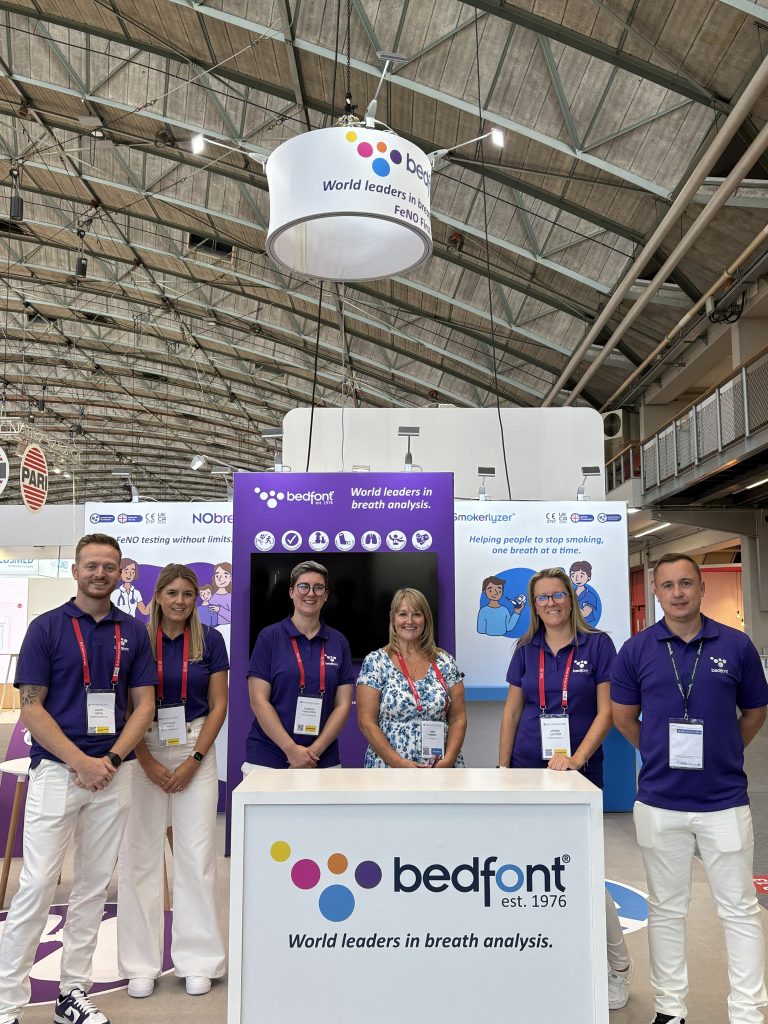
Showcasing the NObreath® and Smokerlyzer® range while connecting with research teams and global distribution partners at Europe’s leading respiratory congress.

Bedfont® Scientific Limited, a world leader in breath analysis, is excited to be attending this year’s European Respiratory Society (ERS) Congress in Barcelona. With over 50 years of experience in the design and manufacture of medical breath analysis devices, Bedfont® looks to connect with professionals in healthcare and clinical research to share its innovative Fractional exhaled Nitric Oxide (FeNO) and carbon monoxide (CO) monitoring technology.

The ERS Congress is the world’s largest international meeting dedicated to respiratory medicine, bringing together approximately 20,000 clinicians, researchers, healthcare professionals and industry leaders from across the world. This year’s congress takes place in Barcelona from the 5th to the 9th of September, providing a platform for sharing the latest scientific advances, promoting collaboration and driving innovation in respiratory care.

This year’s theme is “United for better breathing: partnership between patients, clinicians and researchers.” With Bedfont® looking to strengthen its commitment to respiratory clinical research, ERS provides the perfect platform to connect with industry professionals and showcase its innovations.

Jason Smith, CEO at Bedfont®, comments, “ERS Congress is one of the most important events in the respiratory calendar, bringing together the very people driving innovation in respiratory medicine. We’re excited to return to Barcelona to showcase our NObreath® FeNO device and Smokerlyzer® range, while strengthening relationships with our distributor network and connecting with research teams and healthcare professionals. As Bedfont® continues to expand its presence in medical research, we’re looking forward to discussing how our trusted respiratory monitoring solutions can further support studies and ultimately improve patient care around the world.”

The Bedfont® team will be at Stand R.19 from the 6th to the 9th of September, where visitors can explore the NObreath® and Smokerlyzer® devices and meet the experts behind them. Joining the team is renowned respiratory nurse and clinical leader, Carol Stonham MBE, who will be on the stand to share her expertise and provide valuable clinical insight into the role of FeNO testing in respiratory care. Carol will be available alongside Bedfont’s Clinical Research Partnerships Manager, Hannah Vince-Drew, to answer questions and discuss the application of FeNO testing in both clinical practice and clinical research.

To learn more, visit the website here.

NObreath® and Smokerlyzer® at ERS

Traditionally, people associate quitting smoking with national events like Stoptober and New Year’s resolutions, but quitting smoking doesn’t have to wait until then. As the summer holiday season draws to an end and people settle back into everyday routines, late summer can be the perfect time to make positive health changes, such as quitting smoking.

Summer habits are changing anyway

As people return from holidays, festivals, and social events, daily routines change and become more structured; it could be the perfect time to incorporate a quit-smoking attempt into a new routine.

Smoking is often linked to everyday routines, like having a cigarette with a morning coffee, during a work break, or after a meal. When these routines shift, it can be easier to break smoking triggers and habits whilst settling into the new normal and replace them with healthier alternatives.

Late summer offers a fresh opportunity to make a positive change when you’re already adjusting to a new routine, rather than waiting for New Year’s resolutions.

Better weather can support your quit journey

With milder weather and longer days during summer, people tend to be more motivated to stay active. When giving up smoking, cravings can take over, and things like walking, cycling or outdoor hobbies can distract from this.

We are aware that quitting smoking is notoriously difficult, and it can cause stress, but there are ways to manage stress levels. Exercise can improve mood and help manage stress levels during the quitting process, and spending more time outdoors can provide healthy alternatives to smoking breaks.

Feel the benefits before winter

Winter places extra strain on the lungs, with cold weather and seasonal viruses contributing to increased respiratory illnesses and hospital admissions. Smokers are particularly vulnerable, as smoking damages the lungs and is the leading cause of Chronic Obstructive Pulmonary Disease (COPD)1, a condition that commonly worsens during the winter months. Quitting before colder weather arrives gives lungs time to begin recovering and reduces the risk of serious respiratory complications.

A fresh start: Why late summer is a good time to quit smoking

By quitting in late summer, you will have several months of smoke-free progress before winter arrives. Improved circulation and lung function can begin within weeks of quitting smoking2, with people also reporting improved breathing and energy levels, leading to increased overall well-being.

The average smoker in the UK now spends around £250 a month on cigarettes3; that figure could exceed £500 a month for those who smoke 20 cigarettes a day. Quitting in late summer can also boost finances, enabling people to put more money away for the festivities that winter brings.

A fresh start: Why late summer is a good time to quit smoking

Support is more accessible than ever

There are various tools and services available to support those who need them during a quit attempt, such as:

  • Smoking cessation services,
  • Nicotine replacement therapies,
  • Support groups,
  • Carbon monoxide (CO) monitoring.

People do not have to face a quit attempt alone, and reaching out for support could boost motivation. CO monitoring is a great motivational tool that provides instant feedback on a person’s smoking status.

Smokerlyzer® CO Monitoring range

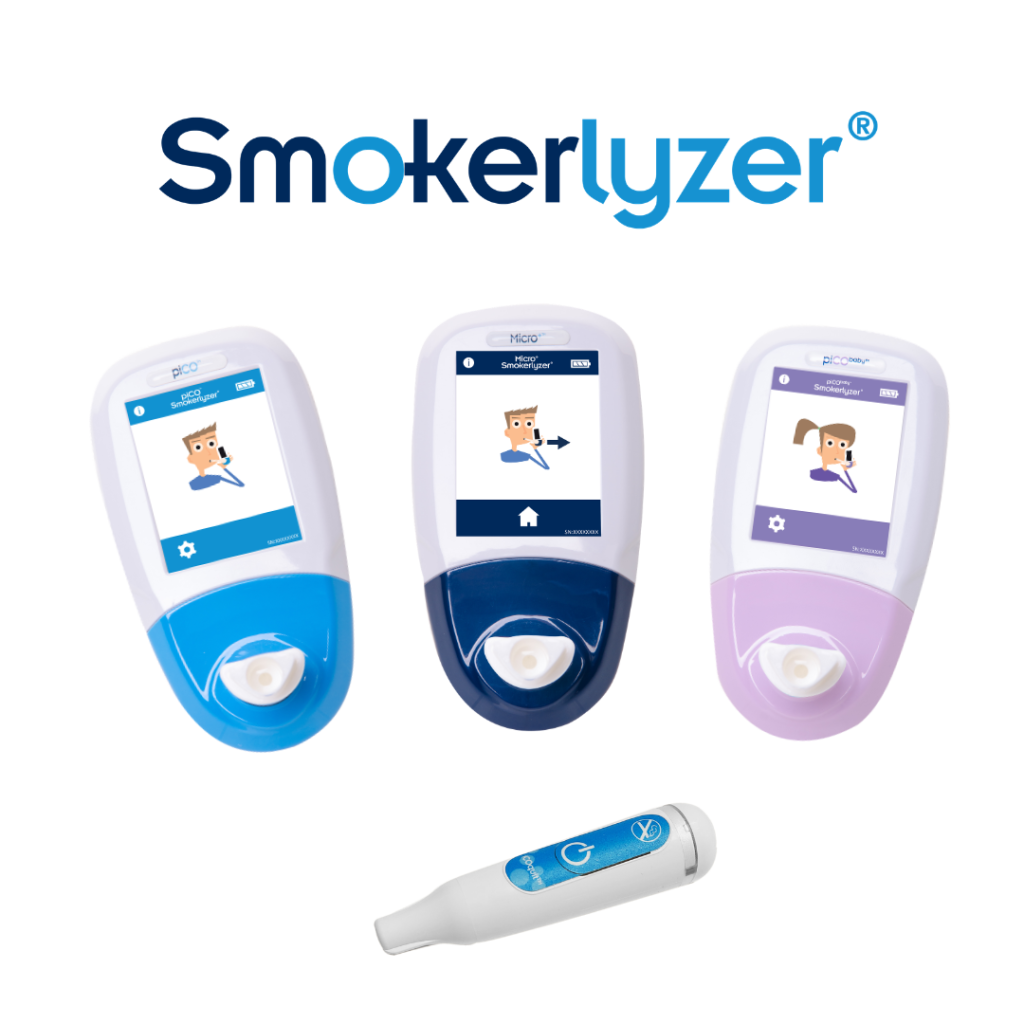
CO monitoring with the Smokerlyzer® range of devices measures CO levels in exhaled breath. You can track your CO levels with the professional range in clinic or remotely in the comfort of your own home with the iCOquit® home device. CO is a gas inhaled when smoking, and the level of CO in exhaled breath can help distinguish a person’s smoking status. Used as a motivational aid, the Smokerlyzer® range provides instant feedback and helps to motivate a quit attempt. Seeing CO levels drop keeps users engaged and more determined to maintain their non-smoking status.

Start today, not January

Quitting smoking is not easy, and there is no perfect date to quit. However, using the seasonal shift as routines begin to change, could be the motivation needed to start a journey to quit smoking. Quitting smoking in late summer can lead to a healthier, fitter and smoke-free autumn and winter.

Smokerlyzer - A fresh start: Why late summer is a good time to quit smoking

To learn more about smoking cessation using CO monitoring tools like the Smokerlyzer®, visit the website here.

References

  1. World Health Organization. Smoking Is the Leading Cause of Chronic Obstructive Pulmonary Disease [Internet]. www.who.int. 2023 [cited 2026 July 9]. Available from: https://www.who.int/news/item/15-11-2023-smoking-is-the-leading-cause-of-chronic-obstructive-pulmonary-disease
  2. NHS. Quit smoking – better health [Internet]. NHS.UK. NHS; 2020 [cited 2026 July 9]. Available from: https://www.nhs.uk/better-health/quit-smoking/
  3. Family [Internet]. Smokefree Sheffield. [cited 2026 July 9]. Available from: https://smokefreesheffield.org/why-quit/family/

Tobacco kills more than 7 million people each year, including an estimated 1.6 million non-smokers exposed to second-hand smoke.1 It is estimated that tobacco costs the global economy more than $1.4 trillion a year in healthcare costs and lost productivity.2 This World No Tobacco Day, we are going to explore the appeal behind smoking tobacco and the healthcare burden it causes.

What is World No Tobacco Day?3

World No Tobacco Day is a global awareness event, held every year on the 31st May by the World Health Organisation (WHO). The event was created to draw global attention to the tobacco epidemic and the preventable deaths and diseases it causes. Each year follows a new theme; the theme for 2026 is Unmasking the appeal – countering nicotine addiction. Whilst global tobacco use has declined in recent years, its burden remains devastating.

The appeal: Why tobacco still attracts users.

Cigarette in a hand

Whilst evidence does not support this, smoking is still widely perceived as a stress reliever, with studies indicating that between 36-43% of people believe smoking helps manage stress, anxiety and depression. The truth is, smoking actually increases tension and lowers mental health in the long run.4

Marketing tactics have changed over the years with the introduction of vapes, flavoured products, and targeting youth and young adults, especially in low-income communities and regions with weaker tobacco regulations.

Together, these psychological misconceptions and evolving marketing strategies create a powerful and carefully engineered appeal. Nicotine products are framed as tools for coping, symbols of independence, or fashionable accessories, rather than addictive substances. These influences normalise use, particularly among younger and more vulnerable populations, making tobacco appear not only acceptable but desirable.

The health burden: What tobacco really costs.

Smoking tobacco has a direct impact on health and is linked to diseases like:5

  • Lung cancer,
  • Chronic obstructive pulmonary disease (COPD),
  • Coronary artery disease,
  • Stroke.

This doesn’t just impact the smokers themselves; non-smokers are also affected by second-hand smoke, leading to a significant impact on healthcare systems worldwide.

Smoking-related hospital admissions and care in the UK alone cost the NHS £1.9 billion each year, signifying an urgent need for change.6

What needs to change?

There are many contributing factors that could change and improve outcomes worldwide, and whilst there are already various initiatives in place, such as:

  • Plain packaging,
  • Smoke-free zones,
  • Less advertisement.

More can be done across the board to remove the appeal.

Awareness campaigns like World No Tobacco Day help to raise awareness of the significant impact smoking can have on health and economic costs. Additionally, smoking cessation programmes can provide support for those looking to quit smoking. These services can educate smokers on the long-term benefits of quitting smoking as well as highlight tools which can aid a quit attempt. One of those tools is carbon monoxide (CO) monitoring.

What is CO monitoring?

Taking a CO test with the Smokerlyzer

When someone smokes tobacco, they inhale CO, which enters their bloodstream and reduces oxygen delivery around the body.7 A CO monitoring device like the Smokerlyzer® measures CO levels in a person’s exhaled breath. The Smokerlyzer® is widely used across the world as a motivational tool to aid a quit-smoking attempt. Seeing CO levels drop empowers smokers to continue their quit-smoking journey.

Smokerlyzer Range

A 2012 study found that people who used a CO monitoring device reported feeling more motivated to quit smoking. Participants described how seeing their CO levels decrease over time provided clear, tangible evidence that their efforts were making a real difference. This immediate, visible feedback appeared to strengthen their commitment to quitting by reinforcing the health benefits of staying smoke-free and encouraging them to keep going, especially during moments of doubt or temptation.8

World No Tobacco Day 2026 is highlighting how the appeal to nicotine and tobacco addiction is engineered and not accidental. With healthcare and economic costs rising, it is vital that more is done to tackle the tobacco epidemic.

To learn more about the support available to aid a quit smoking attempt, visit the NHS website here.

To find out more about the Smokerlyzer® range and how it is helping people quit smoking for good, visit the website here.

References

  1. World Health Organization. Tobacco [Internet]. World Health Organization. World Health Organization; 2025. Available from: https://www.who.int/news-room/fact-sheets/detail/tobacco
  2. ‌US$ 1.4 trillion lost every year to tobacco use – New tobacco tax manual shows ways to save lives, money and build back better after COVID-19 [Internet]. www.who.int. Available from: https://www.who.int/news/item/12-04-2021-1.4-trillion-lost-every-year-to-tobacco-use-new-tobacco-tax-manual-shows-ways-to-save-money-and-build-back-better-after-covid-19
  3. ‌World. World No Tobacco Day 2026: Unmasking the appeal – countering nicotine and tobacco addiction [Internet]. Who.int. World Health Organization: WHO; 2025. Available from: https://www.who.int/news/item/17-10-2025-world-no-tobacco-day-2026–unmasking-the-appeal—countering-nicotine-and-tobacco-addiction
  4. ‌Perski O, Theodoraki M, Cox S, Kock L, Shahab L, Brown J. Associations between smoking to relieve stress, motivation to stop and quit attempts across the social spectrum: A population survey in England. Kaye JT, editor. PLOS ONE [Internet]. 2022 May 17;17(5):e0268447. Available from: https://journals.plos.org/plosone/article?id=10.1371/journal.pone.0268447
  5. ‌ASH. Smoking and Other Health Conditions – ASH [Internet]. ASH. 2025. Available from: https://ash.org.uk/resources/view/smoking-and-other-health-conditions
  6. ‌Action on Smoking and Health. Latest figures show cost of smoking in England up 25% to at least £21.8 billion [Internet]. ASH. 2024. Available from: https://ash.org.uk/media-centre/news/press-releases/latest-figures-show-cost-of-smoking-in-england-up-25-to-at-least-21-8-billion
  7. ‌Raub JA, Benignus VA. Carbon monoxide and the nervous system. Neuroscience and Biobehavioral Reviews [Internet]. 2002 Dec 1;26(8):925–40. Available from: https://pubmed.ncbi.nlm.nih.gov/12667497/
  8. ‌Beard E, West R. Pilot study of the use of personal carbon monoxide monitoring to achieve radical smoking reduction. Journal of Smoking Cessation. 2012 Jun;7(1):12-7.

January marks the start of a new year, with many people using this time as a fresh start and the perfect time to set health-improving goals. A study in 2024 found that January is the most popular month of the year for people to give up smoking, with an average of 440,670 online searches for terms related to quitting smoking1.

New Year’s resolutions can be health-focused or financially driven, and quitting smoking aligns perfectly with both. Not only does it improve overall health, but it also saves significant money, allowing people to achieve their financial goals.

Understanding CO monitoring.

Carbon monoxide is an odourless, colourless, and tasteless gas that is produced during incomplete combustion. This gas is found when smoking tobacco and has a profound effect on people’s health. When inhaled, CO binds to haemoglobin in red blood cells, reducing the delivery of oxygen throughout the body2. Smokers typically have high CO levels, and this can be monitored through a CO monitoring device used to aid a quit-smoking attempt.

The role of CO monitoring in quitting smoking.

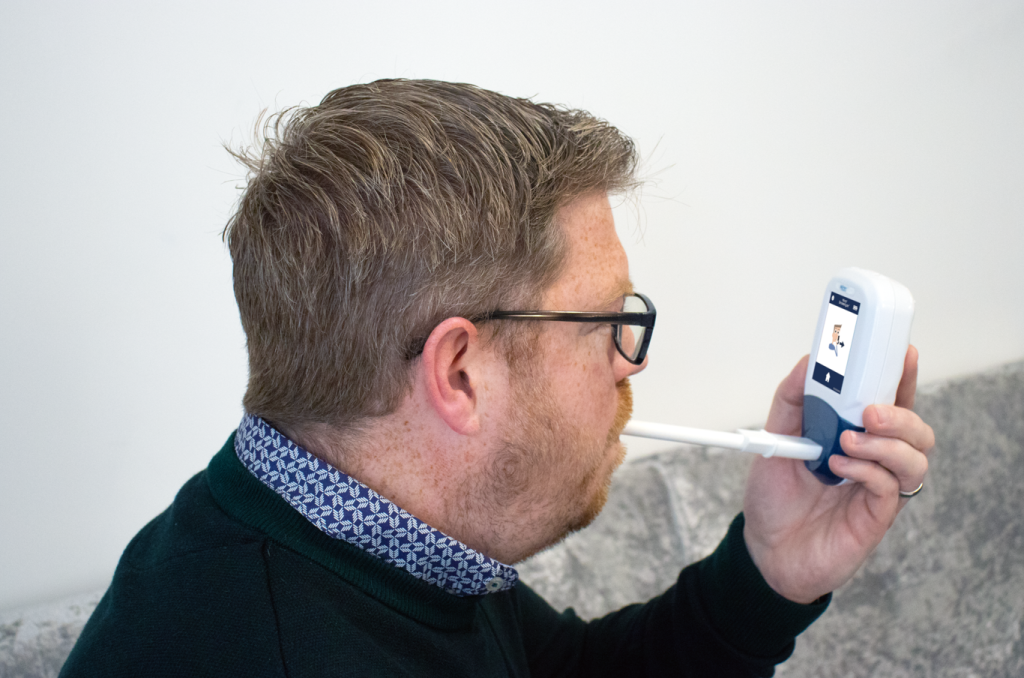
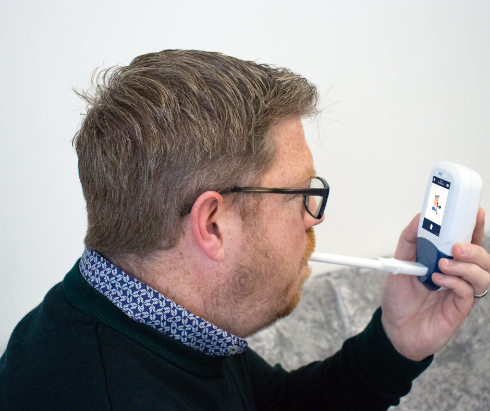
A CO monitoring device, like the Smokerlyzer®, measures the levels of CO on exhaled breath, establishing a person’s smoking status. The device offers a simple test: the user exhales slowly into the device to receive an instant CO reading, providing tangible feedback. Using a CO monitoring device during a quit attempt empowers the user to take control of their own health and, by seeing their CO levels drop over time, motivates them to continue their quit attempt.

The Smokerlyzer® range.

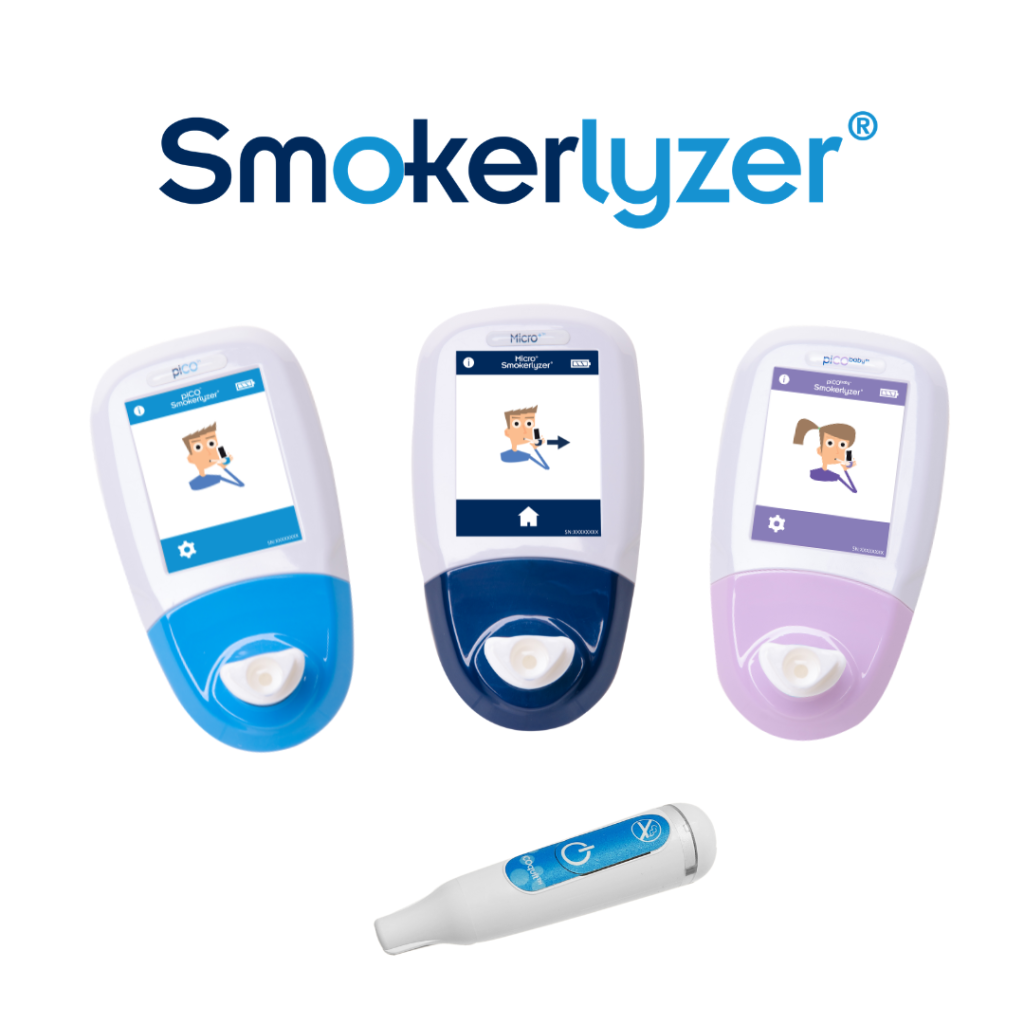
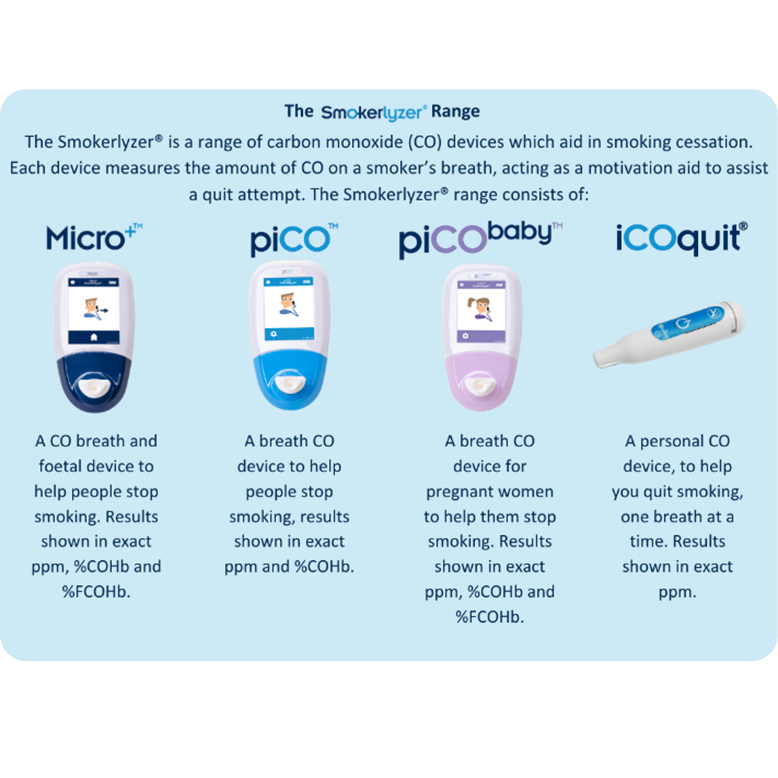
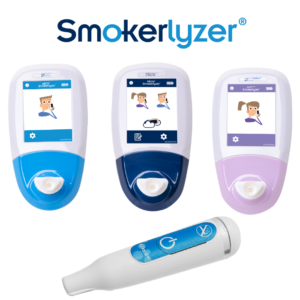
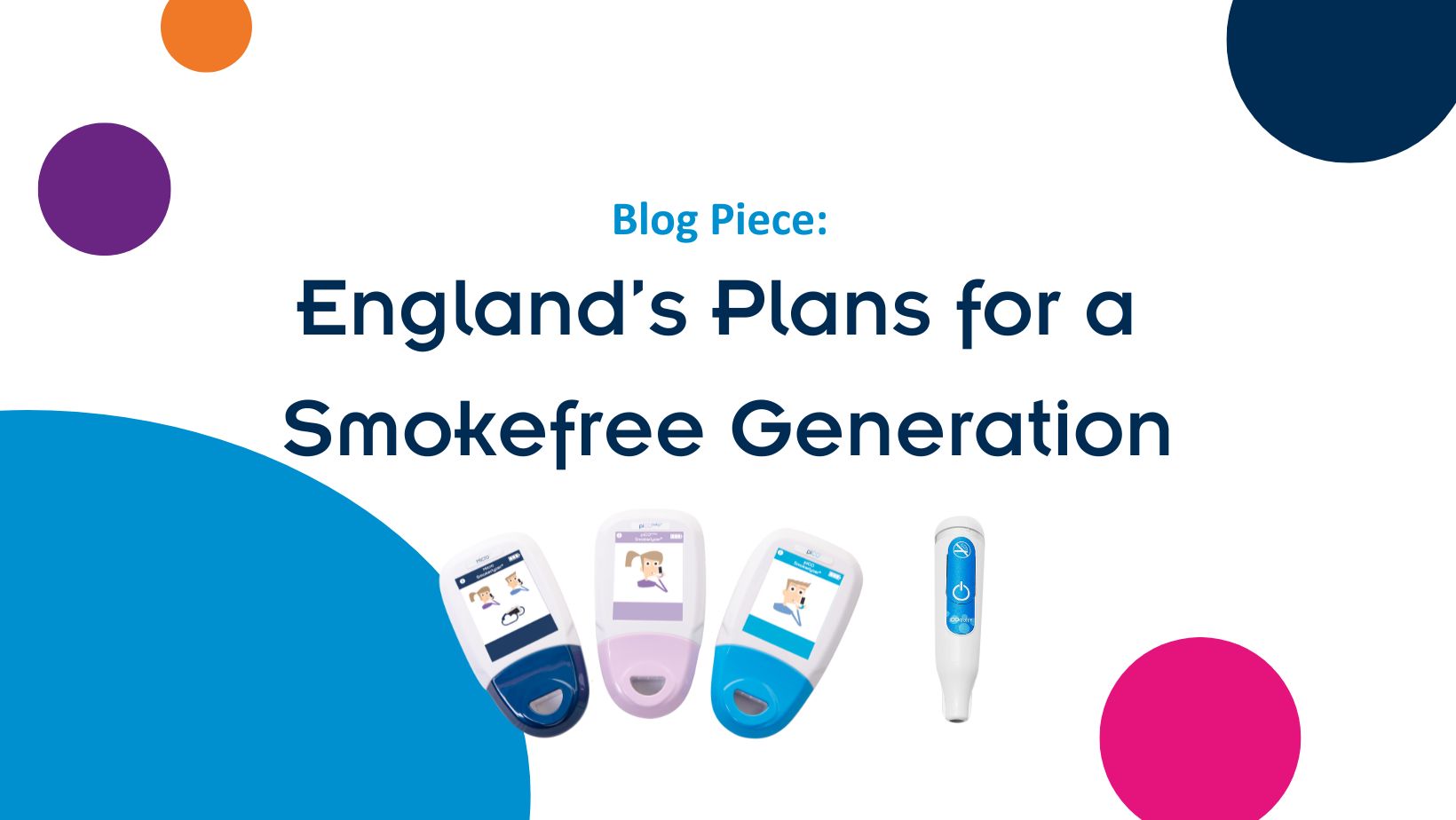
  • Micro+™ – a CO breath and foetal %COHb %FCOHb device providing instant results, in parts per million (ppm), to help people stop smoking.
  • piCO™ – a breath CO device, providing instant results in exact ppm and %COHb to help people stop smoking.
  • piCObaby™ – a breath CO device for pregnant women to help them stop smoking, providing instant results in exact ppm, %COHb and %FCOHb.
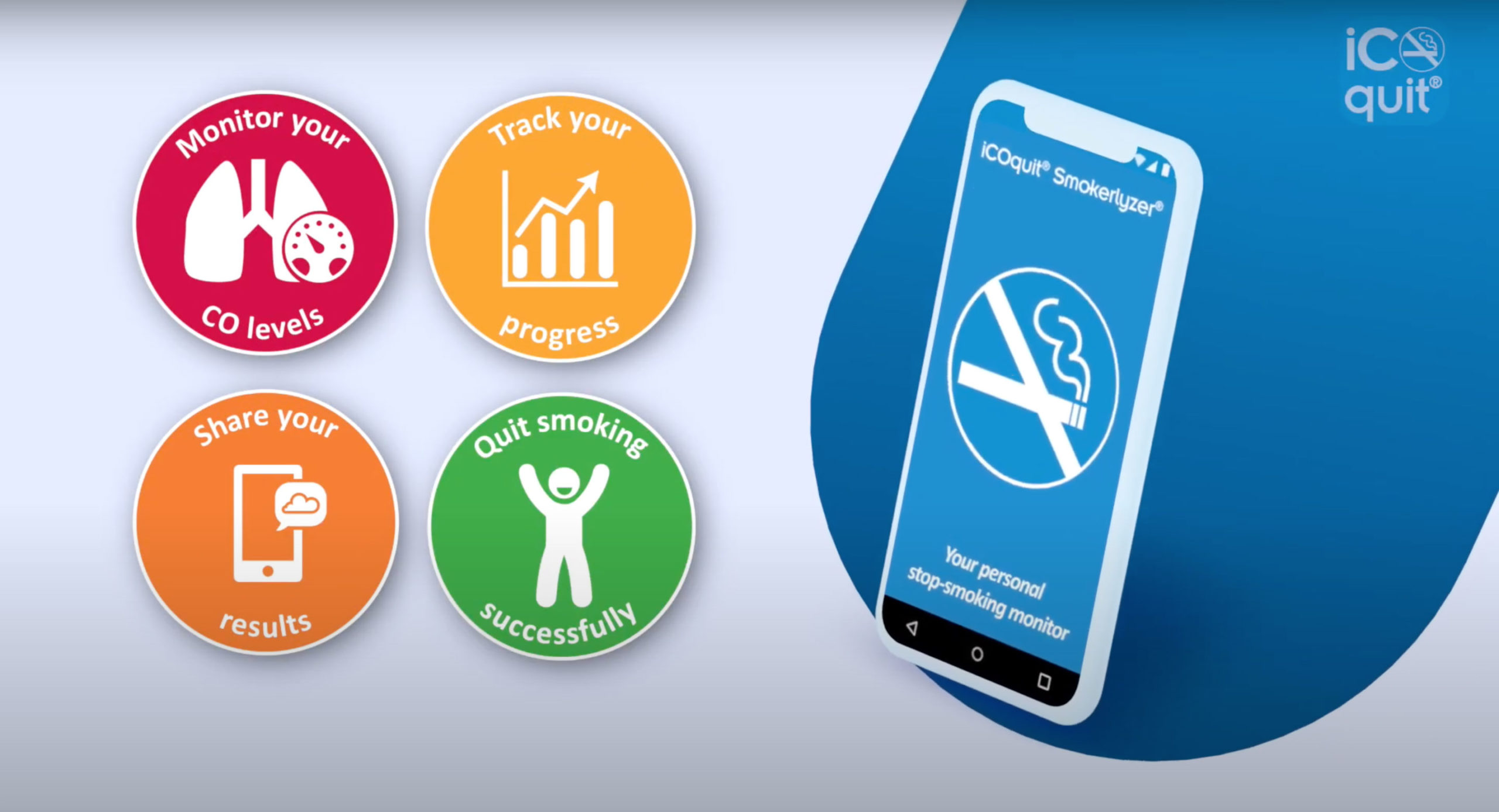
  • iCOquit® – a personal CO device, which can be used at home to help you quit smoking.

Setting realistic quit goals.

Quitting smoking doesn’t happen instantly; it is a process, and like any significant lifestyle change, it works best when you set clear, achievable goals. A structured approach can help you stay focused, track progress, and celebrate success along the way. A helpful way to plan your quit journey is to make your goals SMART.

  • Specific – Be clear about what you want to achieve.
  • Measurable – Use CO readings or smoke-free days to track progress.
  • Achievable – Set goals that challenge you but are realistic.
  • Relevant – Focus on why quitting matters to you.
  • Time-bound – Set a timeframe for your targets.

Tracking progress and staying motivated.

Measuring CO levels during a quit attempt provides users with visual feedback; watching CO levels drop is a powerful motivator that helps people continue their journey. CO monitoring is also helpful in identifying relapses early and prompting users to get back on track. Quitting smoking is notoriously difficult, and it is important to celebrate milestones during a quit journey. Lower CO readings and smoke-free days are worth celebrating.

January provides the perfect opportunity to make positive, lasting changes, and quitting smoking is one of the most powerful steps you can take for your health. CO monitoring allows you to see tangible proof of your progress from the very first days of your quit journey. Watching CO levels drop is a reminder that your lungs are healing, your oxygen levels are improving, and your body is recovering.

Whether you are cutting down gradually or quitting altogether, setting clear goals, tracking your results, and celebrating each milestone can keep you motivated and on track. For more information on the Smokerlyzer® range and how it can aid a quit-smoking attempt, visit the website here.

References

  1. Leah. New study reveals the most popular times of year to quit smoking – Digital Health Technology News [Internet]. Digital Health Technology News. 2024 [cited 2025 Nov 6]. Available from: https://www.healthtechdigital.com/new-study-reveals-the-most-popular-times-of-year-to-quit-smoking/
  2. Cancer Research UK. What’s in a cigarette? [Internet]. Cancer Research UK. CRUK; 2023. Available from: https://www.cancerresearchuk.org/about-cancer/causes-of-cancer/smoking-and-cancer/whats-in-a-cigarette-0

World No Tobacco Day, established in 1987 by the World Health Organization (WHO), aims to raise global awareness about the tobacco epidemic and the preventable illnesses and deaths it causes. With the 2024 annual theme “Protecting children from tobacco industry interference,” Bedfont® hosted a discussion with Smokerlyzer® Medical Advisory Board members, Dr Amer Siddiq Amer Nordin and Dr Anne Yee, along with insights from Professor Christopher Bullen from the University of Auckland.

Dr Amer Siddiq Amer Nordin

Dr Anne Yee

The discussion covered some fascinating points, looking at where the world is currently with the efforts to reduce tobacco use, and the challenges being faced along the way. The conversation looked closely at New Zealand and Malaysia.

What is happening in New Zealand?

In New Zealand, there has been a considerable effort in research and policy-making to reduce the number of young smokers; this has resulted in a drop in smoking in young people to below 5%, which is the lowest it has ever been. Whilst this statistic should be celebrated, the challenge now being faced is the considerable increase in the number of young people taking up vaping, with the majority of these people having never smoked.

Chris goes on to say that “we shouldn’t be complacent with these numbers; things can change very quickly, and we could well see a surge in the uptake of smoking again in the future.” Although New Zealand is on top of the situation currently, things need to be monitored very closely to avoid an increase in smokers.

In New Zealand, just like the UK, the government brought in legislation that anyone born after January 1st 2009 cannot legally buy tobacco products. However, Professor Bullen comments that a new government was appointed in March this year, who swiftly revoked that legislation.

What is happening in Malaysia?

Sadly, smoking remains a significant public health issue in Malaysia. However, the National Health & Morbidity Report did show a decline in cigarette use in 13-17 years-olds, dropping from 13.8% in 2017 to 6.2% in 2022. Showing a massive decrease in smoking in this age group is positive, yet, the same report did show an increase in e-cigarette and vape use in the same age group, increasing from 9.8% in 2017 to 14.9% in 2022. However, 10.8% of adolescent males were still smoking cigarettes in 2022 compared to 1.7% of adolescent females1; it seems that smoking is still a global issue.

Should we be concerned?

Tobacco companies are always looking for ways to increase smoking; if they are not successful, they are looking to push other products into the market, particularly in countries where the regulatory environment is weak. Dr Anne Yee comments that in Malaysia, vapes are being sold and positioned with snacks and sweets, making smoking and vaping seem more acceptable.

What is being done to reduce the number of people smoking?

In Malaysia, they introduced the Control of Tobacco Products Regulations under the Food Act of 1983 in 2004. These regulations included:

  • Advertising bans
  • Graphic health warnings
  • Restriction on sales to minors.

The Control of Smoking Products for Public Health Act 2024 has been published but is not yet operational in Malaysia, meaning sales of nicotine vapes are still available to minors. Dr Anne Yee fears Malaysia is falling behind in regulating vaping and innovative tobacco products and tobacco companies are seeing this as their way in.

Malaysia has implemented several measures to reduce smoking, such as:

  • Tak Nak, the anti-smoking campaign: The campaign was started to create awareness to encourage people to quit smoking and also discourage non-smokers from starting.
  • Introducing an anti-smoking program in the school curriculum: The program aims to educate and prevent young people from taking up smoking.
  • Quit Smoking Clinics: Set up across the country to offer counselling and nicotine replacement therapy.

Is branding an issue?

With some brands believed to be healthier than others branding is an issue. Like the UK, New Zealand introduced plain packaging and health warning labels on cigarette boxes, whereas Malaysia hasn’t been successful with this just yet.

What can we do to assist young people who want to quit smoking?

Unfortunately, there is not much evidence on which methods are best for adolescents to give up smoking, but in New Zealand, it has been suggested that text messaging has helped this age group. It is also thought that driving the price of tobacco up will discourage younger people to start smoking as they cannot afford it.

With everything discussed, it can be quite daunting when considering all the challenges faced in trying to reduce tobacco use. Nevertheless, we should celebrate how far the world has come in reducing smoking globally, and whilst vaping is rapidly increasing, smoking combustible tobacco is currently considered more dangerous. The world should continue efforts, hoping for a healthier population and a smoke-free future.

To watch the discussion in full visit our YouTube channel https://www.youtube.com/watchv=NeWDIAb9JGM&t=15s


1. NHMS Survey: Among Malaysian Teens, Smoking Rate Falls But Vaping Prevalence Rises To 15%.
CodeBlue. May 2023. [cited on 30/05/24]

Available from:
https://codeblue.galencentre.org/2023/05/25/nhms-survey-among-malaysian-teens-smoking-rate-
falls-but-vaping-prevalence-rises-to-15pc/#:~:text=The%20NHMS%20survey%20shows%20that,per
%20cent%20of%20adolescent%20females.

: The campaign was started to create awareness toencourage people to quit smoking and also discourage non-smokers from starting. Introducing an anti-smoking program in the school curriculum: The program aims toeducate and prevent young people from taking up smoking. Quit Smoking Clinics: Set up across the country to offer counselling and nicotinereplacement therapy.

World No Tobacco Day was created in 1987 by the World Health Organization (WHO) to draw worldwide attention to the global tobacco epidemic and the preventable death and disease it causes. Occurring annually, the day is marked by a different theme that aims to highlight a specific aspect of tobacco control.

What effect does tobacco use have on the world?

Killing over 8 million people a year, the tobacco epidemic is one of the biggest public health threats the world has ever faced. This includes an estimated 1.3 million non-smokers who are exposed to second-hand smoke1. Smoking has a profound impact on people’s health, affecting nearly every organ of the body and leading to a variety of diseases.

Tobacco use has a significant impact on healthcare costs and resources; some examples are:

  • Increased Healthcare Costs: Tobacco use is one of the leading causes of preventable diseases, including cardiovascular diseases, lung disorders, and various forms of cancer. Treating these conditions incurs substantial costs to healthcare systems.
  • Resource Allocation: The high prevalence of tobacco-related health issues demands significant healthcare resources, including hospital beds, medications, and medica personnel. This allocation of resources can strain healthcare systems, especially in regions with limited medical infrastructure.
  • Impact on non-smokers: Tobacco use also impacts non-smokers through exposure to second-hand smoke, leading to health conditions like respiratory infections, heart disease, and lung cancer. This increases the number of patients seeking medical help for tobacco-related conditions who themselves do not use tobacco.

How can the Smokerlyzer® range can help?

Bedfont® Scientific Limited manufactures the Smokerlyzer® range of carbon monoxide (CO) devices, used to aid in smoking cessation. The Smokerlyzer® range comprises of the Micro+™, piCObaby™, piCO™, and remote monitoring device iCOquit®, to help people stop smoking, one breath at a time.

The Bedfont® Smokerlyzer® range of CO devices works by measuring CO levels in a person’s exhaled breath, which can be used to determine a person’s smoking status. For smokers trying to quit, this quick, easy and non-invasive method of CO monitoring can offer instant insights on their quit progress and the colourful traffic-light system has proven to be an effective motivational tool to encourage them to quit.

Smokers can also monitor their progress remotely at home using the iCOquit®. This small, portable Bluetooth® CO device, when used alongside the free iCOquit® app, can provide instant results that can be shared remotely with smoking cessation advisors. Thanks to this innovative technology, stop- smoking services are even more accessible than before, helping the world work towards a smoke- free future.

Micro+™: One CO device for all your smoking cessation needs.


piCObaby™: CO monitoring for maternity made easy.


piCO™: CO monitoring made easy.


iCOquit®: Your personal CO device, to help you quit smoking, one breath at
a time.

Using a CO device to assist with quitting strongly supports the improvement of end results. A study by Beard and West (2012), on the effectiveness of personal carbon monoxide monitoring, found that out of 10 smokers, “7 of the smokers reported that they felt as though the monitors had reduced their cigarette consumption… 6 smokers reported a lower nicotine dependency relative to baseline. Over the 6 weeks there appeared to be a significant decline in the number of cigarettes smoked per day2”.

With more people than ever before having access to no smoking services, the Smokerlyzer® can help people quit, significantly reducing the financial and resource burden on healthcare systems caused by smoking-related diseases. Furthermore, with a lower prevalence of smoking, there will be a reduction in exposure to second-hand smoke; ultimately, this will contribute to solidifying a smoke- free future.

It’s clear that the fight against tobacco use is not just about discouraging a harmful habit but about safeguarding the future of public health globally. Let’s use this day to commit to reducing tobacco consumption in all forms, empower individuals to lead healthier lives and continue the momentum towards a world where tobacco no longer overshadows health and well-being.

If you are thinking about quitting smoking or struggling with your attempt, please visit the NHS quit
smoking page by clicking here.

To find out more about how the Smokerlyzer® range can help aid in smoking cessation, please click
here.


1. World Health Organization. [cited on 2/5/24] Available from https://www.who.int/news-room/fact-sheets/detail/tobacco

2. Pilot Study of the Use of Personal Carbon Monoxide Monitoring to Achieve Radical Smoking Reduction. Journal of Smoking Cessation. Emma Beard and Robert West (2012). [cited on 31/5/24] Available from https://web.archive.org/web/20180721211143id_/https://www.cambridge.org/core/services/aop-cambridge-core/content/view/0BAC2289E42E9C31C892D54BF7980237/S1834261212000011a.pdf/div-class-title-pilot-study-of-the-use-of-personal-carbon-monoxide-monitoring-to-achieve-radical-smoking-reduction-div.pdf

Wednesday 13th March 2024

National No Smoking Day, which has occurred annually since its integration with Ash Wednesday in 19841, has served as an annual reminder for individuals striving to quit smoking. In the United Kingdom, No Smoking Day holds significance with campaigns aimed at raising awareness about the health risks associated with smoking and encouraging smokers to quit. The goals of No Smoking Day include promoting smokefree environments, supporting smoking cessation services, and advocating for stricter tobacco control measures to protect public health. This article aims to explore the current challenges faced by those seeking to quit smoking in the UK and educate future generations about the evolving laws surrounding tobacco control policies and the sale and purchase of tobacco products.

In 2019, the UK government released a green paper, announcing that the 2020s will be the decade of proactive, predictive, and personalised prevention2, setting an objective for England to be
‘Smokefree’ by 2030 by reducing adult smoking to 5% or less3, and increasing the legal age to smoke for those born after 2008. Additionally, as of January 2024, the government has announced that by the end of 2025, disposable vapes will be banned to protect children’s health, due to how easily accessible they are. The government also plans to introduce plain packaging and restrict flavours as most vapes come in sweet flavours. 

With these new massive law-enforced restrictions that will soon be introduced in England, there are still challenges that we face with smoking  cessation including cultural, educational, social, and future challenges.

Current and Future Challenges

Cultural Challenges: 

In England, smoking rates among ethnic minorities are lower rates than Caucasian groups, but the rates within ethnic groups are often gendered with men generally higher than women4. In 2019 smoking habits had a large difference in sex in Asian (13.9% in men and 2.9% in women), Chinese (12.6% in men and 4.0% in women), and black (12.9% in men and 6.9% in women) groups5. Other forms of tobacco are more common in some ethnic groups, shisha (waterpipe) use in 2012-2013 was estimated to be frequently used by about 1% of the British population, with higher rates  in Asian (7%), mixed (5%), and Black (4%) groups6. The smoking cessation process can pose difficulty when people have recently immigrated to the UK from countries that had higher smoking rates where there are different legal and cultural frameworks taken to tobacco use4.

Educational Challenges:

To help with smoking cessation in the UK, healthcare professionals should be able to advise smokers on how to quit smoking; a short survey conducted by Hunter et al. (2019) aimed to identify the extent of smoking cessation teaching and examination in 21 UK pharmacy schools. The survey concluded that there was a lack of training on the management of pregnant smokers and mental health patients who smoke. It was documented that 11 (52%) schools taught about the management of pregnant smokers and 3 (14%) schools taught about the management of mental health patients  who smoke. Smoking during pregnancy is the most preventable cause of adverse pregnancy health outcomes, with half of the pharmacy schools teaching about this. There was also little attention given to mental health patients who smoke, pharmacists need to provide support to vulnerable populations7.

The limited education provided to pharmacists regarding the management of pregnant smokers and mental health patients who smoke may result in a lack of accessibility to smoking cessation support for future patients. The lack of understanding regarding the harms of smoking could lead to significant repercussions.

Social Challenges:

Smoking used to be considered as a social activity, however a 12-year follow-up study by Phillip et al. (2022) found that smokers were more likely to be lonely and socially isolated compared to non-smokers. With a sample size of over 8000, with a mean age of 67 years old, this observational study found that smokers were more likely to be lonely and socially isolated than non-smokers, having less frequent social interactions with friends and family, less frequent engagement with the community and cultural activities, and being more likely to live alone8.

The idea of smoking being a social activity may be a misconception, with insufficient social support can be a challenge when trying to quit smoking, as individuals not surrounded by friends and family may not find the motivation to stay smoke-free.

Future Challenges: 

As the next generation will not legally be able to buy tobacco products, this could create a gap in education and awareness. Without ongoing efforts to educate young people about the dangers of smoking and the benefits of being smoke-free, they may not fully understand the harm it can cause. While the accessibility to tobacco products is already restricted in shops, minors could still be exposed to environments where smoking is normalised, such as having a parent who legally smokes. Without continued education, the future generation might not understand why they legally cannot smoke. With tobacco prices already high and set to rise more to deter smokers, those who still wish to smoke tobacco or sell tobacco products without paying taxes can turn to the illegal importation of tobacco which is sold at cheaper rates on the black market. As of 2020-2021, it is estimated that 16% of cigarettes purchased in the UK were from the black market9. The number of children using vapes has tripled in the last three years with 69% of current vapers aged 11 to 17 years old10. With the upcoming ban on tobacco products and the upcoming ban on disposable vapes, there is still access to non-disposable and refillable vape kits being sold, as well as the existing black market of disposable vapes in corner shops that are illegally imported11

Those born after 2008 may encounter different challenges related to smoking compared to the previous generations so there needs to be continual regulations, education, and support to advance to smokefree UK.

Carbon Monoxide (CO) testing: 

Bedfont® Scientific Ltd. manufactures the Smokerlyzer® range, non-invasive breath testing devices measuring carbon monoxide (CO) to help people stop smoking, one breath at a time. The Smokerlyzer® range consists of the Micro+™, piCObaby™, piCO™, and the homecare CO device the iCOquit®. All devices provide instant results with a traffic light system making CO levels identifiable to patients, whilst acting as a motivational tool to help them quit smoking. In addition to behavioural support and nicotine replacement therapy (NRT), CO devices have been integrated into stop-smoking programmes for years, used as a bio-verification tool that can identify CO on the breath (produced by incomplete combustion burning of tobacco products) and therefore confirm abstinence from traditional tobacco smoking, in addition to being used as a motivational tool for smokers.

To find out more about how you can support families with smoking cessation, visit https://www.bedfont.com/smokerlyzer

References:

1. National No Smoking Day [Internet]. UK Parliament. 2023. [Cited Friday 23rd February 2024]. Available from: https://commonslibrary.parliament.uk/research-briefings/cdp-2023-0056/#:~:text=National%20no%20smoking%20day%20has,supported%20by%20Alzheimer’s%20Research%20UK

2. Advancing our health: prevention in the 2020s- consultation document [Internet]. GOV.UK. 2019. [Cited Wednesday 31st January 2024]. Available from: https://www.gov.uk/government/consultations/advancing-our-health-prevention-in-the- 2020s/advancing-our-health-prevention-in-the-2020s-consultation-document

3. The Smokefree 2030 ambition for England [Internet]. House of Commons Library. 2023. [Cited Wednesday 31st January 2024]. Available from: https://researchbriefings.files.parliament.uk/documents/CBP-9655/CBP-9655.pdf

4. Tobacco and Ethnic Minorities [Internet]. ASH. 2019. [Cited Friday 2nd February 2024]. Available from: https://ash.org.uk/uploads/ASH-Factsheet_Ethnic-Minorities-Final-Final.pdf?

5. Adult smoking habits in the UK: 2019 [Internet]. Office for National Statistics. 2020. [Cited Friday 2nd February 2024]. Available from: https://www.ons.gov.uk/peoplepopulationandcommunity/healthandsocialcare/healthandlifeexpectancies…

6. Akl EA, Gunukula SK, Aleem S, Obeid R, Jaoude PA, Honeine R, Irani J. The prevalence of waterpipe tobacco smoking among the general and specific populations: a systematic review.
BMC public health. 2011 Dec;11(1):1-2. PMID: 21504559 PMCID: PMC3100253 DOI:10.1186/1471-2458-11-244.

7. Hunter A, Bobak A, Anderson C. A survey of smoking cessation training within UK pharmacy education. Currents in Pharmacy Teaching and Learning. 2019 Jul 1;11(7):696-701. PMID:
31227092 DOI: 10.1016/j.cptl.2019.03.007.

8. Philip KE, Bu F, Polkey MI, Brown J, Steptoe A, Hopkinson NS, and Fancourt D. Relationship of smoking with current and future social isolation and loneliness: 12-year follow-up of older
adults in England. The Lancet Regional Health–Europe. 2022 Mar 1;14. DOI:10.1016/j.lanepe.2021.100302.

9. Outputs for April 2021 to March 2022 [Internet]. GOV.UK. [Cited Tuesday 13th February 2024]. Available from: https://www.gov.uk/government/publications/annual-outputs-for-tacking-tobacco-smuggling/outputs-for-april-2021-to-march-2022#:~:text=The%20government%20has%20had%20a,cigarettes%20and%20hand%2Drolling%20tobacco.

10. Department of health and social care media centre [Internet]. GOV.UK. 2024. [Cited Friday 2nd February 2024]. Available from: https://healthmedia.blog.gov.uk/2024/01/30/creating-a-smokefree-generation-and-tackling-youth-vaping-what-you-need-to-know/

11. The UK disposable vape ban: Impacts and alternatives [Internet] Vape Superstore. 2024. [Cited Friday 2nd February 2024]. Available from: https://www.vapesuperstore.co.uk/blogs/news/are-disposable-vapes-being-banned-in-the-uk
Currently, in the UK, it is against the law to sell tobacco products to individuals under the age of 18. In October 2023, the English government introduced a ground-breaking proposal to raise the legal age by one year, each year. The ultimate goal is to make the sale and purchase of cigarettes illegal, gradually phasing out smoking in the country. New Zealand led this initiative in 2021 by annually increasing the legal smoking age for anyone born after 2008. This change made tobacco products less affordable and less accessible for those still permitted to smoke in New Zealand1.

Current statistics

Smoking-related deaths are the UK’s biggest preventable killer, causing 1 in 4 cancer deaths and 64,000 deaths per year in England2. The government’s proposed plan aims to alleviate the pressure, on an already over-burdened National Health Service (NHS), given that nearly one hospital admission per minute is linked to smoking, along with up to 75,000 monthly GP appointments for smoking-related illnesses2.

In 2022, data revealed that across all age groups from 18 to 65+, men were consistently more likely to smoke than women. Notably, individuals aged 25 to 34 had the highest smoking rate, with 19.1% for men and 13.4% for women3. Yet for those who vape daily, the largest group was those aged 16 to 24, constituting 15.4% of daily vapers across the age range from 16 to 60+. This marked a 3.7% increase from 2021 (11.7%)4.

The government’s plan

According to recent statistics, smoking and vaping are predominantly adopted by younger generations and the government’s plans to prevent the next generation from smoking will benefit England ultimately. This would involve removing additional strain, money, and time on the NHS with appointments and hospital admissions caused by smoking, as well as discouraging young people from taking up vaping with future policies in place for flavours and packaging. Additionally, the government’s efforts to restrict disposable vapes aim to mitigate the environmental impact of these products ending up in landfills.

As well as the plans to increase the legal age to smoke, the government has also pledged to fund numerous initiatives aimed at supporting smoking cessation aid. This involves an additional £70 million annually allocated to local stop-smoking services, and a further £45 million spread over two years to introduce the national ‘Swap to Stop’ project. This project aims to provide individuals who are attempting to quit smoking with a free vape kit and behavioural support as another incentive to help England reach the ‘smokefree’ target by reducing adult smoking to 5% or less by 20305. The government is set to intensify its measures on vaping products, introducing additional regulations on flavours and packaging to reduce appeal among children. Although vaping is intended as a resource to help adults quit smoking, the statistics for youth vapers have tripled in the past three years with 20.5% of children aged 11 to 17 years old having tried vaping at least once in 2023, reported by Action on Smoking and Health (ASH). This trend is not unique to the UK, as similar patterns are observed globally, including in Canada and New Zealand6. There are also plans to limit the availability of disposable vapes in the market, aiming to reduce environmental harm by minimising the disposal of these products in landfills. New research has revealed in the UK that 78% of the 138 million disposable vapes sold every year in the UK are being disposed of incorrectly, which means more than two million single-use vapes are thrown away in general waste every week, instead of being recycled correctly7.

Carbon monoxide devices

Bedfont® Scientific Ltd. manufactures the Smokerlyzer® range, measuring carbon monoxide (CO) which consists of the Micro+™, piCObaby™, piCO™, and the homecare CO device the iCOquit®. All the devices measure CO on the breath with instant results to help motivate patients and there are many resources that can help individuals quit smoking. In addition to behavioural support and nicotine replacement therapy (NRT), CO devices have been integrated into stop-smoking programmes for years, used as a bio-verification tool that can identify CO on the breath (produced by incomplete combustion burning of tobacco products) and therefore confirm abstinence from traditional tobacco smoking, in addition to being used as a motivational tool for smokers.

To find out more about how you can support patients with smoking cessation, visit https://www.bedfont.com/smokerlyzer

Read the full research briefing on the government’s smokefree 2030 ambition for England:

https://researchbriefings.files.parliament.uk/documents/CBP-9655/CBP-9655-The-Smokefree-2030-ambition-for-England-Oct-2023.pdf

References:

  1. New Zealand to ban cigarettes for future generations [Internet] BBC News. 2021. [Cited Tuesday 17th October 2023]. Available from: https://www.bbc.co.uk/news/world-asia-59589775
  2. Prime Minister to create ‘smokefree generation’ by ending cigarette sales to those born on or after 1 January 2009 [Internet]. GOV.UK. 2023. [Cited Tuesday 17th October 2023]. Available from: https://www.gov.uk/government/news/prime-minister-to-create-smokefree-generation-by-ending-cigarette-sales-to-those-born-on-or-after-1-January-2009
  3. Adult smoking habits in England [Internet]. Office for National Statistics. 2023. [Cited Friday 20th October 2023]. Available from: https://www.ons.gov.uk/peoplepopulationandcommunity/healthandsocialcare/healthandlifeexpectancies/datasets/adultsmokinghabitsinengland
  4. E-cigarette use in England [Internet]. Office for National Statistics. 2023. [Cited Friday 20th October 2023]. Available from: https://www.ons.gov.uk/peoplepopulationandcommunity/healthandsocialcare/healthandlifeexpectancies/datasets/ecigaretteuseinengland
  5. The Smokefree 2030 ambition for England [Internet]. House of Commons Library. 2023. [Cited Friday 20th October 2023]. Available from: https://researchbriefings.files.parliament.uk/documents/CBP-9655/CBP-9655-The-Smokefree-2030-ambition-for-England-Oct-2023.pdf
  6. Creating a smokefree generation and tackling youth vaping: what you need to know [Internet] GOV.UK. 2023. [Cited Friday 20th October 2023]. Available from: https://healthmedia.blog.gov.uk/2023/10/12/creating-a-smokefree-generation-and-tackling-youth-vaping-what-you-need-to-know/
  7. Single use vapes spark surge in blazes as three dumped every second [Internet]. Zurich. 2023. [Cited Friday 20th October 2023]. Available from: https://www.zurich.co.uk/news-and-insight/single-use-vapes-spark-surge-in-blazes-as-three-dumped-every-second#:~:text=Research%20released%20today%20by%20public,thrown%20away%20improperly%20every%20week.

In the UK, the National Health Service (NHS) revealed a promising trend in smoking rates among pregnant women during the 2021-2022 period. At the time of birth, the smoking rate hit a historic low of 9.1%, marking a notable drop from the 2019 rate of 10.6%1.

In Somerset, a smoking cessation pregnancy programme called Mums2Be Smokefree had to replace all in-person appointments with telephone support in 2020 due to COVID-19. In 2021, face-to-face appointments were reinstated but the number of sessions had been reduced. This led to the creation of a 12-month pilot study spanning from April 2021 to April 2022, which included the iCOquit® Smokerlyzer®, a personal Bluetooth® carbon monoxide (CO) device manufactured by Bedfont® Scientific Ltd. There were 58 participants, aged 18 to 30 years old, enrolled in the pilot study and each person was issued an iCOquit® device through Mums2Be Smokefree. They were given the device either at 4 weeks (34%) or 12 weeks (66%) into their pregnancy, followed by a semi-structured survey to evaluate the effectiveness of the iCOquit® device from the patient’s perspective.

Study’s finding for iCOquit® and CO testing

Face-to-face CO readings were conducted to validate quit rates, and no discrepancies were reported. At 4 weeks, an impressive 96.55% of participants had successfully quit smoking, and at 12 weeks into the smoking programme, 94.83% of patients had quit smoking.

The implementation of the iCOquit® device not only tracked quit attempts but also significantly minimised the loss of follow-up appointments, with 1.72% at the 12-week mark. The voucher incentive plan for those who quit smoking increased by 828.95% (from 38 to 353 vouchers) from 2020 to 2021. The pilot study resulted in a 26.79% increase in attendance to first appointments with the Mums2Be Smokefree programme. With specific spikes of 15.35% at 4 weeks, and 3.47% at 12 weeks.

Study’s impact on CO testing

The outcomes of the study highlighted the impactful role of iCOquit® in equipping patients with the skills to quit smoking and maintain their journey throughout their pregnancy and post-partum when they were unavailable to meet face-to-face with their smoking practitioner.

Of the participants, half engaged in a brief survey focused on iCOquit®. When asked, “How helpful do you feel the iCOquit® has been to support you not smoking”, respondents expressed a high level of satisfaction, with 55.2% finding iCOquit® very helpful and 41.4% considering it somewhat helpful. When asked, “In what (if any way) did you find the iCOquit® useful to support you not smoking”, 51.72% found the visual results on the phone were supportive of their quit, 31% found the motivation to quit helped them most, 13.8% found the ease of monitoring efficiency at home most helpful, and 3.45% answered goal setting.

The consensus between participants and smoking practitioners on the value of iCOquit® is clear. Providing instant results accessible from anywhere, iCOquit® has not only empowered participants but also streamlined face-to-face appointments with smoking practitioners. The successful integration of iCOquit® into the practices of Mums2Be Smokefree further underscores its significance in enhancing the efficiency and effectiveness of smoking cessation support.

“The combination of the ICOquit® and an advisor (Stop Smoking Practitioner) is what helped me to quit”

(Service user, 2022)

With an easy-to-use, handheld, home CO device, Bedfont® can help users become smoke-free with instant results shown by a motivational traffic light system. The iCOquit® also offers the ability to take a reading anytime, anywhere, allowing a practitioner to offer remote motivation and sustained support. To find out more about how you can support patients with smoking cessation, visit https://www.icoquit.com/

Read the full Evaluation Report here:

https://fabnhsstuff.net/storage/iCO-Monitor-Evaluation-Report-FINAL-12082022-643fa275e1b5d.pdf

References:

  1. NHS helps thousands of pregnant smokers kick the habit [Internet] NHS England. 2022. [Cited Monday 9th September 2023]. Available from: https://www.england.nhs.uk/2022/07/nhs-helps-thousands-of-pregnant-smokers-kick-the-habit/

World No Tobacco Day is an annual awareness day that informs the public about the dangers of using tobacco1. This year’s campaign, ‘Grow food, not tobacco’, encourages the government to end tobacco growing subsidies and use the savings to support farmers to switch to more sustainable crops that improve food security and nutrition1.

Worldwide, approximately 5.89 million metric tonnes of tobacco is produced every year2, contributing to an estimated 1.1 billion active tobacco smokers worldwide3. Bedfont‘s Smokerlyzer® range has been an integral part of the post-smoking process for over 35 years. By providing users with instant Carbon Monoxide (CO) readings and a motivational traffic light system to guide them towards their quit goals, we have helped countless individuals towards their stop smoking goals and improve their overall health and well-being.

It is reported that globally in 2020, tobacco use consisted within the everyday lives of 36.7% of men and 7.8% of the world’s women4. Within the UK, data recorded that in 2020 the proportion of current smokers was 14%, fast-forward to 2021 and that statistic has seen a significant decrease, equating to 13.3%, which corresponds to an estimated 6.6 million people in the UK who are classified as current smokers5.

A study regarding the use of a CO device to quit smoking gathered 10 smokers, who of which received a CO device and were asked to use it regularly throughout the day for 6 weeks with the aim of maintaining their CO reading below 10ppm. At the 6-week follow-up, all participant’s CO concentrations were below their baseline value; two were below 10ppm. The average daily cigarette consumption reduced from 14.1 at baseline to 9.8 during the 2 weeks of daily CO monitoring, and then 9.5 at the 6-week follow-up. Concluding that the use of the CO device was generally found to be acceptable and to increase motivation to stop smoking completely, as five smokers out of the ten attempted to quit smoking6.

The Smokerlyzer® range by Bedfont® consists of 4 handheld breath analysis devices, Micro+™, piCObaby™, piCO, and iCOquit® – each of which tests the level of CO on a smoker’s breath, which can help them understand the harmful effects that smoking has on their body. When a person smokes, they inhale carbon monoxide, which is a poisonous gas that can lead to serious health problems. The on-screen instant results for each device, coupled with the interpretation guide provided, help patients quickly identify which traffic light system bracket they fall into. This enables them to take proactive steps towards quitting smoking and improving their health.

Visit https://www.bedfont.com/smokerlyzer to learn more about how you can aid patients to stop smoking, one breath at a time, with Bedfont® Scientific Ltd’s Smokerlyzer® range.

References:

  1. World No Tobacco Day [Internet]. World Health Organization. World Health Organization; [cited 2023Apr28]. Available from: https://www.who.int/campaigns/world-no-tobacco-day
  2. Shahbandeh M. Global tobacco production 2021 [Internet]. 2023 [cited 2023 May 15]. Available from: https://www.statista.com/statistics/261189/global-tobacco-production-since-1980/
  3. The global burden of tobacco – the Lancet [Internet]. [cited 2023 May 15]. Available from: https://www.thelancet.com/infographics-do/tobacco
  4. Tobacco [Internet]. World Health Organisation. 2022. [Cited 2nd May 2023]. Available from: https://www.who.int/en/news-room/fact-sheets/detail/tobacco
  5. Adult smoking habits in the UK: 2021. [Internet]. Office for National Statistics. 2022. [Cited 2nd May 2023]. Available from: https://www.ons.gov.uk/peoplepopulationandcommunity/healthandsocialcare/drugusealcoholandsmoking/bulletins/smokingprevalenceintheukandtheimpactofdatacollectionchanges/2020
  6. Beard E, and West R. Pilot study of the use of personal carbon monoxide monitoring to achieve radical smoking reduction. Journal of Smoking Cessation. 2012;7(1):12-17. DOI: 10.1017/jsc.2012.1.
Back to top