Asthma is a chronic lung condition affecting approximately 339.4 million people worldwide1, and when uncontrolled, it can be quite debilitating in everyday life. Despite modern-day medicine and the availability of effective treatments, approximately 39% of people with asthma remain uncontrolled1.
What do we mean by asthma control?
Asthma can cause various symptoms such as2:
- Wheezing,
- Coughing,
- Shortness of breath,
- Tight chest.
Asthma control can be measured by symptom frequency, night waking, reliever use, and activity limitations. Poor asthma control can be identified by increased symptoms, and controlled asthma can be recognised by minimal symptoms. Asthma is variable, so symptoms and control can change over time. Because of this, regular asthma reviews are important, even when patients feel fine. Reviews can help to evaluate the risk of future exacerbations and monitor treatment effectiveness.

What can good asthma control look like?
People with good asthma control should be able to carry out day-to-day activities with little to no limitations. However, it seems that people living with asthma have become accustomed to expecting symptoms daily and believe this to be normal. A European study found that out of 8,000 people, 80% considered their asthma to be controlled, when it was found that 45.1% had uncontrolled asthma3.
When asthma is under control, people should4:
- Have few to no daytime symptoms,
- Have reduced nighttime waking due to asthma,
- Have less reliance on reliever medication,
- Participate in exercise and sports.
More importantly, those with good asthma control should experience fewer exacerbations and fewer unscheduled healthcare appointments. Uncontrolled asthma can place a significant burden on healthcare systems; in 2023, the total direct cost to the NHS was believed to be over £1.5 billion5, emphasising the need for better asthma care.
Why symptoms don’t always tell the full story.
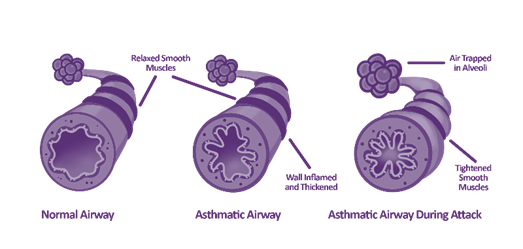
In most people with asthma, inflammation can drive symptoms, but because airway inflammation is not visible, it is often overlooked. If a patient attends a routine asthma review and reports feeling fine, with little to no symptoms, airway inflammation can still be present, increasing the risk of future exacerbations. This demonstrates the need for objective testing in routine care to assess what cannot be seen: airway inflammation.
It is important to build a full picture of what’s happening in the airways instead of just asking about symptoms. This is where Fractional exhaled Nitric Oxide (FeNO) testing is vital to the asthma pathway.
What is FeNO testing6?
FeNO is a non-invasive biomarker associated with type 2 airway inflammation; it measures nitric oxide (NO) in exhaled breath. When inflammation is present in the airways, more NO is produced and can be measured in a person’s breath, helping to assess the level of airway inflammation. FeNO testing provides the missing piece of the puzzle as it can:
- Support an asthma diagnosis,
- Help clinicians make informed treatment decisions,
- Identify poor adherence or inhaler technique,
- Open up more informed conversations between patients and healthcare professionals.
Asthma is a variable condition, with symptoms, triggers and levels of airway inflammation potentially changing over time. Incorporating FeNO testing into routine asthma management can provide healthcare professionals with an objective measure of type 2 airway inflammation, helping them monitor changes over time and build a more complete picture of a patient’s asthma control.
As technology and understanding of FeNO have evolved, its role in asthma care has become increasingly recognised. In the UK, the 2024 joint asthma guideline from the National Institute for Health and Care Excellence (NICE), the British Thoracic Society (BTS) and the Scottish Intercollegiate Guidelines Network (SIGN) incorporated FeNO testing into recommendations for the diagnosis and ongoing management of asthma7.
FeNO testing with the NObreath®.
The NObreath® is an FeNO device that has supported asthma diagnosis and management for over 15 years. Designed with the patient in mind, it provides adult and child test modes, making it suitable for most ages. Its compact, portable design makes it ideal for busy primary and secondary care settings, delivering accurate, reliable FeNO results trusted by healthcare professionals worldwide.

Good control is personal.
Everyone’s normal is different, so good asthma control isn’t about achieving a number; it should mean positive outcomes for the individual, which can translate to:
- Sleeping through the night,
- Exercising,
- Not missing work or school because of symptoms,
- Playing sport.
Good asthma control is about understanding symptoms and reducing future risk. Instead of focusing only on symptoms, consider inflammation. By providing an objective measurement of type 2 airway inflammation, FeNO testing adds the missing piece to the puzzle, helping healthcare professionals make more informed decisions and provide more personalised asthma care, ultimately improving patient outcomes.
To learn more about the role of FeNO testing in asthma management, read our blog here. For more information on FeNO testing with the NObreath®, visit the website here.
References
- Busse WW, Kraft M. Current unmet needs and potential solutions to uncontrolled asthma. European Respiratory Review [Internet]. 2022 Mar 31 [cited 2026 Sept 7];31(163). Available from: https://err.ersjournals.com/content/31/163/210176.long
- NHS. Asthma [Internet]. NHS. 2021 [cited 2026 Sept 7]. Available from: https://www.nhs.uk/conditions/asthma/
- Price D, Fletcher M, van der Molen T. Asthma control and management in 8,000 European patients: the REcognise Asthma and LInk to Symptoms and Experience (REALISE) survey. npj Primary Care Respiratory Medicine [Internet]. 2014 June 12 [cited 2026 Sept 7];24(1). Available from: https://www.ncbi.nlm.nih.gov/pmc/articles/PMC4373302/
- Asthma Zones: Signs of Controlled and Uncontrolled Asthma ǀ AAFA.org [Internet]. Asthma and Allergy Foundation of America. 2026 [cited 2026 Sept 7]. Available from: https://aafa.org/asthma/asthma-symptoms/asthma-control/
- Asthma + Lung UK [Internet]. 2023. [Cited September 2026]. Available from: https://www.asthmaandlung.org.uk/investing-breath-measuring-economic-cost-asthma-copd-uk-identifying-ways-reduce-it-through-better
- Asthma + Lung UK. FeNO test | Asthma + Lung UK [Internet]. www.asthmaandlung.org.uk. 2022 [cited 2026 Sept 7]. Available from: https://www.asthmaandlung.org.uk/symptoms-tests-treatments/tests/feno-test
- National Institute for Health and Care Excellence. Overview | Asthma: diagnosis, monitoring and chronic asthma management (BTS, NICE, SIGN) | Guidance | NICE [Internet]. Nice.org.uk. NICE; 2024 [cited 2026 Sept 7]. Available from: https://www.nice.org.uk/guidance/NG245