Asthma is a chronic disease that affects millions worldwide, with many dying from the condition every year1. Asthma care has evolved over the years, but despite the advances, objectively assessing airway inflammation, the key driver of asthma, remains challenging in routine clinical practice.

Historically, asthma management has relied heavily on symptom reporting, but symptoms alone are unreliable indicators of airway inflammation. Inflammation in the airways cannot be seen, and whilst patients may appear clinically stable, airway inflammation may be present, necessitating the use of objective, measurable biomarkers.

FeNO – A non-invasive biomarker technology

Airway inflammation is associated with elevated levels of nitric oxide (NO) in exhaled breath, providing a measurable biomarker of eosinophilic inflammation known as Fractional exhaled Nitric Oxide (FeNO). Using a FeNO device, clinicians can rapidly assess airway inflammation through a non-invasive test that delivers real-time results to support asthma diagnosis, monitoring, and treatment optimisation.

Evolution of FeNO Testing

The evolution of FeNO technology

In the 1990s, researchers found that FeNO served as a non-invasive biomarker of airway inflammation and used chemiluminescence technology to measure it, detecting NO through light emitted during a chemical reaction. This method provided high sensitivity and accuracy but proved very costly due to the need for regular maintenance and calibration, limited accessibility, and the specialist training required to operate it. It was clear that early FeNO technology demonstrated clinical value but lacked scalability.

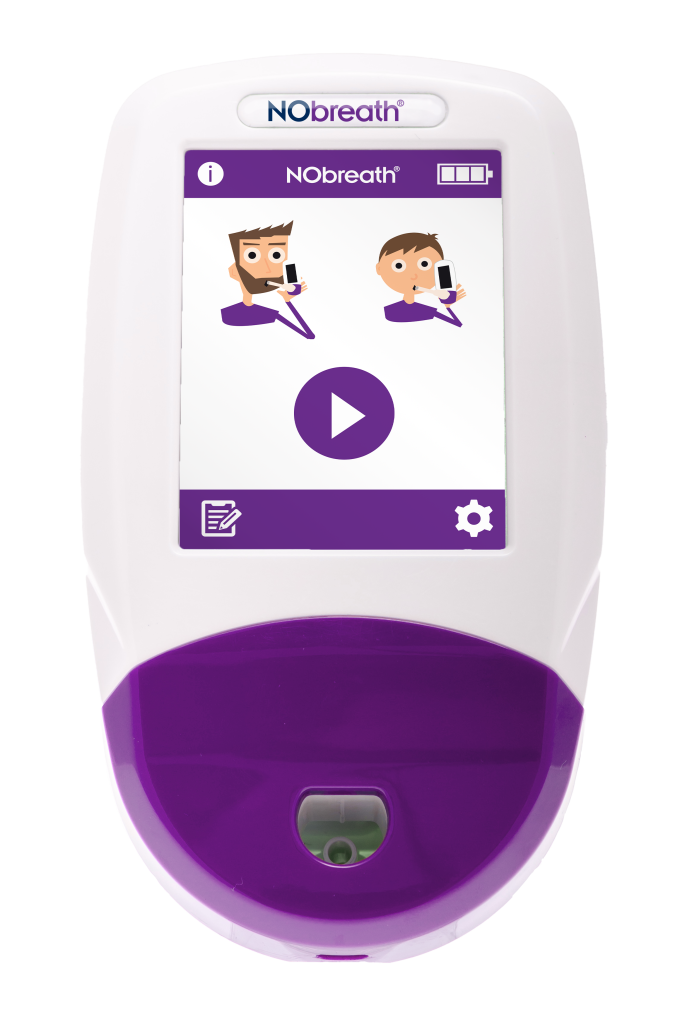
In recent years, this has advanced to electrochemical sensor technology, enabling a new generation of portable FeNO devices, including the NObreath®, whilst still matching the gold-standard chemiluminescence technology.

Modern FeNO devices using electrochemical sensors have decentralised diagnostics, providing a portable respiratory diagnostic option which is easy to integrate into point-of-care workflows. The devices are easy to use and no longer require specialist training, making them a more cost-effective option in respiratory diagnostics.

Evolution of FeNO Testing

How point-of-care FeNO testing changes clinical practice

Thanks to continuous innovation, FeNO devices are now accessible at the point of care, enabling faster clinical decision-making, improved monitoring capabilities, and more personalised asthma management. This evolution reflects a broader shift toward decentralised, non-invasive diagnostic technologies designed to support earlier detection and more proactive respiratory care.

FeNO testing – Ease of use

Recent developments in FeNO devices have focused on usability, workflow efficiency, and accessibility. For example, the NObreath®, now in its 2nd generation, is a portable FeNO device which pioneered the exhalation-only manoeuvre. Helping to improve asthma care for over 15 years, the device is suitable for both adults and children, the test is easy to complete and provides a flow incentive to ensure a flow rate of 50 ml/s, yielding an accurate result. Providing instant results, FeNO testing supports efficient point-of-care workflows and faster clinical decision-making.

The future of respiratory diagnostics

The inclusion of FeNO testing in clinical guidelines has increased throughout the years, with the 2024 UK guidance from the National Institute for Health and Care Excellence (NICE), the British Thoracic Society (BTS), and the Scottish Intercollegiate Guidelines Network (SIGN) recommending FeNO as a first-line test to aid asthma diagnosis and management2.

This marks a major shift in asthma care, with a growing emphasis on biomarker-led approaches and more personalised treatment strategies to improve patient outcomes. As respiratory diagnostics become increasingly accessible beyond hospitals and specialist centres, more patients can benefit from advanced technologies through primary care, community clinics, and outpatient respiratory services. Reflecting this trend, Intermedical UK, the exclusive UK distributor of the NObreath® FeNO device, has now installed more than 3,000 devices across the UK, including over 1,200 since the 2024 guideline update, highlighting the rapid adoption of FeNO testing in routine clinical practice.

FeNO testing offers a non-invasive option to aid diagnosis and monitoring of asthma, making biomarker testing more accessible and decentralising respiratory monitoring. Continued innovation in this technology may even expand to home monitoring in the future.

NObreath® Evolution of FeNO Testing

References

  1. World Health Organization. Asthma [Internet]. World Health Organization. 2024. Available from: https://www.who.int/news-room/fact-sheets/detail/asthma
  2. National Institute for Health and Care Excellence. Overview | Asthma: diagnosis, monitoring and chronic asthma management (BTS, NICE, SIGN) | Guidance | NICE [Internet]. Nice.org.uk. NICE; 2024. Available from: https://www.nice.org.uk/guidance/NG245

Written by Carol Stonham MBE

Carol Stonham MBE - Love Your Lungs Week

This article reflects the opinions of a healthcare professional. The views expressed are their own. The intended use for the NObreath® is as follows:

The 2nd generation NObreath® is a breath nitric oxide (NO) test system intended to measure fractional exhaled nitric oxide (FeNO) in parts per billion (ppb) in exhaled breath.

The measurement is taken to evaluate airway inflammation and should be used in conjunction with other clinical and laboratory evaluations where appropriate when making a diagnosis or treatment plan. The measurements are intended for interpretation by healthcare professionals and for us in a healthcare environment, where paediatric and adult patients will complete measurements under supervision.

For many people lungs don’t really feature in their daily self-awareness despite the vital work they do. They are there in the background doing their job. For many people Love your Lungs week might just make them think about what a good job their lungs are doing and maybe look for ways of encouraging them to stay healthy – avoiding pollution, not smoking or vaping and getting regular exercise in for example.

Love Your Lungs Week and Asthma

For those people with asthma Love Your Lungs week might have a different emphasis. Asthma symptoms, whether minor or more dramatic, will certainly make a person aware of their breathing. Good asthma care can help to keep the symptoms under control and avoid bouts of acute symptoms.

Good asthma care starts with an accurate diagnosis. Historically an asthma diagnosis was made on assessment of symptoms, perhaps some lung function testing, and response to treatment. Evidence shows us we sometimes got it wrong using this approach 1. The current joint UK guidelines from British Thoracic Society (BTS), Scottish Intercollegiate Network (SIGN) and National Institute for Health and Care Excellence (NICE)2 have moved to basing a diagnosis of asthma on assessment of symptoms and history that is supported by objective testing. Fractional exhaled nitric oxide (FeNO) is the first recommended test based on clinical accuracy and cost effectiveness. A raised FeNO is an indicator of eosinophilic airway inflammation which is commonly seen in most types of asthma when it is not adequately treated with inhaled corticosteroids (ICS).

Love Your Lungs Week

Once an accurate diagnosis has been made the person being diagnosed needs to understand what asthma is, what is happening in their lungs, and how their treatment works. There are no agreed education sessions for people newly diagnosed with asthma as there are for those with diabetes.

As asthma is a variable condition, understanding these features support the person to adjust medication to control symptoms and self-manage their condition. Healthcare input is minimal in someone with asthma – an annual review is usually the only planned touch point; others tend to be when the symptoms are poorly controlled. Most healthcare professionals will use a diagram or airway model to explain asthma but the addition of FeNO is a useful tool to demonstrate inflammation especially in the symptomatic person. It helps both practitioner and patient to understand what is happening in the lungs – a measured objective marker demonstrating inflammation.

Why Objective Assessment Remains Important

Many people with a long-term health condition will become so used to the symptoms they experience and the regular use of treatment4. This is seen in some people with asthma – they accept that they have asthma therefore they accept a wheeze or cough4, they stop taking regular ICS treatment and instead rely on a rescue inhaler to treat symptoms as they arise4, or they might continue treatment but fall into bad habits and use their inhaler incorrectly5. In all of these cases measuring FeNO is helpful to assess the underlying airway inflammation, to demonstrate suboptimal control of airway inflammation, and to base ongoing treatment decisions which may require a change of medication, a change of inhaler device or commonly, simply a reminder that asthma treatment needs to be taken regularly with good technique.

The NObreath® FeNO Device

Love Your Lungs Week

FeNO testing with the NObreath® is a quick and easy non-invasive way to objectively measure airway inflammation. With adult and child test modes, the NObreath® is suitable for all settings thanks to its accuracy and portability. Featuring an exhalation-only manoeuvre, the test is easy to do and can help to improve asthma care, allowing healthcare professionals to tailor asthma treatment effectively.

Love Your Lungs for those with asthma should focus on getting the treatment right and taking it effectively and regularly so that the lungs can get on doing their job without reminding the person they have asthma at all. Of course, that will also include the general measures that everyone else will be considering – avoiding pollution, avoiding smoking and vaping, and getting regular exercise in, but good asthma care will support activity without a symptom burden. 

References:

  1. Aaron SD, Vandemheen KL, FitzGerald JM, Ainslie M, Gupta S, Lemière C, Field SK, McIvor RA, Hernandez P, Mayers I, Mulpuru S. Reevaluation of diagnosis in adults with physician-diagnosed asthma. JAMA. 2017;317(3):269-79.
  2. National Institute for Health and Care Excellence. Asthma: diagnosis, monitoring and chronic asthma management (BTS, NICE, SIGN) (NG245) [Internet]. London: NICE; 2024 [cited 2026 18 Jun]. Available from: https://www.nice.org.uk/guidance/ng245
  3. Patel S, Huang M, Miliara S. Understanding treatment adherence in chronic diseases: challenges, consequences, and strategies for improvement. Journal of Clinical Medicine. 2025 Aug;14(17):6034. DOI: 10.3390/jcm14176034.
  4. Canonica GW, Domingo C, Lavoie KL, Kaliasethi A, Khan SQ, Majumdar A, Fulmali S. Asthma patients’ and physicians’ perspectives on the burden and management of asthma: post-hoc analysis of APPaRENT 1 and 2 to assess predictors of treatment adherence. Respiratory medicine. 2024;227:107637.
  5. Bosnic-Anticevich S, Bender BG, Shuler MT, Hess M, Kocks JW. Recognizing and tackling inhaler technique decay in asthma and chronic obstructive pulmonary disesase (COPD) clinical practice. The Journal of Allergy and Clinical Immunology: In Practice. 2023;11(8):2355-64.

Small Intestinal Bacterial Overgrowth (SIBO) is a gastrointestinal condition where an abnormal number of bacteria is found in the small intestine. Whilst small amounts of bacteria are normal, higher levels can cause uncomfortable digestive issues. SIBO can impact nutritional absorption and affect hydration. In this article, we will take a closer look at the impact of SIBO and how Hydrogen and Methane Breath Testing (HMBT) can aid in a diagnosis.

What is SIBO?1

SIBO is a condition characterised by elevated bacterial levels in the small intestine. This excess amount of bacteria ferments food and interferes with digestion. Common causes of SIBO include:

  • Motility issues: Slowed gut movement from conditions like irritable bowel syndrome (IBS), diabetes, or surgery.
  • Low stomach acid: Reduced acid allows bacteria to survive and travel to the small intestine.
  • Structural problems: Adhesions, scarring, or bowel surgery.

There are different types of SIBO, categorised by the primary gas produced. Hydrogen-dominant, methane-dominant and mixed SIBO are the most common forms. SIBO causes various uncomfortable symptoms, such as:

  • Bloating,
  • Abdominal pain,
  • Diarrhoea or constipation,
  • Excess gas,
  • Fatigue.

These symptoms can significantly impact a person’s quality of life, underscoring the need for an accurate diagnosis.

Why diagnosis matters.2,3

Symptoms of SIBO can overlap with many other gut conditions, mimicking conditions like IBS, Chron’s disease and coeliac disease. Given the significant overlap in symptoms, a definitive diagnosis is crucial. SIBO is frequently misdiagnosed, and this can lead to inappropriate treatments and ongoing symptoms; an early diagnosis can improve patient outcomes. The primary test for SIBO is a non-invasive HMBT.

What is HMBT?4

A Hydrogen and Methane Breath Test (HMBT) is a non-invasive diagnostic method for measuring hydrogen and methane concentrations in exhaled breath. As approximately 30%–62% of the adult population are methane producers5, there is a clear need for HMBT methods that reliably detect both gases.

Prior to the test, the patient must follow a strict protocol that includes a fasting period. On the day of the test, the patient will be asked to do the following:

  • Drink a sugar solution like lactulose or glucose.
  • Exhale into an HMBT device at certain timed intervals.

Hydrogen and methane are the gases produced when bacteria ferment food prematurely in the small intestine. High levels of these gases can indicate elevated bacterial levels and support a diagnosis of SIBO.

What happens after diagnosis?6

Once a diagnosis has been confirmed, SIBO can be treated by either:

  • Antibiotics,
  • Dietary changes,
  • Addressing the root cause.

A HMBT allows healthcare professionals to target treatment options, providing the best outcome for the patient.

SIBO is a common condition, but it is often overlooked due to overlap in symptoms. It can affect nutrient absorption, leading to vitamin deficiencies, and can impact hydration through its symptoms. It is vital that you consult with a healthcare professional for an accurate diagnosis. By providing a HMBT for an accurate diagnosis, healthcare professionals can tailor treatment to relieve symptoms, providing better outcomes for patients.

The Gastrolyzer® range by Bedfont® Scientific Limited

The Gastrolyzer® range of HMBT devices is designed to aid the diagnosis of various gastrointestinal conditions, such as SIBO and carbohydrate malabsorption.

The Gastro+™ is a portable, handheld device that measures hydrogen gas levels in exhaled breath. Breath testing can be performed with mouthpieces or by facemask, making it a perfect solution for infants and elderly patients who may struggle to hold their breath before exhaling.

The GastroCH4ECK® is a desktop HMBT device that measures hydrogen and methane gas levels in exhaled breath. Remote testing can be performed with the GastroCH4ECK® using breath bags for accurate, reliable results.

For more information on HMBT and how tools like the Gastrolyzer® are aiding gastrointestinal investigations, visit the educational portal here.

References

  1. SIBO Symptoms & Diagnosis | Digestive Health | Royal Bucks [Internet]. The Royal Buckinghamshire Hospital. 2025 [cited 2026 Jan 21]. Available from: https://www.royalbucks.co.uk/conditions-and-symptoms/small-intestinal-bacterial-overgrowth/
  2. Shah A, Thite P, Hansen T, Kendall BJ, Sanders DS, Morrison M, et al. Links between celiac disease and small intestinal bacterial overgrowth: A systematic review and meta‐analysis. Journal of Gastroenterology and Hepatology [Internet]. 2022 Oct 1;37(10):1844–52. Available from: https://www.ncbi.nlm.nih.gov/pmc/articles/PMC9795979/
  3. ‌Goździewska M, Łyszczarz A, Kaczoruk M, Kolarzyk E. Relationship between SIBO and other bowel diseases and a common eating pattern for them. Part III. Annals of Agricultural and Environmental Medicine. 2024 Sep 19;31(3):322–8.
  4. Hydrogen/Methane Breath Testing for SIBO and Malabsorption [Internet]. Bsg.org.uk. 2024. Available from: https://www.bsg.org.uk/clinical-resource/agip-protocol-for-hydrogen-methane-breath-testing
  5. Sahakian AB, Jee SR, Pimentel M. Methane and the Gastrointestinal Tract. Digestive Diseases and Sciences [Internet]. 2009 Oct 15;55(8):2135–43. Available from: http://image.sciencenet.cn/olddata/kexue.com.cn/upload/blog/file/2010/1/2010123203248875447.pdf
  6. Gastroadmin. Management of Small Intestinal Bacterial Overgrowth – SIBO [Internet]. London Gastroenterology Centre. 2019. Available from: https://www.gastrolondon.co.uk/management-of-small-intestinal-bacterial-overgrowth-sibo/
Back to top