Asthma is a chronic lung condition that causes airway inflammation and affects approximately 262 million people worldwide1. Typical symptoms include:
- Wheezing,
- Breathlessness,
- Chest tightness,
- Coughing.
When airways are inflamed, breathing can become difficult. Recent Asthma + Lung UK research found that over 42,000 people ended up in emergency care in 2023/24 after visiting 5 or more times within the last 12 months2. These startling numbers highlight the importance of better asthma management to reduce the burden on healthcare systems.
Assessing airway inflammation is key to better asthma management. When a person’s airways become inflamed, higher-than-usual nitric oxide (NO) gases are produced. The easiest way to measure a person’s NO levels is a Fractional exhaled Nitric Oxide (FeNO) test.
What is FeNO testing?
A FeNO test with a device like the NObreath® is a quick, easy, non-invasive and accurate way to measure NO levels in exhaled breath. NO is a marker of eosinophilic airway inflammation, common in allergic asthma. Patients follow on-screen instructions to inhale and then exhale into the device, providing instant results.
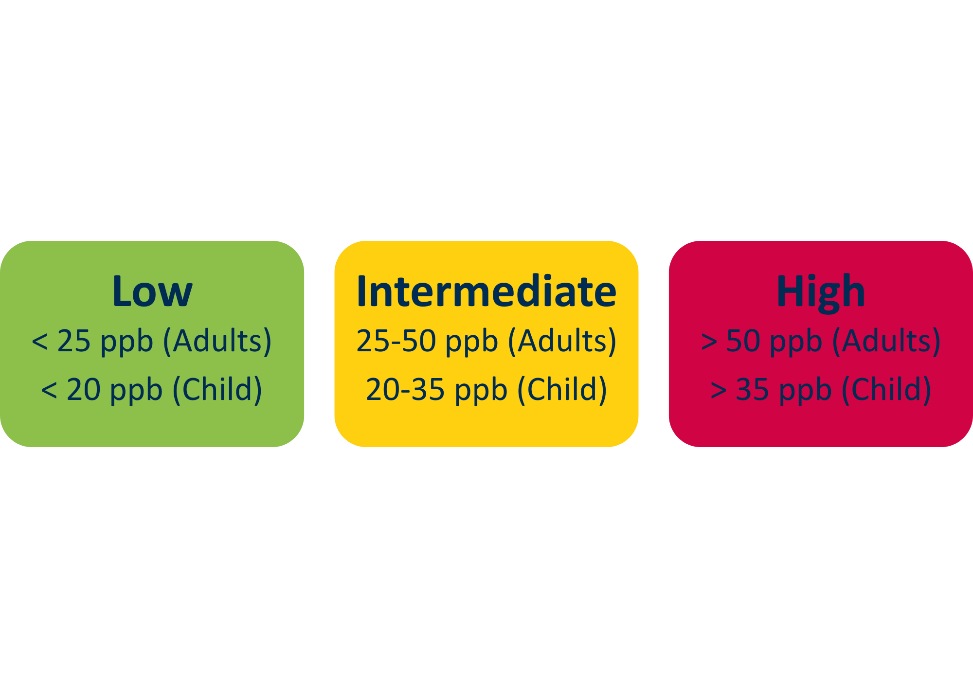
FeNO levels are measured in parts per billion (ppb). A high FeNO level indicates airway inflammation and can aid in diagnosing asthma.
ATS/ERS Clinical Guidelines Summary for Interpreting FeNO Levels3,4:
FeNO testing with the NObreath®
The NObreath® is a FeNO device manufactured by Bedfont® Scientific Limited. Bedfont® has over 48 years of knowledge and expertise in designing and manufacturing medical breath analysis devices. The NObreath® has improved asthma management for over 15 years, providing healthcare professionals (HCPs) with a fairly priced solution for FeNO testing. Suitable for both adults and children, the NObreath® is perfect for primary and secondary care settings. For more information on the NObreath®, visit the website here.
Why is FeNO testing useful in asthma?
Airway inflammation cannot be seen; FeNO tests allow HCPs to track any underlying inflammation and, when used alongside an extensive clinical history, can diagnose asthma. Having access to a FeNO device is useful throughout the asthma pathway. Not only does it aid an asthma diagnosis, but it also helps to guide treatment decisions.
Carrying out FeNO tests in routine asthma reviews allows HCPs to:
- Tailor inhaled corticosteroid (ICS) therapy,
- Identify steroid responsiveness,
- Guide step-up or step-down treatment strategies.
A patient who consistently presents with a high FeNO level indicates possible poor adherence to ICS, therefore, instigating conversations about medication use.

FeNO testing is incorporated into worldwide guidelines. Joint guidelines by the National Institute of Health Excellence (NICE), the British Thoracic Society (BTS), and the Scottish Intercollegiate Guidelines Network (SIGN) now recommend FeNO as a first-line test for asthma diagnosis.
Future of FeNO testing.
The biggest challenge with FeNO testing is accessibility; unfortunately, some areas do not have access to a FeNO device. In a recent interview with Carol Stonham MBE, we discussed the issues around funding. In some areas, the Integrated Care Board (ICB) will pay for it, but in others, it is down to the Primary Care Network (PCN). However, if the PCN does not deem it a priority, it comes down to the individual General Practice (GP) surgeries.
Looking back at the shocking statistics at the beginning of this blog, it is clear that better asthma management is needed. FeNO is a valuable tool in modern asthma management. It guides HCPs to understand the underlying airway inflammation in asthma, leading to better patient outcomes.
With the NICE/BTS/SIGN guidelines update, FeNO testing is recommended as a first-line test for asthma diagnosis and management in adults. This means access to FeNO needs to improve.
For more information on FeNO testing and its central role in asthma care in the joint NICE/BTS/SIGN guidelines, click here to read our article on the guideline updates and FeNO testing.
References
- World Health Organization. Asthma [Internet]. World Health Organization. 2024. Available from: https://www.who.int/news-room/fact-sheets/detail/asthma
- Surge in repeat hospital visits for lung conditions [Internet]. Asthma + Lung UK. 2025 [cited
2025 Mar 18]. Available from:
https://www.asthmaandlung.org.uk/media/press-releases/surge-repeat-hospital-visits-lung-
conditions - Louis R, Satia I, Ojanguren I, Schleich F, Bonini M, Tonia T, Rigau D, Ten Brinke A, Buhl R, Loukides S, Kocks JW. European Respiratory Society guidelines for the diagnosis of asthma in adults. European Respiratory Journal. 2022 Sep 1;60(3). DOI: 10.1183/13993003.01585-202. [cited 2025 May 14] Available from: https://pubmed.ncbi.nlm.nih.gov/35169025/
- Dweik RA, Boggs PB, Erzurum SC, Irvin CG, Leigh MW, Lundberg JO, Olin AC, Plummer AL, Taylor DR, American Thoracic Society Committee on Interpretation of Exhaled Nitric Oxide Levels (FENO) for Clinical Applications. An official ATS clinical practice guideline: interpretation of exhaled nitric oxide levels (FENO) for clinical applications. American journal of respiratory and critical care medicine. 2011 Sep 1;184(5):602-15. PMCID: PMC4408724 PMID: 21885636. [cited 2025 May 14] Available from: https://pubmed.ncbi.nlm.nih.gov/21885636/