Intermedical UK proudly delivers the 3,000th NObreath® FeNO device to the UK market.
Bedfont® Scientific Limited, a medical device manufacturer based in Kent, with over 49 years’ experience in the breath analysis industry, was pleased to support its UK distributor, Intermedical UK, in supplying the 3,000th NObreath® Fractional exhaled Nitric Oxide (FeNO) device in the UK. Intermedical UK, a trusted leader in respiratory health, has been providing cardio-respiratory diagnostic and therapy equipment for frontline care since 1997.
Bedfont® and Intermedical Team
Livio Gagliardi, Acting Managing Director at Intermedical (UK) Ltd, said, “Reaching the 3,000th NObreath® FeNO device in the UK is a shared success that reflects the dedication of both the Intermedical and Bedfont® teams. Together, we have worked hard to deliver a clinically proven, accessible, and cost-effective FeNO solution that genuinely meets the needs of frontline healthcare. We are incredibly grateful to our customers for placing their trust in us and for recognising the value that NObreath® brings to asthma diagnosis and ongoing management. Their commitment to improving respiratory care is what makes milestones like this possible, and we look forward to continuing this journey of innovation and impact alongside Bedfont®.”
The NObreath® FeNO device, manufactured by Bedfont®, is an innovative diagnostic tool that measures airway inflammation and helps healthcare professionals diagnose and manage asthma effectively. With over 3,000 devices now available across the UK, access to FeNO testing is improving, bringing Bedfont® closer to a world where everyone can access instant, non-invasive, and simple breath testing to support medical diagnosis.
As a valued long-term distributor of the NObreath®, Intermedical UK has played a key role in expanding access to high-quality respiratory diagnostics, and the close partnership over the years has been instrumental in reaching this monumental milestone.
Jason Smith, CEO at Bedfont®, comments, “This milestone of 3,000 devices in UK primary care highlights just how rapidly objective asthma testing is advancing. The updated joint UK guidelines now place even greater emphasis on FeNO, echoing the global shift toward evidence-based, accessible diagnostic tools. We are committed to making this technology available everywhere it is needed, ensuring clinicians and patients around the world benefit from fast, non-invasive breath testing.”
Bedfont® remains committed to improving asthma care worldwide, working closely with a global network of distributors to expand access to FeNO testing and improve asthma treatment. Recent partnerships in Mexico and India are already strengthening diagnostic capabilities, enabling clinicians in these regions to integrate simple, non-invasive breath testing into routine asthma assessment.
To learn more about Bedfont® and the NObreath® FeNO device, visit the website here.
Innovative NObreath® FeNO device is the allergists‘ device of choice in the USA.
coVita™ LLC, a leader in advanced breath analysis and diagnostic solutions, serves as the U.S. distributor for the innovative NObreath® Fractional Exhaled Nitric Oxide (FeNO) device from UK-based Bedfont® Scientific Ltd. The new agreement with Allergy Partners marks the culmination of a strategic partnership developed over the past two years.
“The partnership established between coVita™ and Allergy Partners marks important progress in broadening access to FeNO technology on a global scale.” Said Jason Smith, CEO at Bedfont®.“We are pleased to support this collaboration and proud of the role coVita™ is playing in advancing high-quality asthma care.”
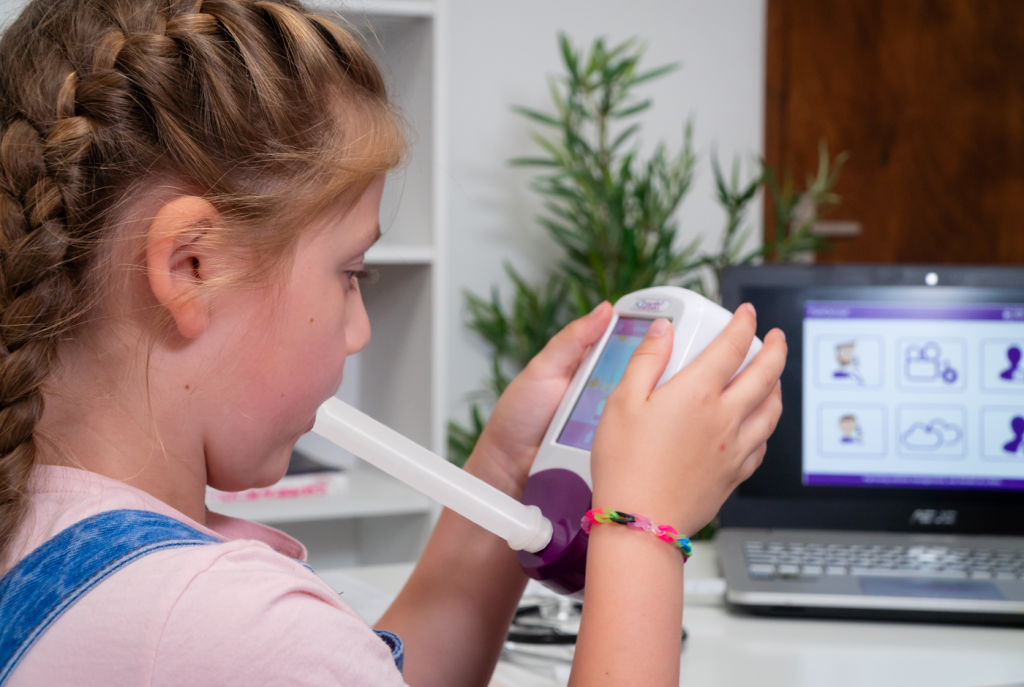
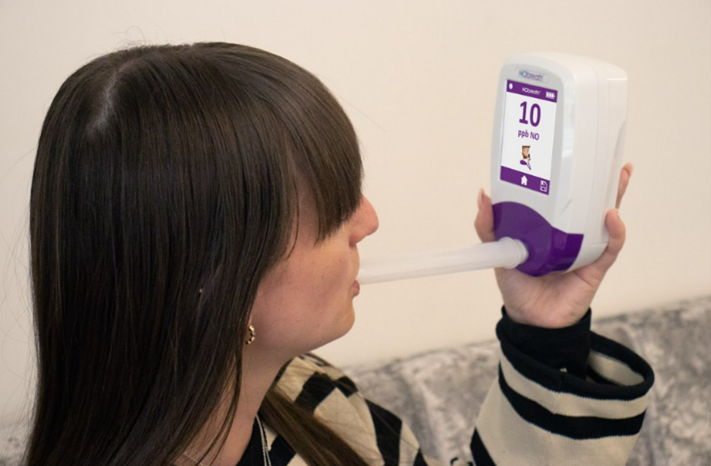
Taking a FeNO test with the NObreath®
As the nation’s largest and most trusted integrated network of allergy and asthma specialists, Allergy Partners serves patients through more than 125 locations in over 20 states. Under the new agreement, all Allergy Partners clinics will provide FeNO testing with the NObreath® device, enhancing patient access to advanced, non-invasive tools that aid in asthma diagnosis and management. The NObreath® is the allergist’s device of choice in the USA, further underscoring its value in supporting accurate assessment and personalised treatment. With 26.8 million Americans, 8.2% of the U.S. population, affected by asthma in 2022, the need for innovative tools to support better care and disease management has never been greater.
„We are incredibly proud of our collaboration with Allergy Partners and thrilled to help them implement the NObreath® FeNO technology”, said Jason Aversano, CEO at coVita™. “Their determination to integrate FeNO testing across their entire network of providers is illustrative of their understanding of the vital role objective FeNO monitoring plays in the modern clinical setting.“
Bedfont® Scientific, manufacturer of the NObreath®, and coVita™, share a long-standing partnership grounded in mutual respect, trust, and a shared vision to improve respiratory health through innovation. Over the years, the two companies have worked hand in hand to make advanced breath analysis more accessible to clinicians and patients throughout the United States. Their collaboration continues to exemplify how aligned values and global cooperation can drive meaningful change in healthcare.
To learn more about the NObreath® FeNO device, visit the website here.
Smokerlyzer®, Gastrolyzer®, and NObreath® devices on show at the world’s largest healthcare event.
Bedfont® Scientific, world leaders in breath analysis, with over 49 years of experience in the medical breath analysis industry, is thrilled to be showing its innovative devices at this year’s World Health Expo (WHX) Dubai, from the 9th to the 12th February 2026. Formally known as Arab Health, WHX Dubai has grown into a global healthcare hub, attracting professionals from over 180 countries. The event is due to take place at the Dubai Exhibition Centre.
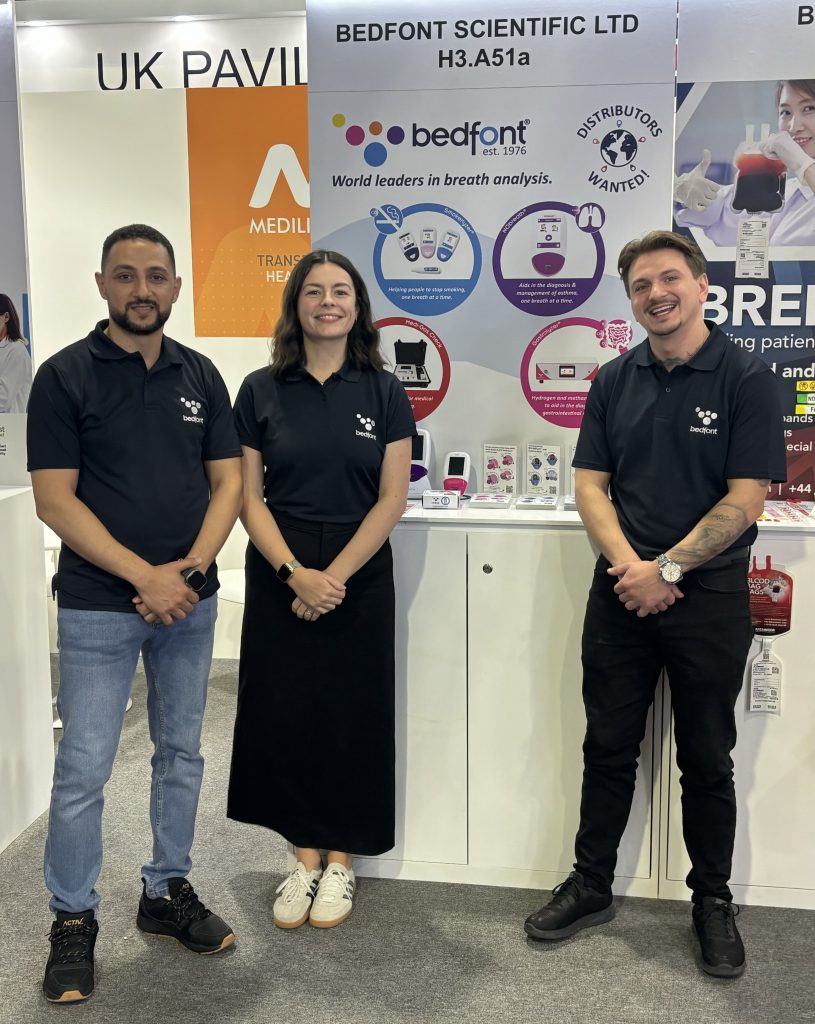
Bedfont Team at Arab Health 2025
WHX Dubai represents a cornerstone event for international healthcare collaboration, innovation, investment, and knowledge sharing. Bedfont® is pleased to be demonstrating its devices at the world’s largest healthcare event. On show at stand S7.F90.F, you will find the Smokerlyzer® range of breath carbon monoxide (CO) devices, which aid smoking cessation. The Gastrolyzer® hydrogen-methane breath testing (HMBT) range, which is used to help detect gastrointestinal disorders. And the NObreath® fractional exhaled nitric oxide (FeNO) device, which aids asthma diagnosis and management.
Jason Smith, CEO at Bedfont® Scientific, said, “WHX Dubai continues to set the benchmark for healthcare innovation worldwide. Our presence underscores our dedication to excellence and to delivering devices that genuinely elevate the standard of patient care. As healthcare demands grow, we remain committed to providing solutions that empower clinicians, improve outcomes, and support a more efficient, responsive care environment. We look forward to building on the momentum generated at this year’s event.”
WHX Dubai 2026 is expected to attract over 235,000 professionals, offering the opportunity to see innovative medical solutions, attend educational and thought-leadership conferences, and network with like-minded individuals looking to improve healthcare across the globe. With strong relationships already established across the Middle East, Bedfont® hopes to engage with various healthcare professionals during the event, showcasing its innovative breath analysis devices.
You will find the friendly Bedfont® team at stand S7.F90.F. For more information on Bedfont® and to learn more about the Smokerlyzer®, Gastrolyzer®, and NObreath® devices, visit the website here.
January marks the start of a new year, with many people using this time as a fresh start and the perfect time to set health-improving goals. A study in 2024 found that January is the most popular month of the year for people to give up smoking, with an average of 440,670 online searches for terms related to quitting smoking1.
New Year’s resolutions can be health-focused or financially driven, and quitting smoking aligns perfectly with both. Not only does it improve overall health, but it also saves significant money, allowing people to achieve their financial goals.
Understanding CO monitoring.
Carbon monoxide is an odourless, colourless, and tasteless gas that is produced during incomplete combustion. This gas is found when smoking tobacco and has a profound effect on people’s health. When inhaled, CO binds to haemoglobin in red blood cells, reducing the delivery of oxygen throughout the body2. Smokers typically have high CO levels, and this can be monitored through a CO monitoring device used to aid a quit-smoking attempt.
The role of CO monitoring in quitting smoking.
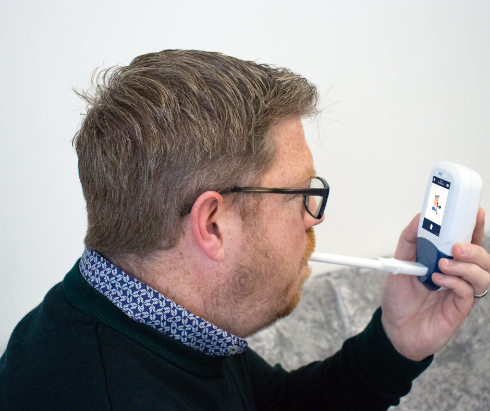
A CO monitoring device, like the Smokerlyzer®, measures the levels of CO on exhaled breath, establishing a person’s smoking status. The device offers a simple test: the user exhales slowly into the device to receive an instant CO reading, providing tangible feedback. Using a CO monitoring device during a quit attempt empowers the user to take control of their own health and, by seeing their CO levels drop over time, motivates them to continue their quit attempt.
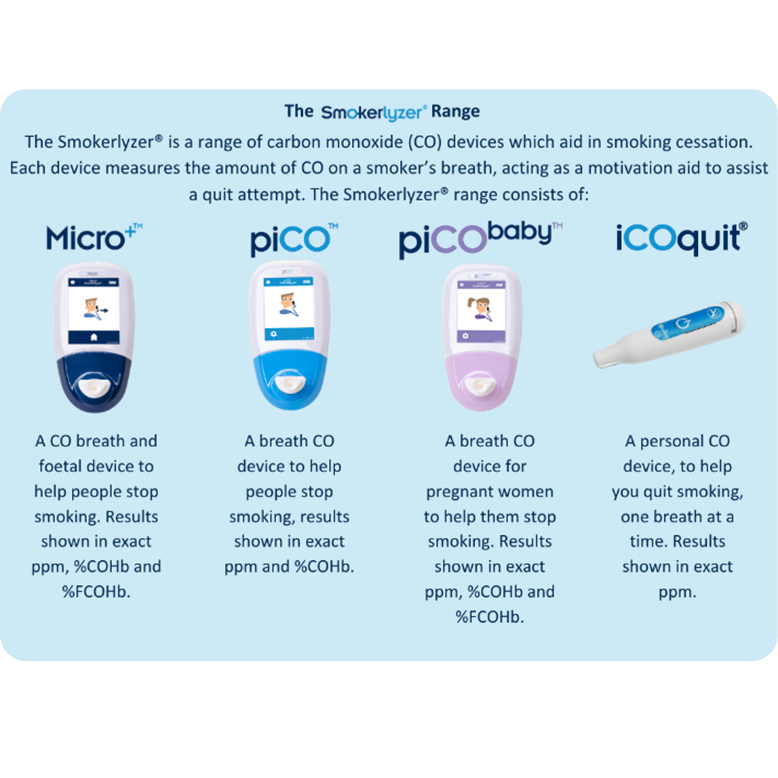
The Smokerlyzer® range.
Micro+™ – a CO breath and foetal %COHb %FCOHb device providing instant results, in parts per million (ppm), to help people stop smoking.
piCO™ – a breath CO device, providing instant results in exact ppm and %COHb to help people stop smoking.
piCObaby™ – a breath CO device for pregnant women to help them stop smoking, providing instant results in exact ppm, %COHb and %FCOHb.
iCOquit® – a personal CO device, which can be used at home to help you quit smoking.
Setting realistic quit goals.
Quitting smoking doesn’t happen instantly; it is a process, and like any significant lifestyle change, it works best when you set clear, achievable goals. A structured approach can help you stay focused, track progress, and celebrate success along the way. A helpful way to plan your quit journey is to make your goals SMART.
Specific – Be clear about what you want to achieve.
Measurable – Use CO readings or smoke-free days to track progress.
Achievable – Set goals that challenge you but are realistic.
Relevant – Focus on why quitting matters to you.
Time-bound – Set a timeframe for your targets.
Tracking progress and staying motivated.
Measuring CO levels during a quit attempt provides users with visual feedback; watching CO levels drop is a powerful motivator that helps people continue their journey. CO monitoring is also helpful in identifying relapses early and prompting users to get back on track. Quitting smoking is notoriously difficult, and it is important to celebrate milestones during a quit journey. Lower CO readings and smoke-free days are worth celebrating.
January provides the perfect opportunity to make positive, lasting changes, and quitting smoking is one of the most powerful steps you can take for your health. CO monitoring allows you to see tangible proof of your progress from the very first days of your quit journey. Watching CO levels drop is a reminder that your lungs are healing, your oxygen levels are improving, and your body is recovering.
Whether you are cutting down gradually or quitting altogether, setting clear goals, tracking your results, and celebrating each milestone can keep you motivated and on track. For more information on the Smokerlyzer® range and how it can aid a quit-smoking attempt, visit the website here.
References
Leah. New study reveals the most popular times of year to quit smoking – Digital Health Technology News [Internet]. Digital Health Technology News. 2024 [cited 2025 Nov 6]. Available from: https://www.healthtechdigital.com/new-study-reveals-the-most-popular-times-of-year-to-quit-smoking/
Cancer Research UK. What’s in a cigarette? [Internet]. Cancer Research UK. CRUK; 2023. Available from: https://www.cancerresearchuk.org/about-cancer/causes-of-cancer/smoking-and-cancer/whats-in-a-cigarette-0
Bedfont® is recognised for putting people first and scoops the AHM Health & Wellbeing Award.
Bedfont® Scientific Limited, an innovative MedTech company that has just celebrated its 49th anniversary, is thrilled to have won the All Health Matters (AHM) Health & Wellbeing Award at this year’s Kent Business Awards. The annual awards celebrate business excellence across Kent, recognising the impact businesses have made over the year across various categories.
Photo Credit: Albane McGuinness
Bedfont® prides itself on being a company that puts its people first, with a strong commitment to employee health and wellbeing. It has a dedicated team of Wellbeing Warriors, all Mental Health First Aid-trained, who work to ensure all staff are supported and encouraged to take time out of their busy days to focus on their wellbeing.
Claire Dadswell, Wellbeing Manager at Bedfont®, comments, “At Bedfont®, our people truly come first. We believe that when our team feels supported, nurtured, and valued, everything else follows. Our Wellbeing Warriors are here to make sure every member of staff knows it’s okay to pause, breathe, and prioritise themselves, because wellbeing isn’t just something we talk about, it’s something we live every day. We’re incredibly grateful to receive this award, as it recognises the dedication and hard work our team puts into supporting one another.”
Bedfont® joined various businesses from across Kent at the event, which took place at the Ashford International Hotel on Thursday, 4th December. The evening shone a light on the significant contribution businesses in Kent are making, from start-ups to Medium Business of the Year.
The award win is just another step forward in Bedfont’s efforts to prioritise staff wellbeing. Looking ahead, the Wellbeing Warriors are working hard to ensure 2026 is another positive year, with plans already in place to ensure staff feel valued and looked after.
For more information on Bedfont’s wellbeing initiatives, follow them on social media or visit the website here.
Bedfont® Scientific Limited strengthens community safety with defibrillator donation.
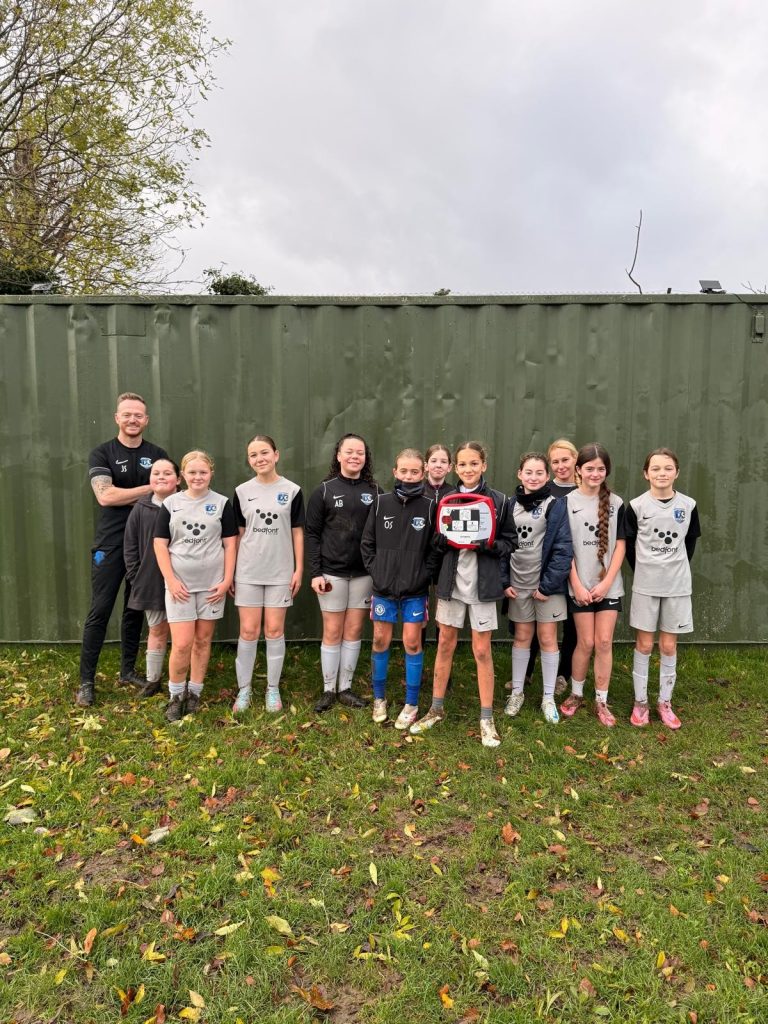
Bedfont® Scientific Limited, an innovative MedTech company with over 48 years of experience in breath analysis, has proudly donated a defibrillator to Medway United FC. The club is an integral part of the football community in Medway and Kent, and the addition of a defibrillator ensures the safety of not only the club’s teams but also the surrounding community.
Bedfont® Scientific, a business committed to supporting the community, has strong ties with Medway United Football Club. Not only does the company sponsor the under-11s girls‘ football team, but its very own CEO, Jason Smith, coaches the girls. When Jason heard that the grant the club were waiting for was taking longer than expected, he reached out to Defib Supplies, a crucial division of Intermedical (UK) Limited, who were happy to assist and provide the much-needed defibrillator at a reduced cost.
Jason Smith, CEO at Bedfont®, said, “As sponsors and as part of the coaching team, I see every week how much passion and commitment go into this club. When we learned that the defibrillator grant had been delayed, we felt a responsibility to act. We’re grateful to Defib Supplies for helping us secure the equipment at a reduced price, ensuring everyone at the club has access to the safest possible environment.”
In the UK, approximately 80,000 out-of-hospital cardiac arrests happen each year1, with less than 1 in 10 people surviving2. Having access to a defibrillator can increase survival by over 70% if used within the first three to five minutes2, and with cardiac arrest being the leading cause of sudden death during sport in young athletes3, the importance of having access to this life-saving equipment at all sports and health facilities is essential.
“We are incredibly grateful to Bedfont® Scientific for this generous donation. Having a defibrillator at our all-girls venue provides an invaluable level of safety and reassurance for players, parents, and coaches alike. It gives our young athletes the peace of mind to enjoy their football in the safest possible environment.” Said Mark Davis, Lead Coach and Founder at Medway United FC. “The addition of this life-saving equipment reflects our responsibility as a club to protect every young person who steps onto our pitch, and Bedfont’s support has helped us strengthen that commitment. Their generosity will have a lasting impact on our community.”
Bedfont’s generous donation provides the club with earlier access to this vital equipment and gives them peace of mind that, in the event of a sudden cardiac arrest, they have access to a tool that could save someone’s life.
To learn more about Bedfont® and its community efforts, visit the website here.
References
Pareek N, Rees P, Quinn T, Von Vopelius-Feldt J, Gallagher S, Mozid A, et al. British Cardiovascular Interventional Society Consensus Position Statement on Out-of-Hospital Cardiac Arrest 1: Pathway of Care. Interventional Cardiology: Reviews, Research, Resources. 2022 Nov 10;
NICE. Cardiac arrest – out of hospital care: What is the prognosis? [Internet]. NICE. 2018. Available from: https://cks.nice.org.uk/topics/cardiac-arrest-out-of-hospital-care/background-information/prognosis/
Mayo Clinic Staff. What to know about sudden death in young people [Internet]. Mayo Clinic. 2019. Available from: https://www.mayoclinic.org/diseases-conditions/sudden-cardiac-arrest/in-depth/sudden-death/art-20047571
With the festive holiday season upon us, many tend to indulge in the various rich, festive treats on offer. December is a joyful time; it is also a time to relax and treat yourself; however, the festive eating can take its toll on digestive health. A recent survey by King Edward VII’s Hospital found that 6 in 10 people blame their festive digestive issues on overindulgence1. In this blog, we will explore how HMBT can help you take a closer look at your gut health and identify any underlying conditions that may be causing your discomfort.
Common holiday eating habits and their impact
Typically, in December, we have a higher intake of sugar, fat, and alcohol. This is due to the tasty treats on offer and the extra socialising during this period. Some view the festivities as a time to relax from their regular eating habits and find themselves eating at irregular times. In contrast, others find the festive period a particularly stressful time, which can result in stress eating. As the gut microbiome can be very sensitive to dietary changes, you may find you suffer from bloating, gas, reflux, and irregular bowel movements during the festive period.
What is HMBT?
Hydrogen-methane breath testing is a non-invasive method for measuring hydrogen (H2) and methane (CH4) gases in exhaled breath. Gut bacteria produce these gases during the fermentation of undigested carbohydrates, and high levels of these gases can indicate an underlying issue. A HMBT can help identify gastrointestinal disorders like:
Small Intestinal Bacterial Overgrowth (SIBO).
Fructose/lactose intolerance.
General fermentation imbalances.
HMBT with the Gastrolyzer® range
The Gastrolyzer® is a range of HMBT devices used to aid in gastrointestinal investigation. A test using the Gastro+™ and GastroCH4ECK® is a simple, non-invasive method for measuring hydrogen and methane gases in exhaled breath. The Gastro+™ is a hand-held portable hydrogen device for quick and easy breath analysis, and the GastroCH4ECK® is a breath hydrogen and methane device with direct breath testing, allowing you to take a reading there and then, with instant results. The GastroCH4ECK® also allows for remote breath testing, allowing patients to undergo a HMBT in the comfort of their own homes.
How HMBT can help after the holidays
If you experience gastrointestinal issues, it is essential to consult a healthcare professional for evaluation. Some individuals may find that their issues resolve once they return to their normal routine; however, a HMBT can help identify sugar intolerance, such as lactose intolerance, which can help guide you in respect to what you eat during the festive period. Hydrogen-methane breath testing can also be used to support tailored dietary plans aimed at restoring gut health after the holidays.
December is a time for joy and indulgence, but balance is key. Try to avoid overindulging excessively, and ensure your diet during this period includes fibre, prebiotics, and probiotics. It is also vital to stay hydrated. By incorporating these into your festive diet, you can help minimise gastrointestinal discomfort, leaving you free to enjoy the holidays without the discomfort.
To learn more about HMBT and the Gastrolyzer® range, please visit our website here.
Rbeck Healthtech Private completes registration for the NObreath® FeNO device, helping to improve asthma care across the region.
Bedfont® Scientific Limited, world leaders in breath analysis, with over 48 years of experience in designing and manufacturing medical breath analysis devices, has collaborated with Rbeck Healtech Private to make Fractional exhaled Nitric Oxide (FeNO) testing more accessible in India. Rbeck Healthtech Private is an entirely diverse healthcare equipment distributor, with a portfolio specialising in pulmonology, cardiology, and rehabilitation. It has recently added the innovative NObreath® device to its offerings, expanding access to FeNO testing in India.
Asthma is a chronic lung disease which cannot be cured; however, with the correct diagnosis and treatment, people with asthma can lead normal lives. India accounts for approximately 13.1% of the global asthma burden1, meaning that improving access to essential diagnostic and management tools, such as the NObreath®, is vital. The NObreath® measures FeNO levels on exhaled breath, a key indicator in type 2 airway inflammation, which is commonly found in asthma.
Jason Smith, CEO at Bedfont®, comments, “Partnering with Rbeck Healthtech and the successful registration for the NObreath® in India is a meaningful milestone in our mission to make precision asthma care accessible worldwide. India faces a significant burden of asthma, and we believe that FeNO testing can empower clinicians with clearer insights into airway inflammation, leading to more personalised and effective treatment decisions.”
With the Global Asthma Report 2022 indicating that a considerable proportion of asthmatic individuals remain underdiagnosed or untreated2 in India, it is hoped that this strategic partnership will help expand the accessibility of FeNO testing in the region, ultimately saving lives.
To find out more about the NObreath® and how it is improving asthma care worldwide, visit the website here.
References
1.Singh S, Salvi S, Mangal DK, Singh M, Awasthi S, Mahesh PA, et al. Prevalence, time trends and treatment practices of asthma in India: the Global Asthma Network study. ERJ Open Research [Internet]. 2022 May 30;8(2):00528-2021. Available from: https://www.ncbi.nlm.nih.gov/pmc/articles/PMC9149387/
Part 3: Asthma treatment in 2024: Navigating the new recommendations for every age
After exploring diagnostic changes and the pivotal role of Fractional exhaled Nitric Oxide (FeNO) in asthma care, part 3 of our series shifts the focus to treatment and long-term management. From the latest recommendations for patients aged 12 and over, as well as tailored treatment pathways for children under 5, this blog summarises practical, guideline-driven approaches for managing asthma more effectively.
Treatment for patients ages 12 and over
In the past, patients with asthma have always been told to carry their blue inhaler, as this will keep them safe in the event of an asthma attack. This is no longer the case in the new guidelines.
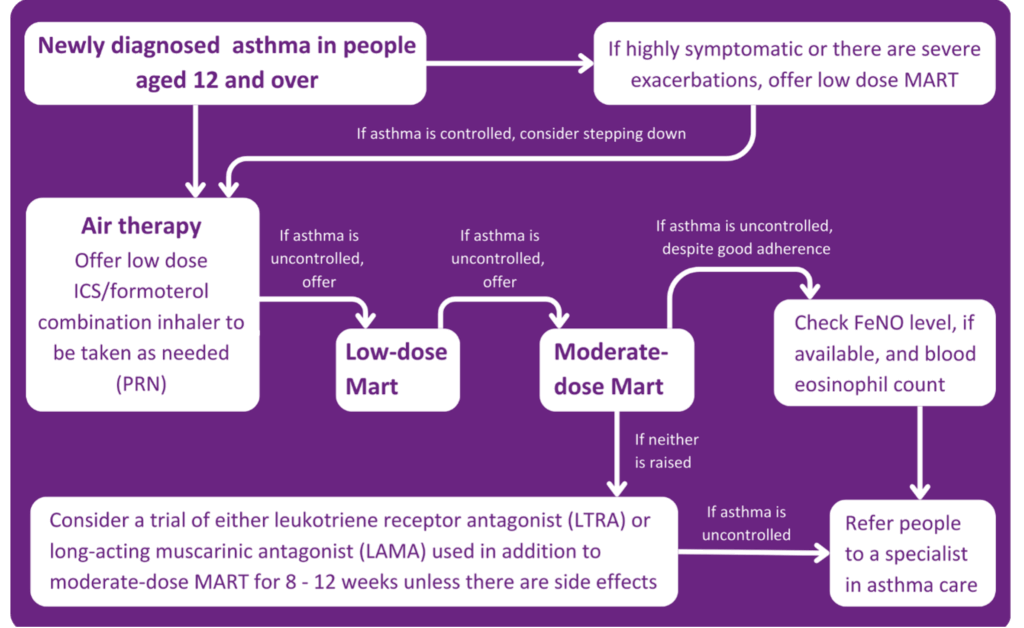
It is now recommended that people aged 12 and above with a new diagnosis of asthma should be offered Anti-Inflammatory Relief (AIR) therapy. This means using a formoterol-containing inhaled steroid inhaler on an as-needed basis. This process is for someone not experiencing symptoms at the time of presentation.
If a patient is unwell or exacerbating, this step should be skipped, and the patient should be offered low-dose Maintenance and Reliever Therapy (MART). MART is an asthma treatment plan in which one combination inhaler is used instead of two separate preventer and reliever inhalers.
If a patient is still symptomatic after being on a low-dose MART regime, then a moderate-dose MART regime should be offered. If this doesn’t relieve symptoms, inhaler technique, adherence, and new triggers should be assessed.
At this point, if a person is still symptomatic, it is important to understand what is causing the symptoms. Is it uncontrolled eosinophilic airway inflammation, or is it that the inflammation is controlled and it is bronchospasm? A FeNO test will measure the patient’s FeNO level. If it is raised, a referral to an asthma care specialist is required. If the FeNO level isn’t raised, the patient should be offered either a Leukotriene Receptor Antagonist (LTRA) or a Long-Acting Muscarinic Antagonist (LAMA) on top of a moderate-dose MART regimen for 8-12 weeks.
If at the end of the 8-12 weeks:
The asthma is controlled, continue with the treatment.
If this control has improved but still not completely, continue the treatment or add the LTRA or LAMA (Whichever is not already being taken).
If the control hasn’t improved, stop the LTRA or LAMA being taken and replace it with the alternative.
If, after these steps, the asthma remains uncontrolled, the patient should be referred to a specialist.
For patients with an existing asthma diagnosis and currently on treatment recommended in the previous guideline, nothing needs to change as long as the asthma is controlled and not much salbutamol is being used. If, however, the patient is only using salbutamol with no other inhalers, it should be considered to push them over to an AIR regime.
If patients on a low-dose inhaled steroid and not using a MART regimen become symptomatic, they should be moved to a low-dose MART regimen, and if on a moderate-dose steroid, then to a moderate-dose MART regimen.
If the patient is still experiencing symptoms after this, they should be referred to a specialist. If you have patients on a high-dose steroid and they are symptomatic, they should also be referred.
The guidelines also state that before any medication is adjusted or changed, you must address the possible reasons why the asthma is uncontrolled. For example:
Currently, no inhalers are licenced for MART in children, even though the guidelines include MART for consideration in treatment. Just because the licensing isn’t available now doesn’t mean MART cannot be used for children; it can be prescribed off-label. In this case, it should be documented that medication is being used off-label under the current guidelines by NICE/BTS/SIGN 2024.
Previously, the Quality and Outcomes Framework (QOF) said spirometry and one other test should be conducted; however, that has now changed in line with the current guidance. You should now look at the number of patients newly diagnosed with asthma who have had one of the following tests:
Eosinophil count,
FeNO,
Spirometry,
Peak flow with Bronchodilator Response (BDR),
Bronchial responsiveness (In adults),
Skin prick test or blood IgE (In children).
This is between 3 months before or 3 months after diagnosis. The diagnosis must be coded correctly to qualify for QOF points.
Monitoring asthma
At every asthma review, asthma control should be monitored by asking the following questions:
Has there been any absence from work or school due to asthma?
How much reliever inhaler is being used, including a check of the prescription record.
The number of courses of oral corticosteroids.
Have there been any hospital admissions or emergency visits due to asthma?
The guidelines recommend using an asthma control test at reviews and say not to use peak flow to assess asthma control unless there is a person-specific reason to do so. FeNO testing should also be considered in reviews for adults and before and after changing asthma medication.
Poor asthma control
If a patient has poor asthma control, it is recommended to check their FeNO level, as this may indicate poor adherence to treatment or the need for an increased dose of Inhaled Corticosteroids (ICS).
A Short-Acting Beta2 Agonist (SABA) should no longer be prescribed without an ICS, and if any change to asthma medication is made, you should review the response within 8-12 weeks.
Changing medication
There is now also guidance on what you should base the choice of inhalers on. The following must be considered:
Can the patient use the inhaler correctly?
The patient’s preference for inhalers.
The lowest environmental impact among suitable devices.
The presence of a dose counter.
It is also noted that a spacer should be prescribed with a metered dose inhaler, particularly in children.
The inhaler technique must be checked at every asthma review when control deteriorates and if the inhaler changes. A suitable alternative should be found if the patient cannot use the device correctly.
Risk care
HCPs should consider identifying asthma patients who are more at risk of poor outcomes. Risk factors to consider are:
Non-adherence to medication.
Overuse of SABA inhalers (More than two a year).
Needing two or more courses of corticosteroids per year.
Two or more emergency or hospital admissions for asthma per year.
This is just a recommendation to evaluate those who are more at risk; you should not forget about the other patients.
The latest guidelines from NICE, BTS, and SIGN introduce significant changes to the diagnosis and management of asthma. While adapting to these updates may initially be challenging, proper education and resources will help healthcare professionals integrate them effectively. In the long run, this unified approach will enhance asthma care for thousands of patients and improve outcomes.
To watch the full webinar, ‘Practical Insights for Asthma Care. The New NICE/BTS/SIGN Guidelines. Why FeNO First?’, click here.
Part 2: Why FeNO first? Spotlight on testing & special cases
In Part 1, we explored the redefined approach to asthma diagnosis under the new NICE/BTS/SIGN guidelines. In Part 2, we dive deeper into the role of Fractional exhaled Nitric Oxide (FeNO) testing, looking at why it is now a frontline diagnostic tool and how it fits into broader asthma care, especially for children and those with occupational risks.
Why is FeNO now highlighted in the new guidelines?
FeNO has always been included in the guidelines and was central to the previous National Institute for Health and Care Excellence (NICE) guidelines for asthma care and management; however, the British Thoracic Society (BTS) and the Scottish Intercollegiate Guidelines Network (SIGN) previously only recommended FeNO to prove an asthma diagnosis. Now, all three have come together and recommended a FeNO test as a first-line diagnostic test for asthma.
Nitric Oxide (NO) is a gas we breathe out all the time; it is a normal part of the respiratory process. When a person has eosinophilic inflammation, more NO is produced, which results in a higher FeNO reading.
Occupational asthma
There is no new update to the guidelines on occupational asthma; the guidelines refer you to the BTS clinical statement for occupational asthma. It does state that if a patient has adult-onset asthma or poorly controlled established asthma, you should check if the symptoms are work-related, by asking the following questions:
Are your symptoms the same, better or worse on days away from work?
Are your symptoms the same, better or worse when on holiday or longer than usual breaks from work?
If symptoms worsen at work and occupational asthma is suspected, the patient should be referred to a specialist.
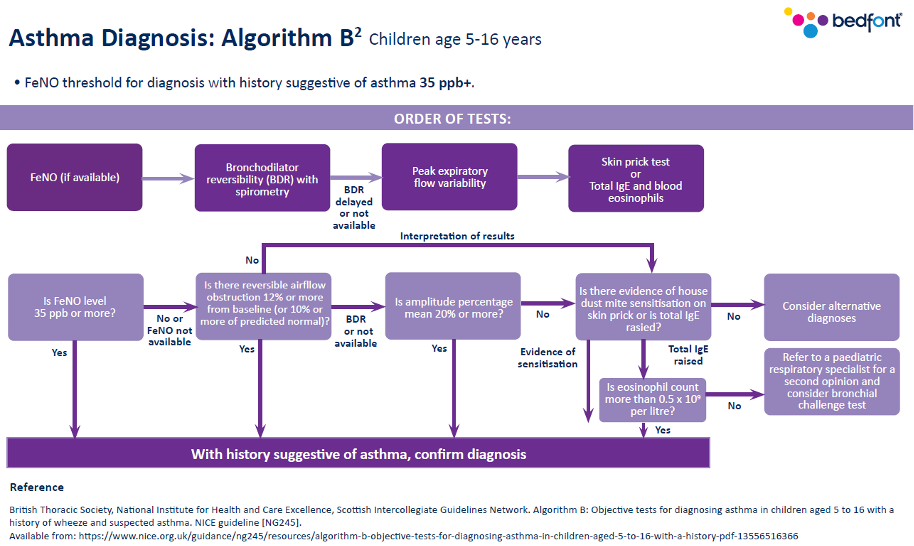
Asthma diagnosis in children (Aged 5-16)
As with adults, once a clear history and physical examination has taken place and asthma is suspected, you can move on to carrying out tests.
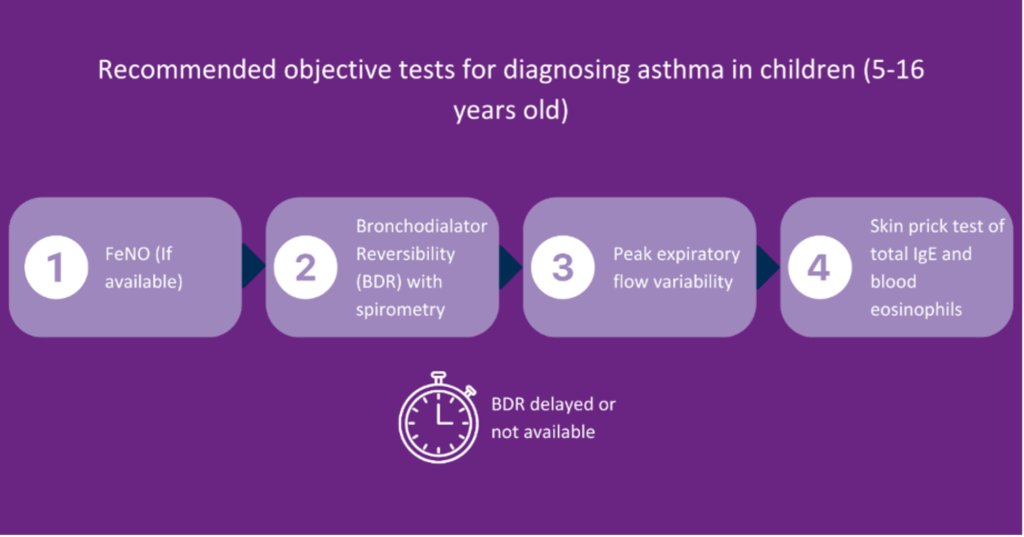
The first and only recommended test for children is a FeNO test. This means that a FeNO device should be available in primary care.
If the FeNO result does not support an asthma diagnosis, you should move on to bronchodilator reversibility (BDR) with spirometry. However, children on the younger side of the age bracket may find this test very challenging.
If this is the case, the guidelines recommend you move on to a peak flow diary.
A skin prick test is recommended if the peak flow diary results do not suggest asthma. Unfortunately, skin prick testing is not widely available, so this may not be possible.
Blood eosinophils are recommended last due to the invasiveness of the test.
How can you incorporate FeNO testing?
In some Primary Care Networks (PCNs), nursing teams have short slots available daily to perform FeNO tests on the day of presentation. This means the entire nursing team is trained to perform and correctly code a FeNO test and result. This approach, however, is not always possible in some settings, so some will ensure all clinicians are appropriately trained. This means that patients can receive instant results, start treatment immediately in the same appointment, and be referred to the asthma specialist for a follow-up.
Children under 5 years old
Previously, healthcare professionals (HCPs) were told not to diagnose asthma in children under 5 years old; it was recommended that they wait until they were 5 years old to make a diagnosis.
The new guidelines recognise that diagnosing this age group is challenging, as young children do not have the breath control required to take a test.
The recommendations in the new NICE/BTS/SIGN guidelines are:
If you suspect asthma, use your clinical judgement to treat and review regularly.
Once the patient reaches 5 years old, attempt to test for asthma. However, it is unclear whether treatment should stop before the test.
If the test is unsuccessful, continue treatment with regular reviews.
Re-attempt the tests every 6-12 months.
If the patient is not responding to treatment, refer them to a specialist, as it may not be asthma.
The guideline also recommends that any preschool child admitted to the hospital or had two or more emergency care visits because of respiratory issues in 12 months be referred to a specialist.
What’s next?
With a clearer understanding of FeNO testing and its applications, we will now focus on how these new guidelines reshape asthma treatment and long-term management. In Part 3, we will cover therapy options across age groups, medication strategies, and key recommendations for improving asthma control.
To keep up to date with our upcoming webinars, please follow us on social media or visit our website here.